Day 12: Arrived! (Melide to Santiago de Compostela)

Distance: 40 miles (64km)

Climbing: 3,829 feet (1167m)

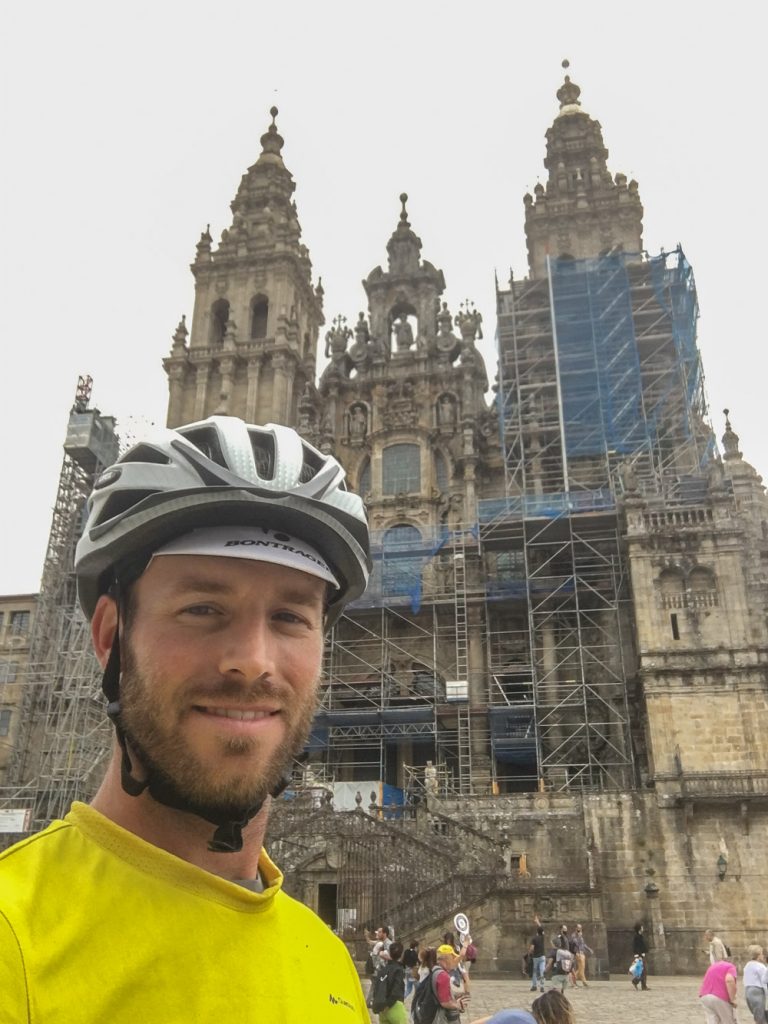
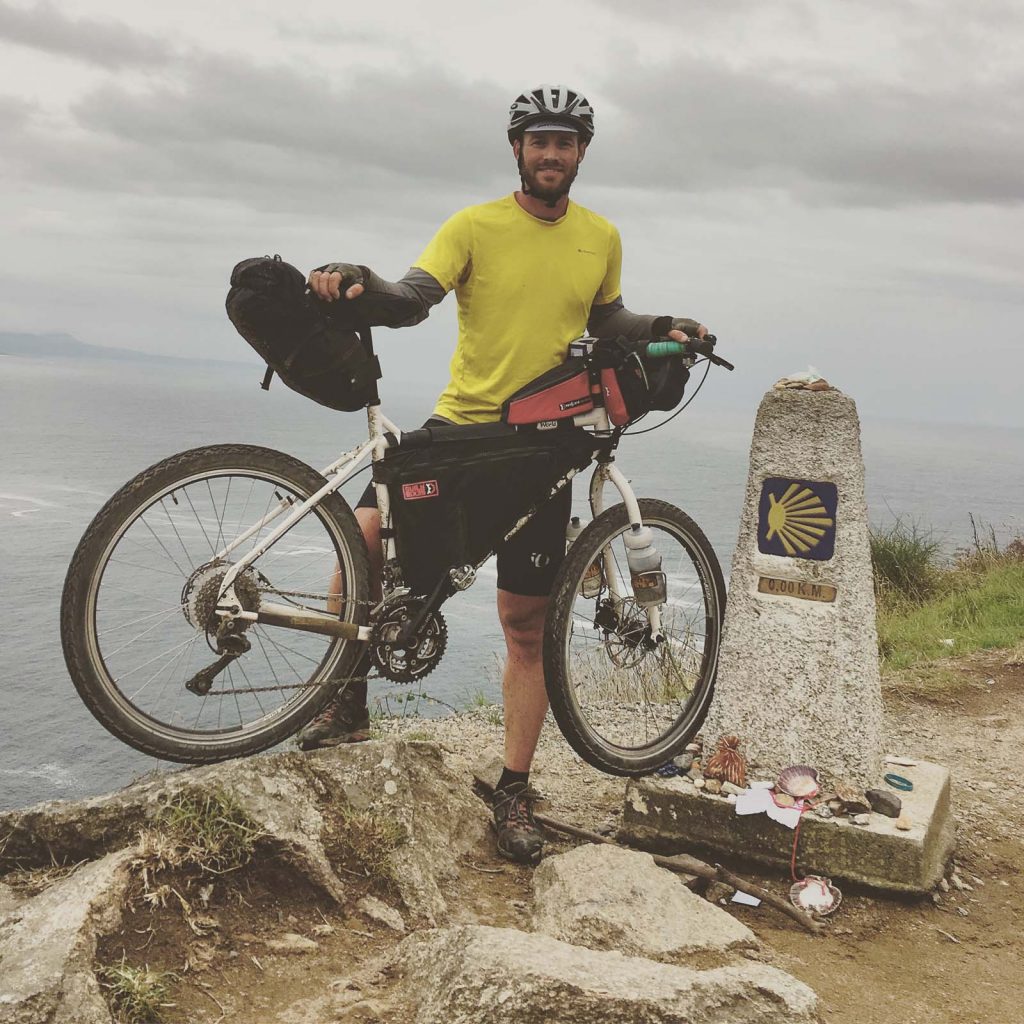
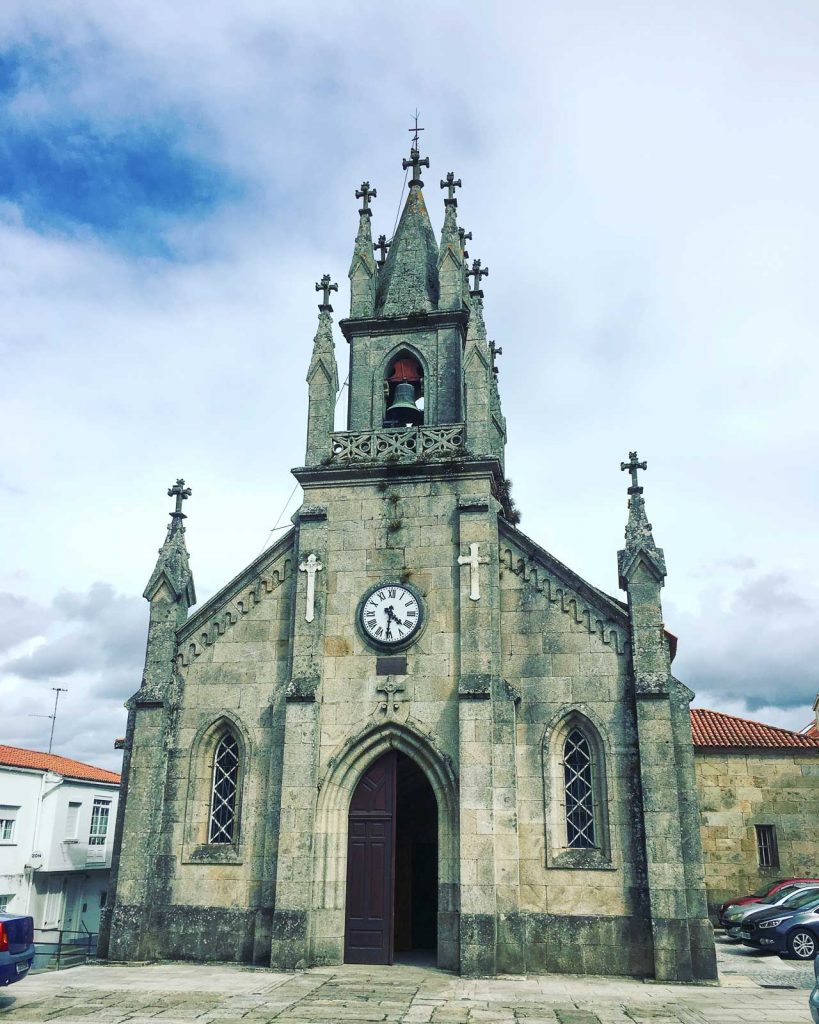
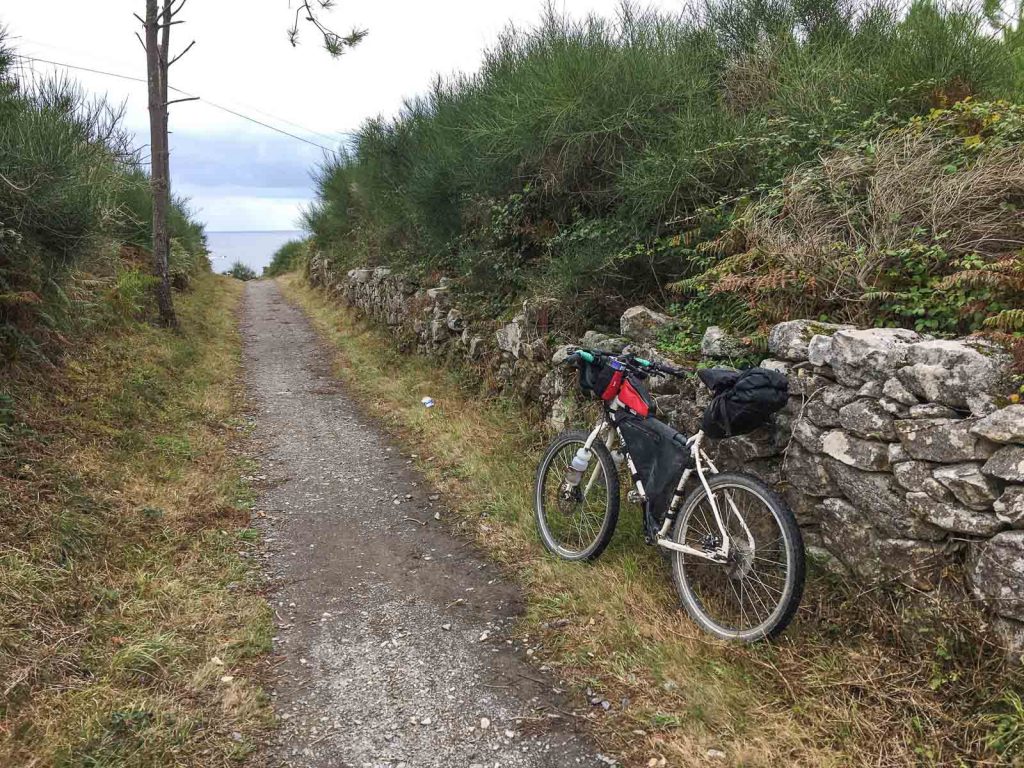
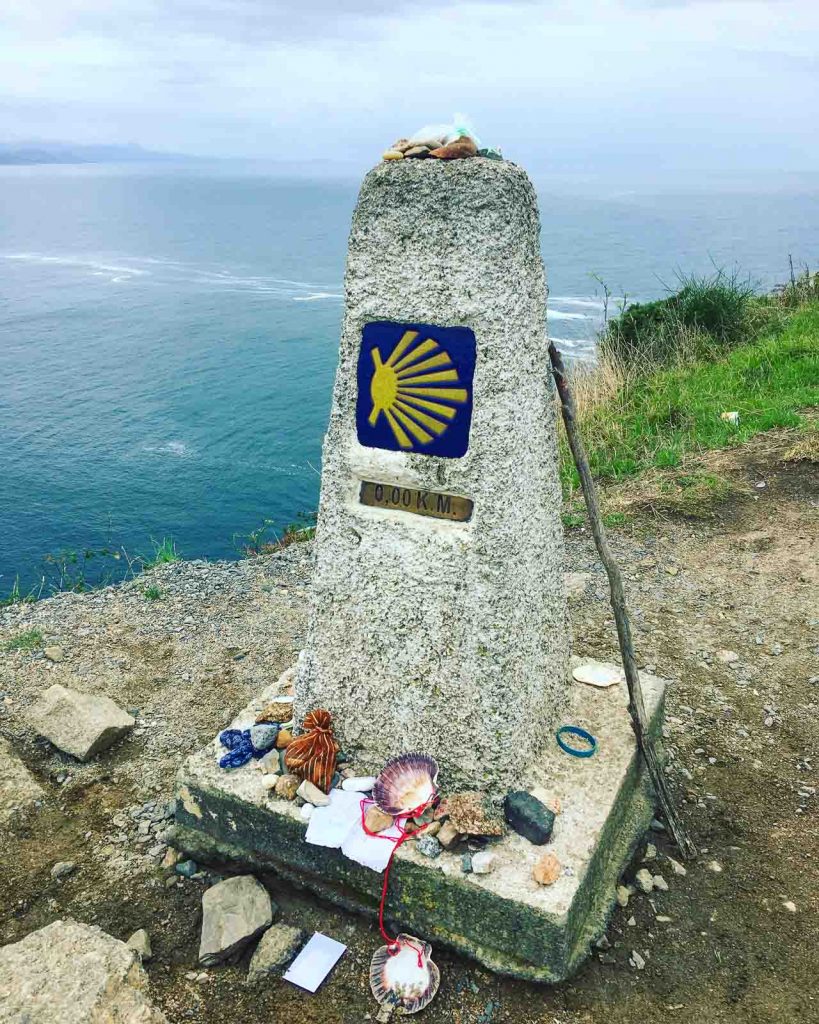
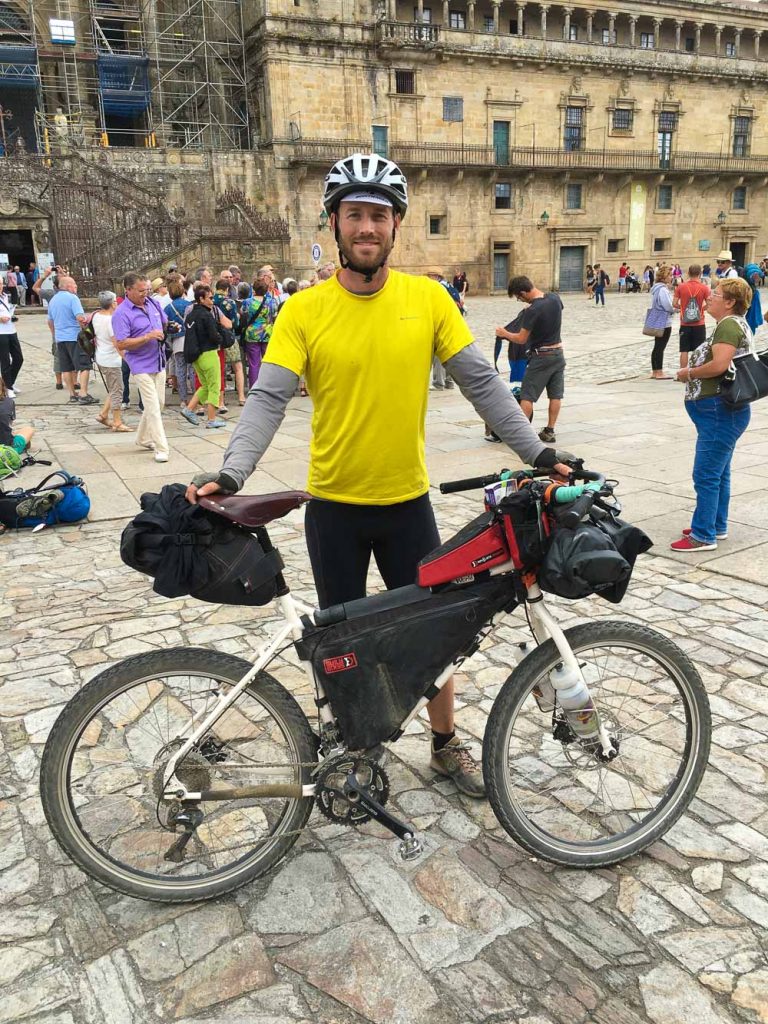
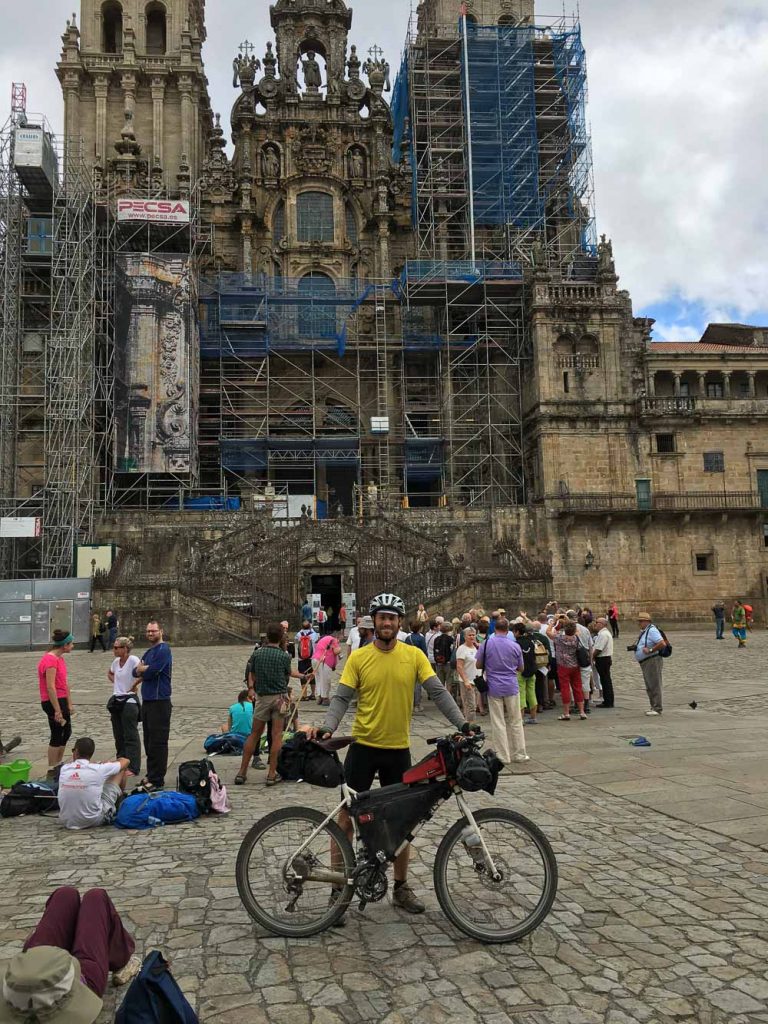
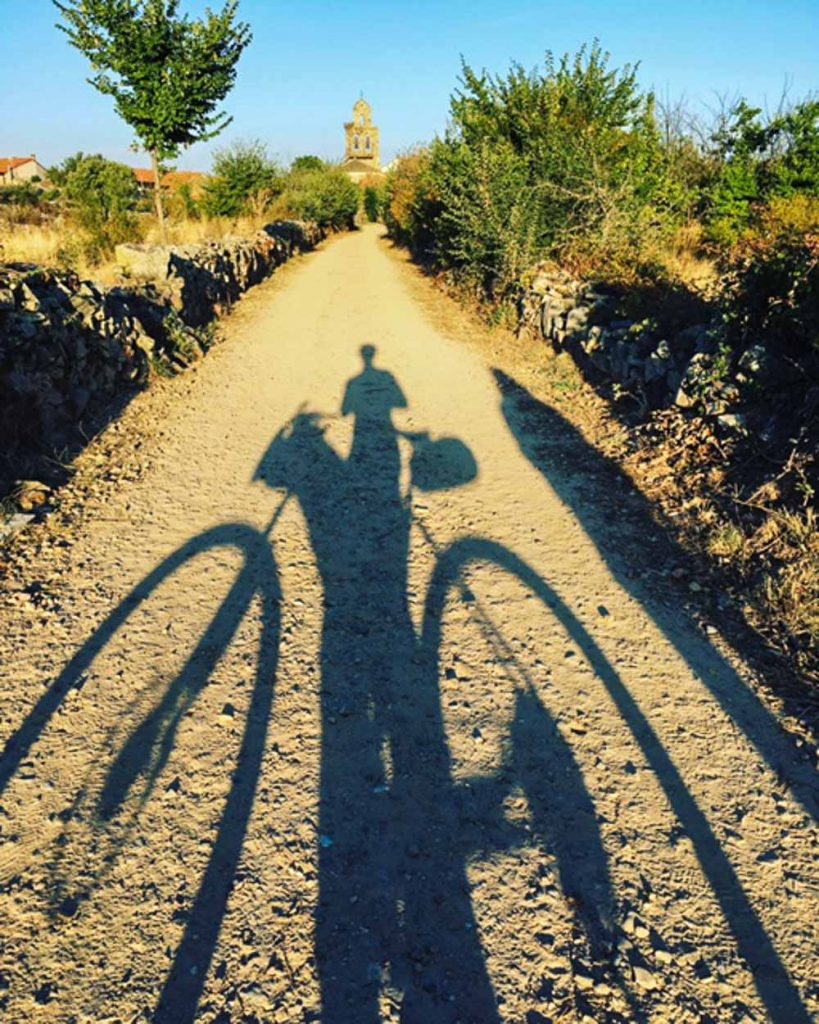
I’ve made it to Santiago! Another hilly day with many short, steep climbs, but better trail surface overall.

2016-09-12-09-20-33

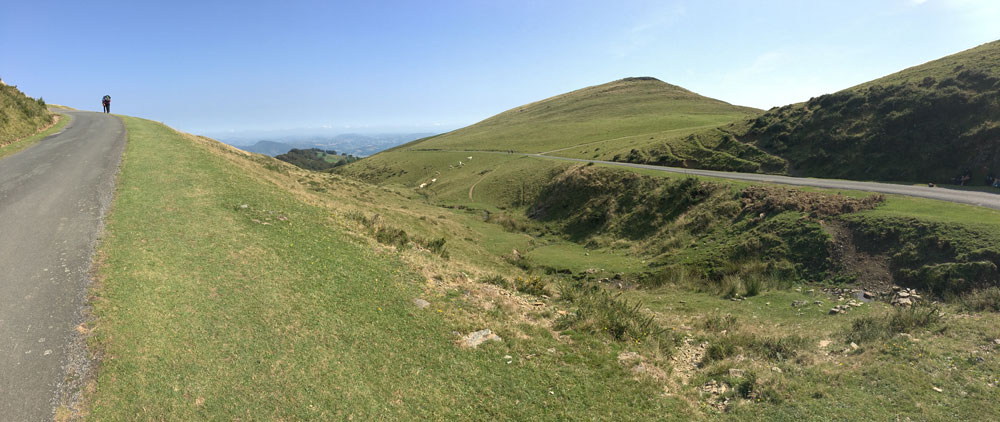
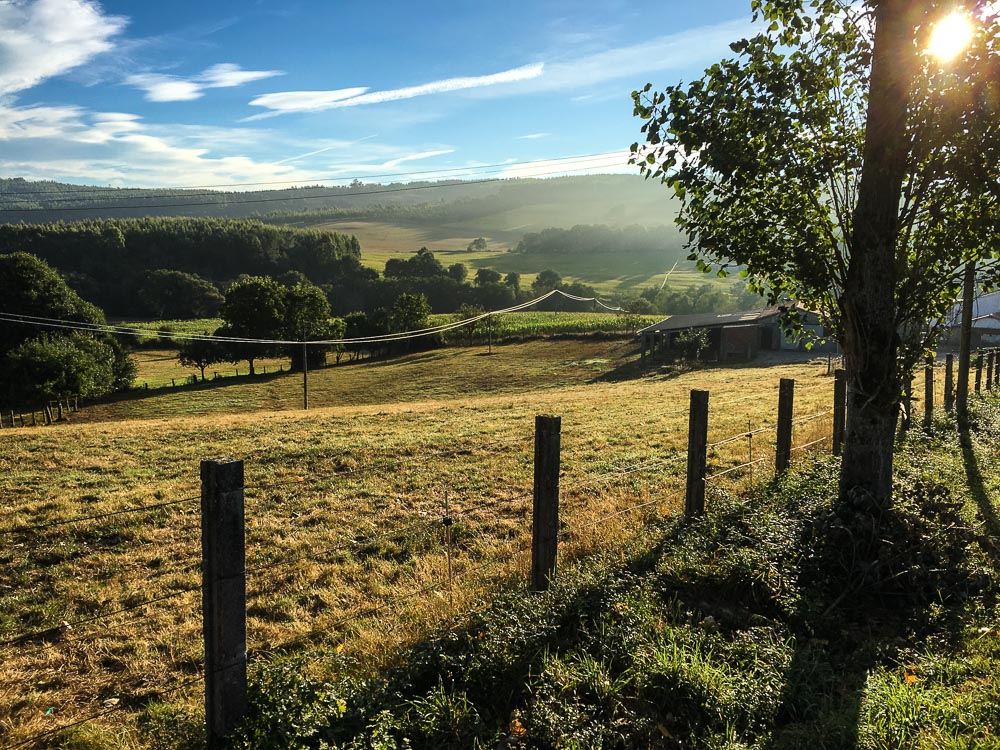
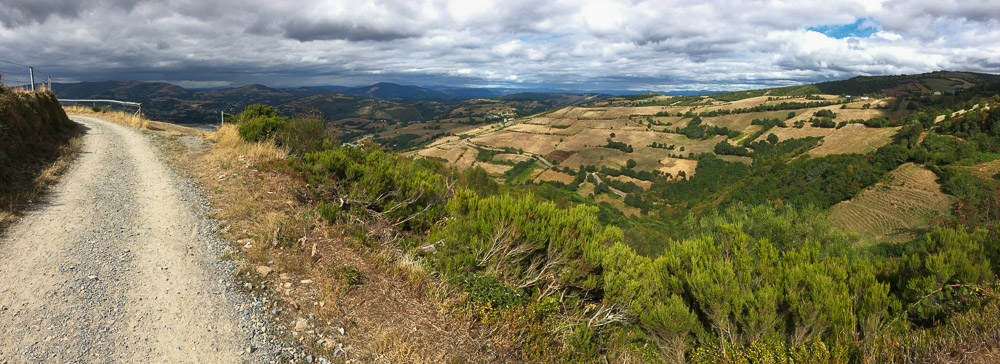
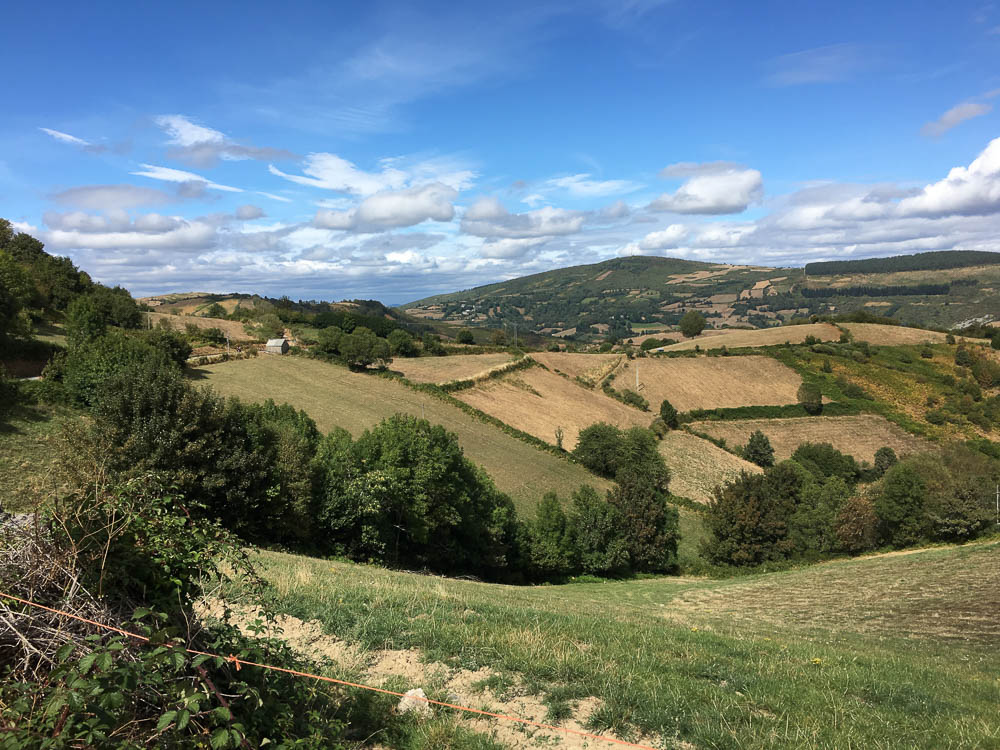
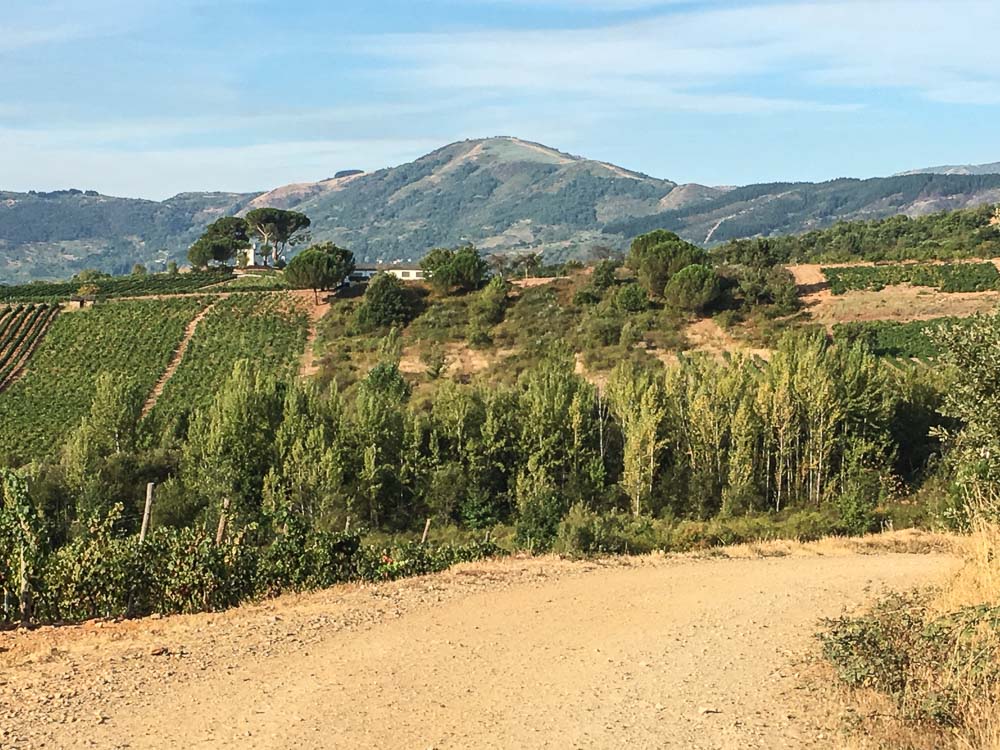
Galicia is beautiful with its rolling farmland.

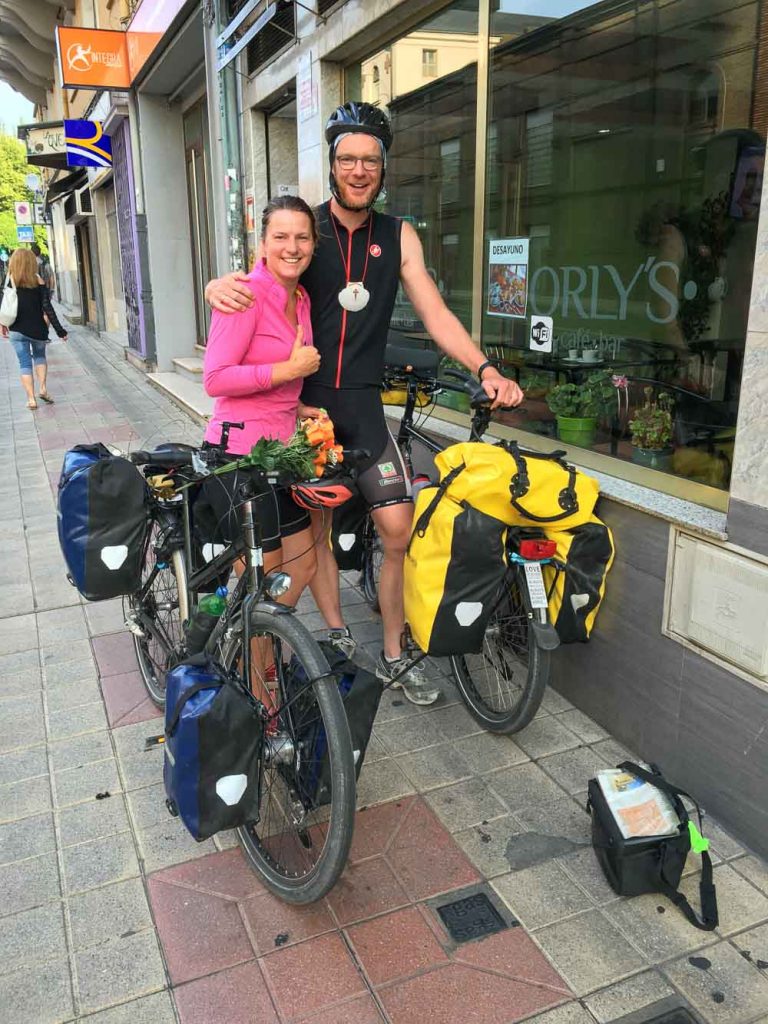
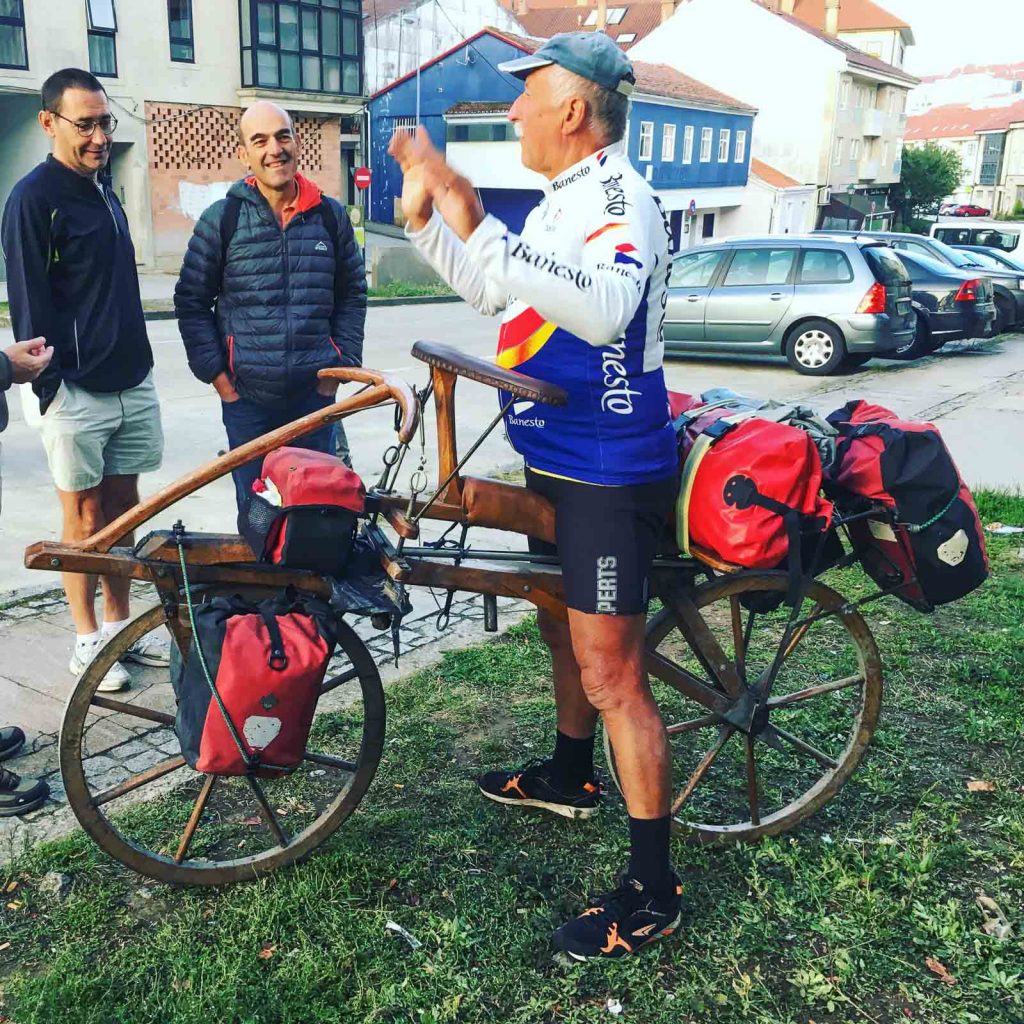
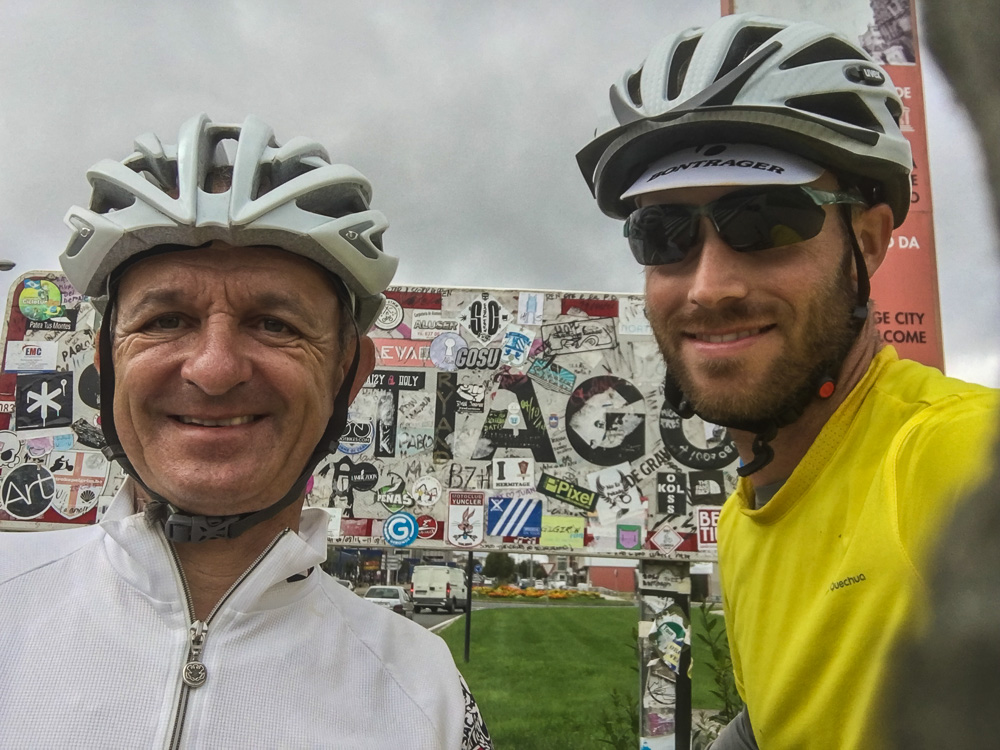
I was eager to get in before too late, so I didn’t take too many photos or stop very often, only to eat a sandwich and meet the two bikers from Belgium who have also kept the same schedule. I also met up with my Swiss cycling friend – see photo below, who comically had his only flat of the trip just outside of Santiago. He is the only cyclist I’ve seen on the first and last day of the trip.
2016-09-12-14-03-53

Selfie with my Swiss friend

Tomorrow I take a rest day in Santiago and hopefully wait out most of the rain, and then on Wednesday I hit the trail again for the epilogue ride to Finisterre and Muxía, which should be around 130km over 2-3 days. Looking forward to giving my legs a rest for a day. Since St-Jean-Pied-de-Port in France, here are the total riding stats:

Trip length: 12 days

Distance: 564 miles (909km)

I’ve climbed a total 43,106 ft (13,139m)

2016-09-12-14-23-29

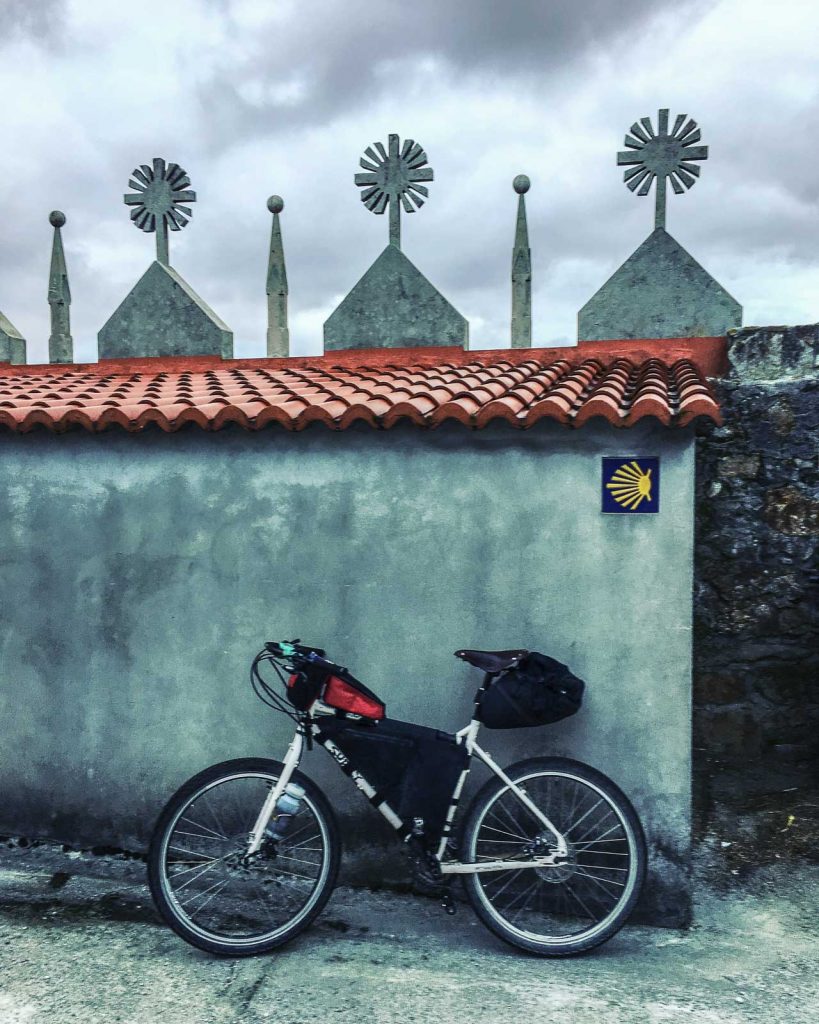
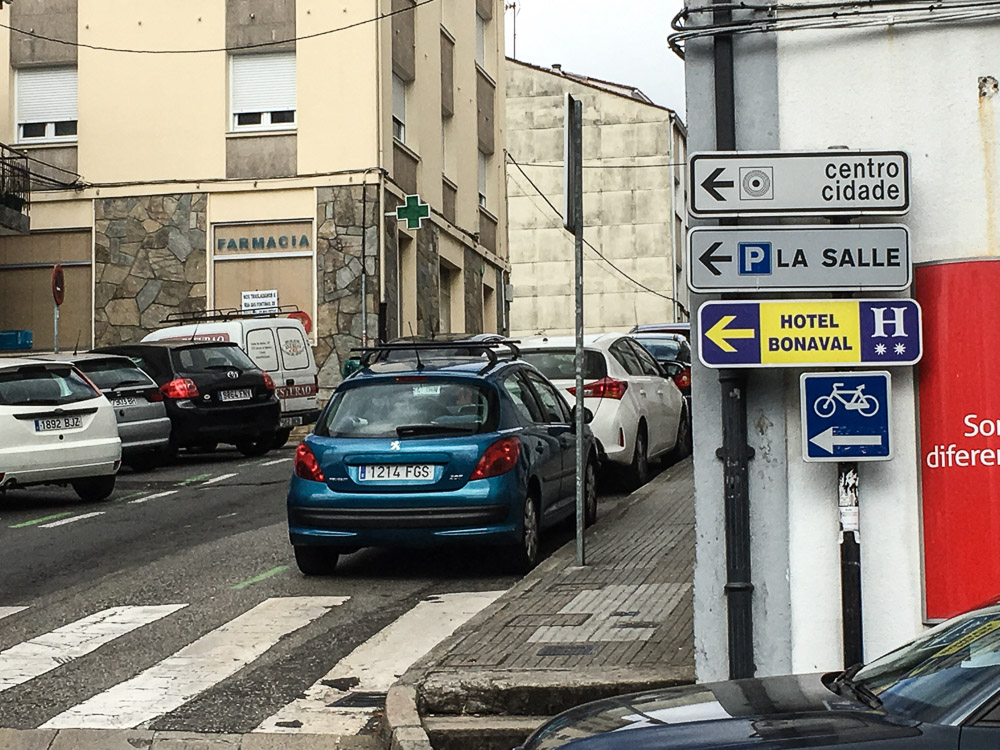
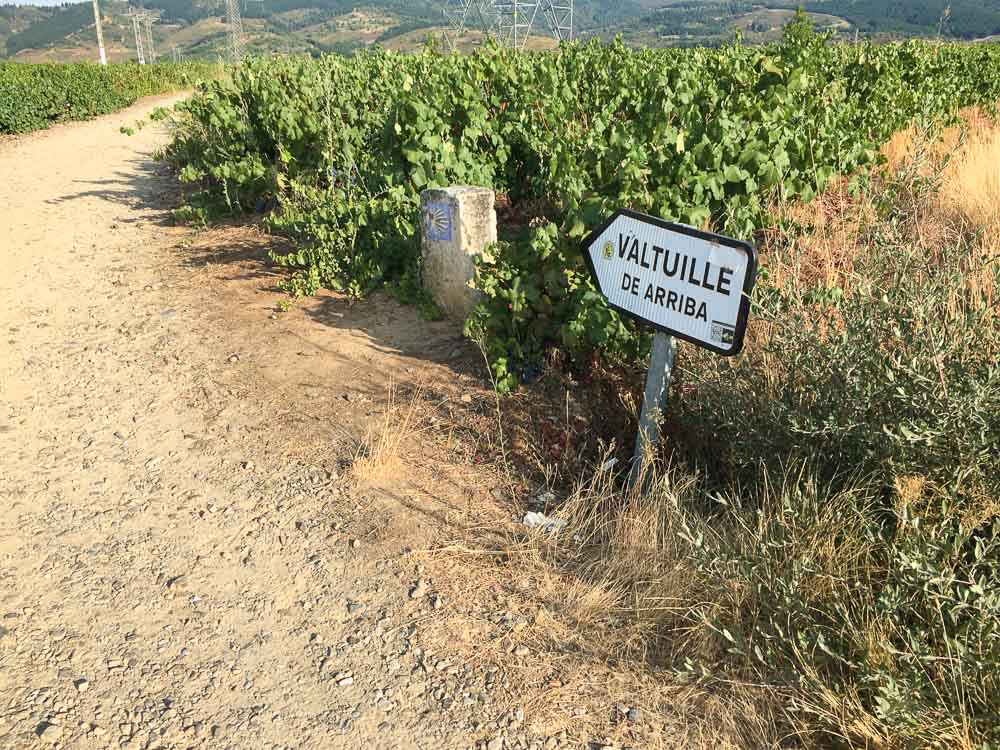
Bike detours into Santiago are confusing. Will try to find more clarity on this tomorrow. I followed two of these signs and then they disappeared, so I just headed for the Cathedral.

2016-09-12-14-39-07  2016-09-12-14-40-18


Day 11: Hills of Galicia (Triacastela to Melide)

Distance: 59.5 miles / 96km

Climbing: 5769′ / 1758m

2016-09-11-09-11-09

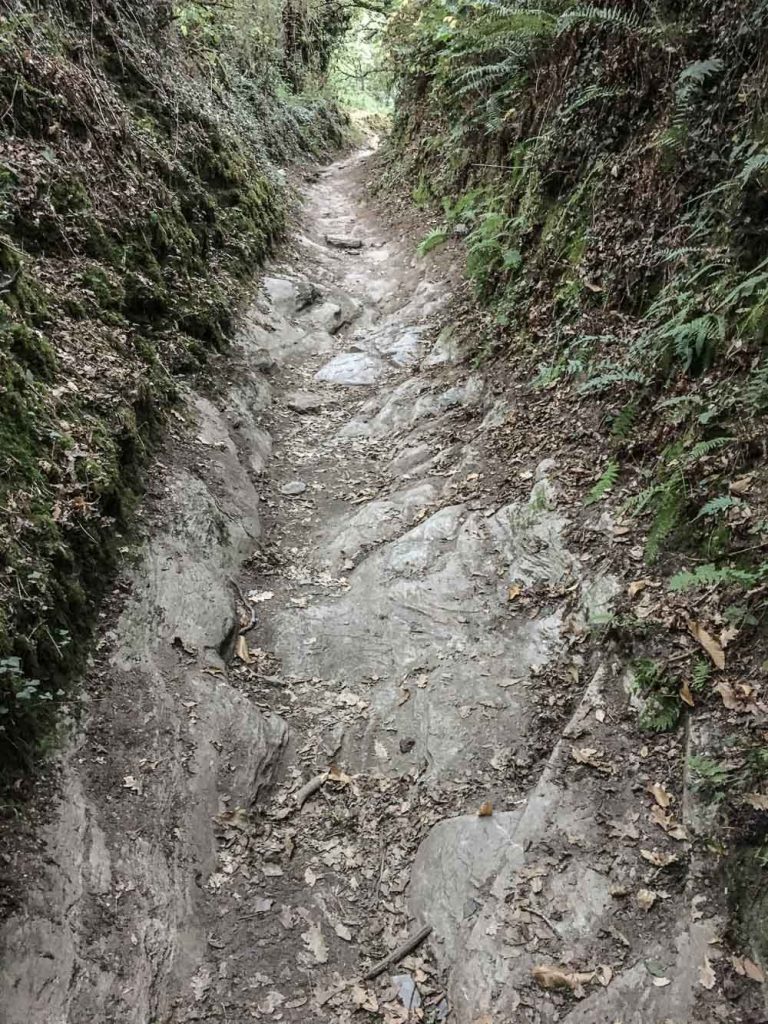
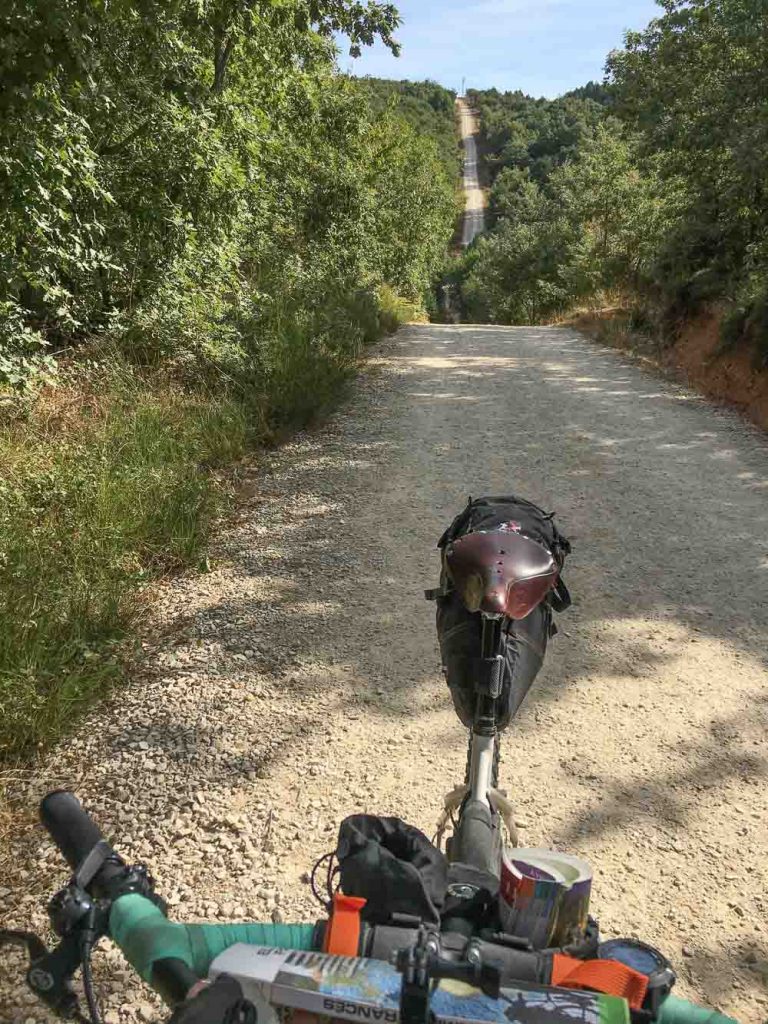
Challenging rocking trails in Galicia.

2016-09-11-08-45-24

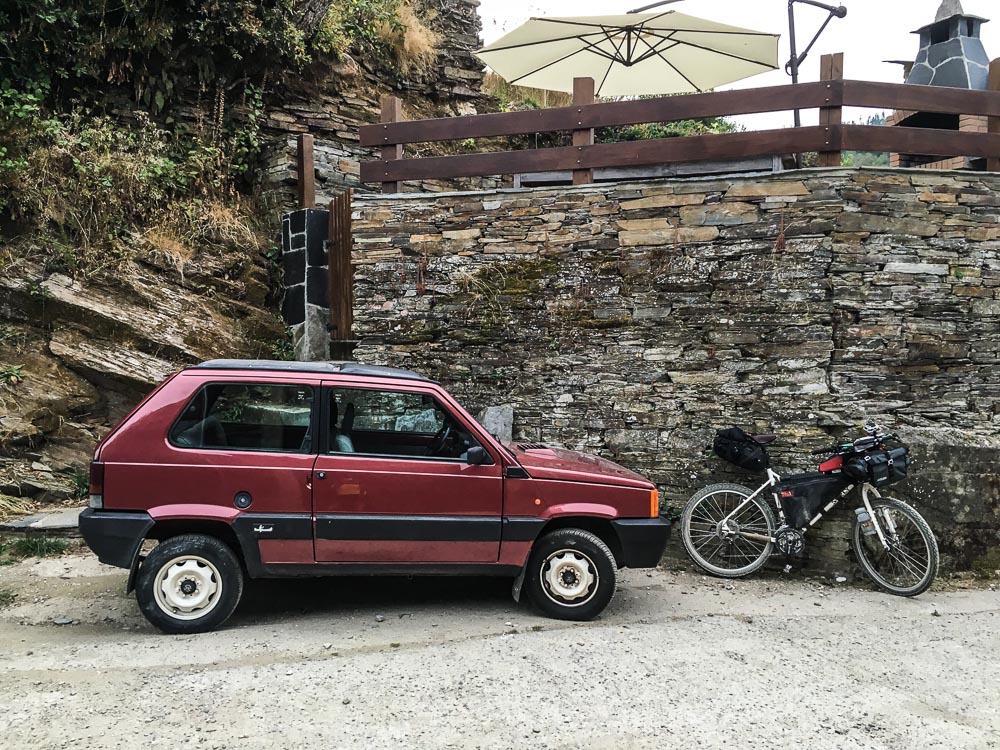
This same small car was there seven years ago on my first Camino.


Today was the longest of the trip so far, also with a lot of climbing. Galicia’s riding has proven to be harder than I expected, and part of the reason is that I’m trying to finish a day early to beat a big rainstorm on Tuesday.

I’ve been trying to ride the walking trails as much as possible, and it seems that most cyclists are riding the roads, even those with mountain bikes and suspension. I think I only saw 2-3 bikes on the trails today at all, and then many more on roads and at cafes in town.

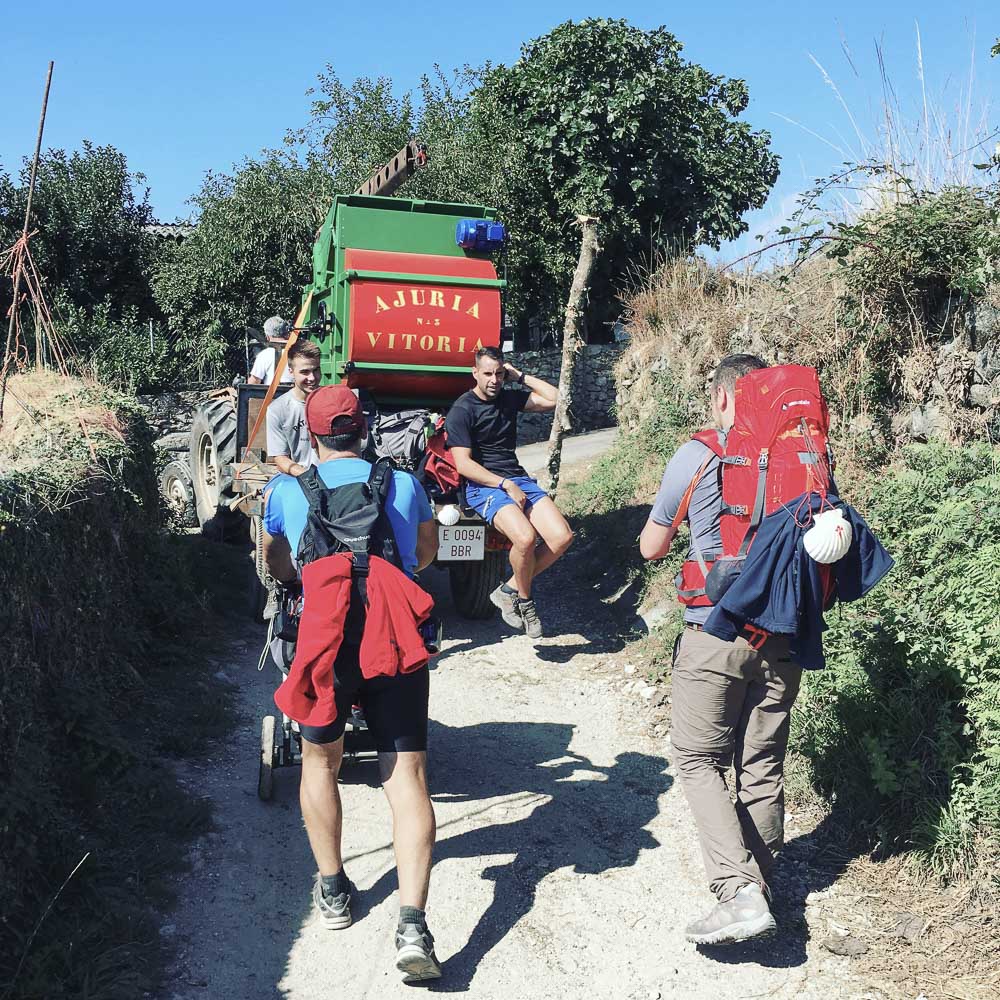
At one point I came across two parents and their 3 year old son in an all-terrain stroller with had a flat tire. They seemed utterly stranded along the way, and I was glad to be able to patch it for them. It seemed to be holding air in the end, even though the tube looked very old and dried out. They called me their “salvador,” and I was glad to be able to help.

From the town of Sarria, which is the starting point for walking pilgrims to be able to get their Compostela (certificate of completion), the paths became very full with new walkers and Camino bus tourists walking a short section. This made the going slow, and I even encountered one tourist who wasn’t familiar with the repeated sound of a ringing bike bell, and finally when I found a way to pass him, said in English, “well, I guess that’s what that sound means.”

2016-09-11-10-49-12

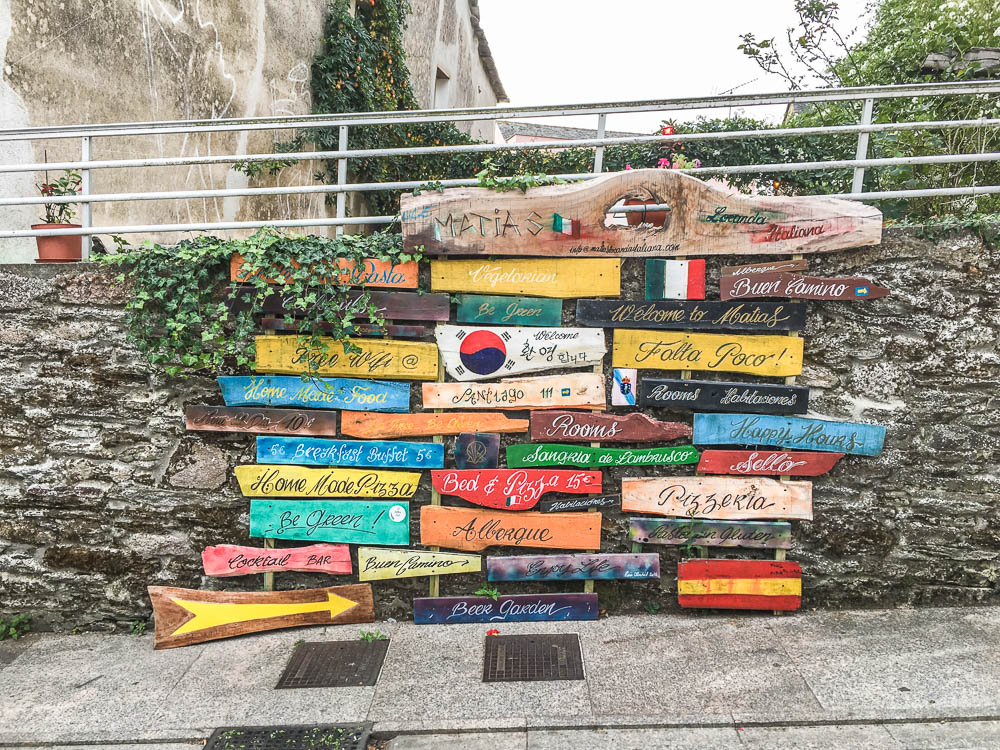
Creative sign in Sarria

2016-09-11-12-27-54-2

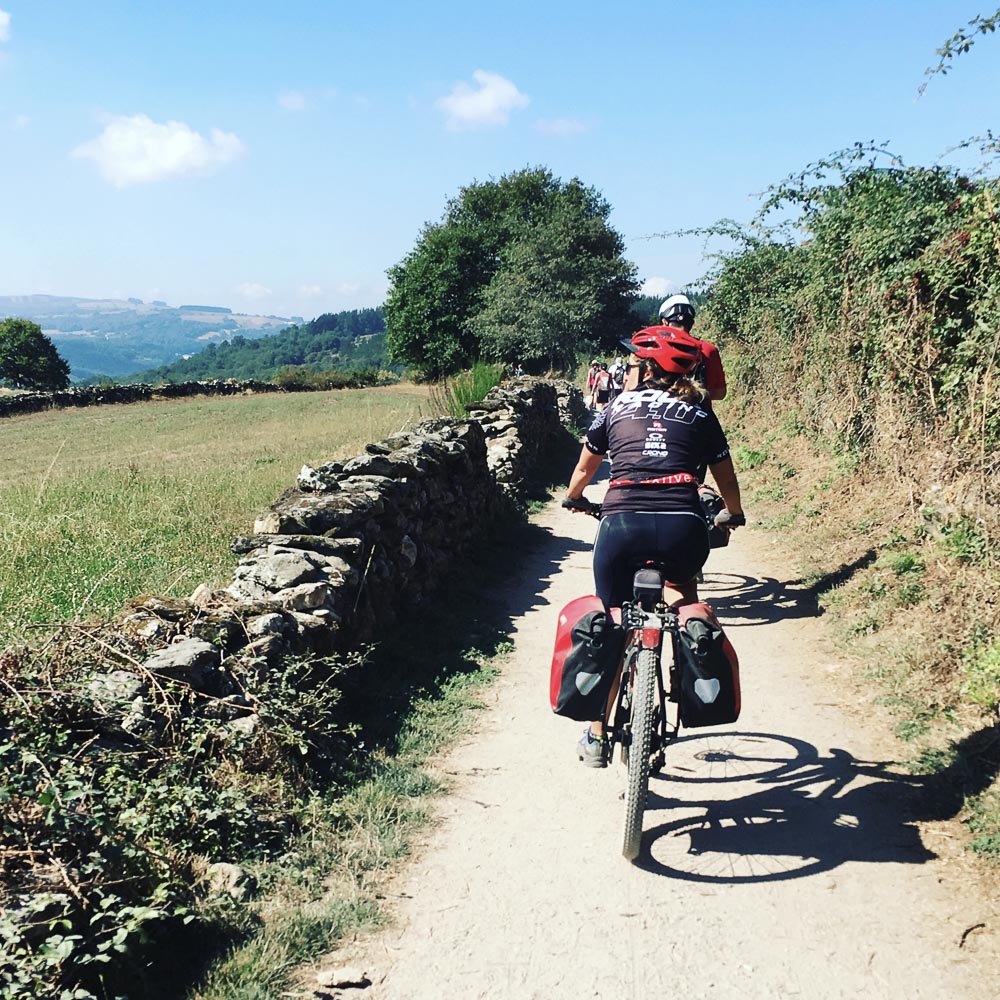
Beautiful stone-lined trails in Galicia.

2016-09-11-12-20-46-1

Clever pilgirms.

Most of today’s ride wound through small Galician farming villages and switched between dirt farm tracks/trails and small roads. There was a fairly long downhill section to Portomarin, and then an equally challenging climb afterwards. I wasn’t expecting the day’s climbing to top yesterday with the major pass at O’Cebereiro, but in the end my GPS read 5769′.

2016-09-11-13-12-24

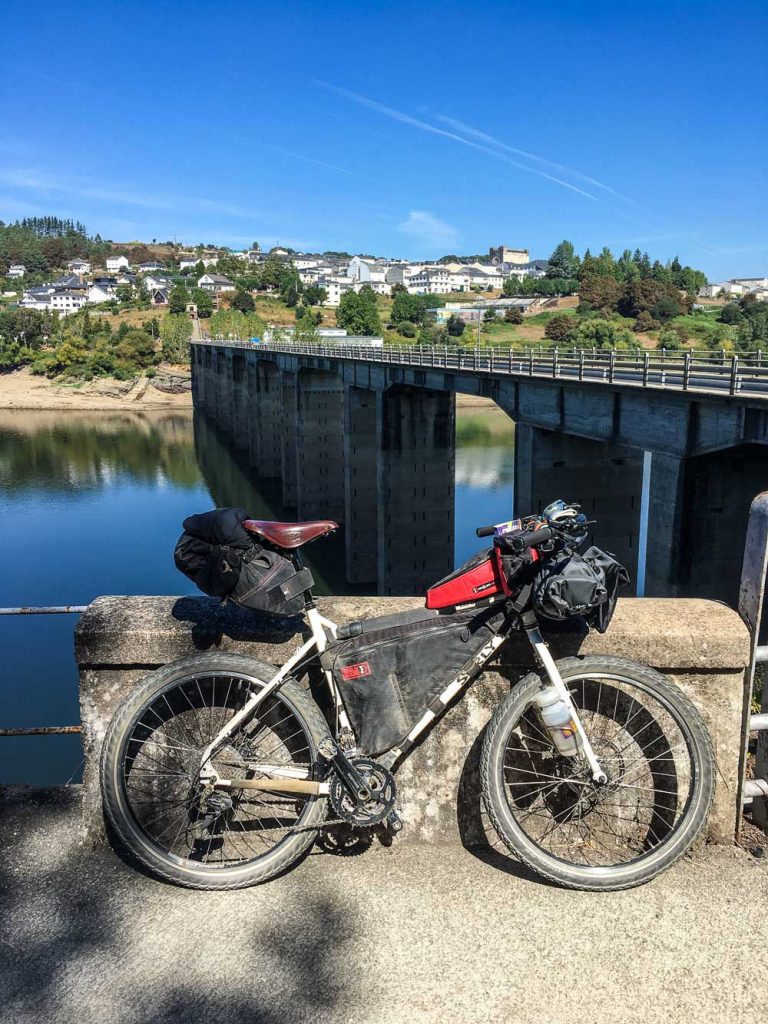
Bridge into Portomarin.

2016-09-11-15-25-34

Top of the long climb out of the Portomarin valley.

2016-09-11-16-10-23

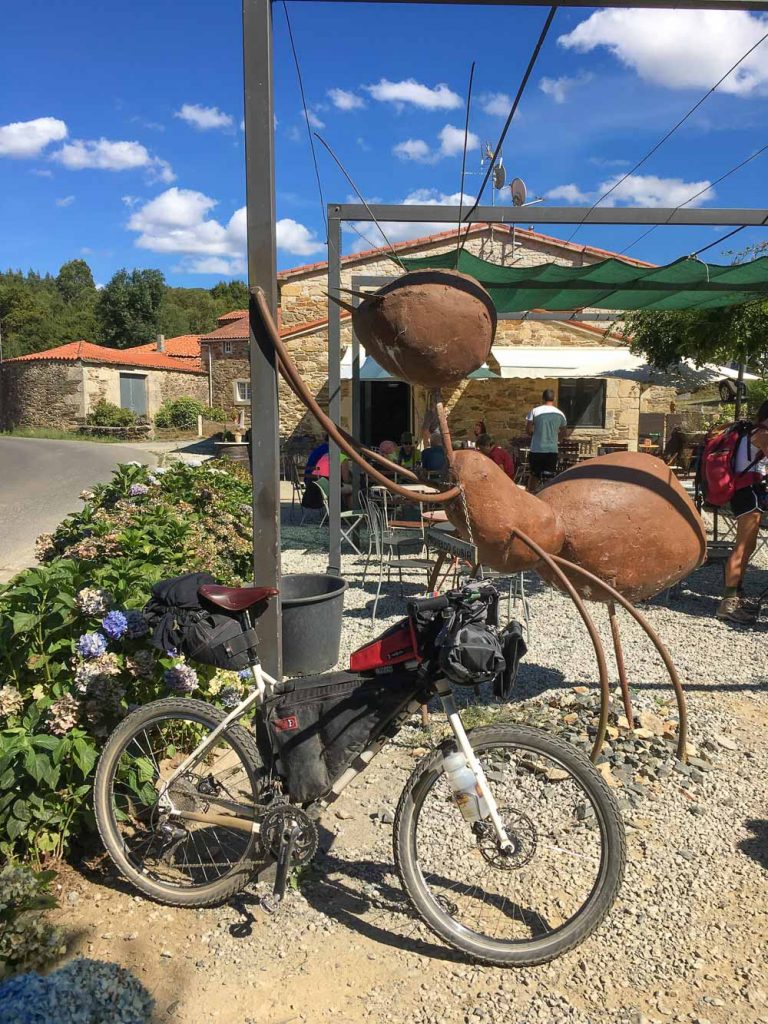
Paso del Hormiga.

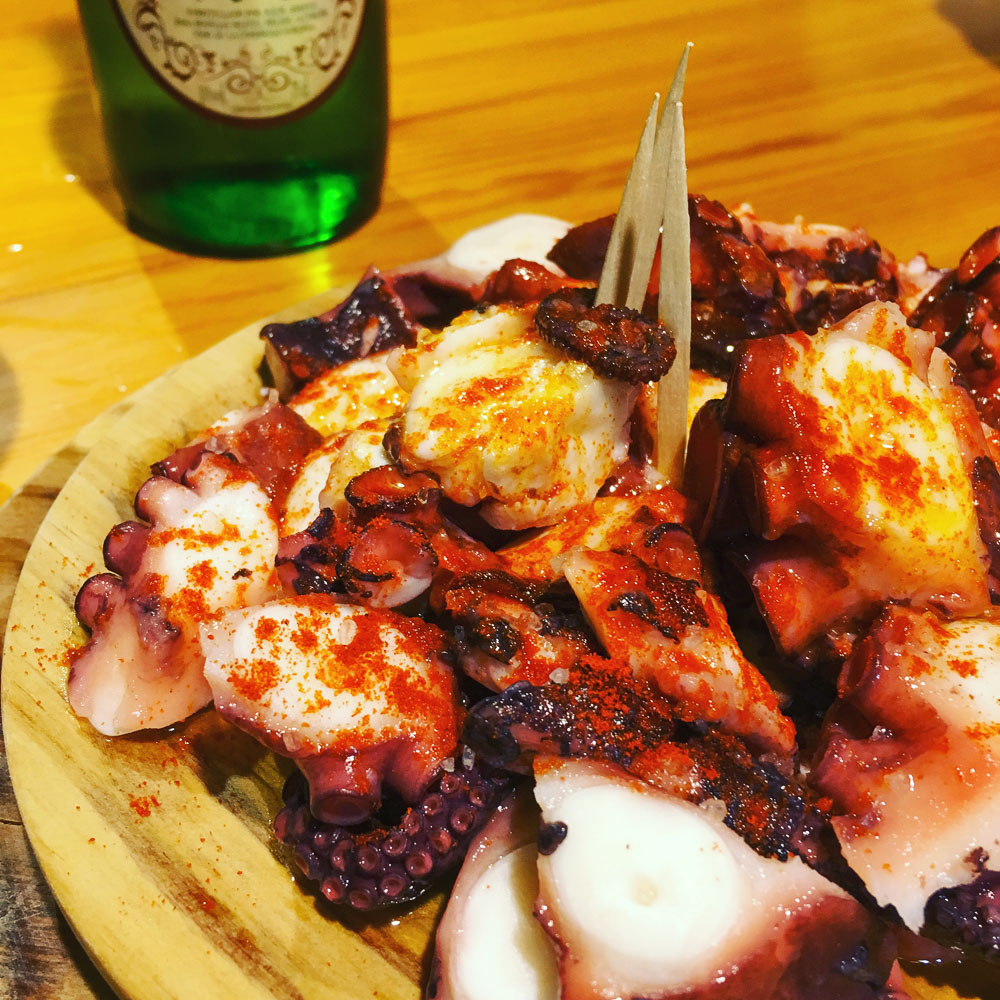
I arrived at 6:30pm quite tired, my legs still feeling the previous day’s climbing too. It took a while to check all the details for the guidebook and keep forward progress on the slow moving trails.  I still had to have the energy to head out and east some of Melide’s famous octopus/pulpo. There is a “fiesta del vino” happening throughout the town, with many teenagers in costumes and fireworks overhead.

2016-09-11-21-04-09-1

Pulpo in Melide.

From here, it’s a familiar 50km to Santiago, and the last part is mostly on roads so it should go fast. I’m looking forward to arriving in Santiago after a challenging ride! I’m going to take a rest day to wait out the rain, and then head west to the coast over the next 2-3 days.

Day 10: Climbing into Galicia (Ponferrada to Triacastela)

Distance: 51.5 miles / 83km

Climbing: 5157′ / 1561m

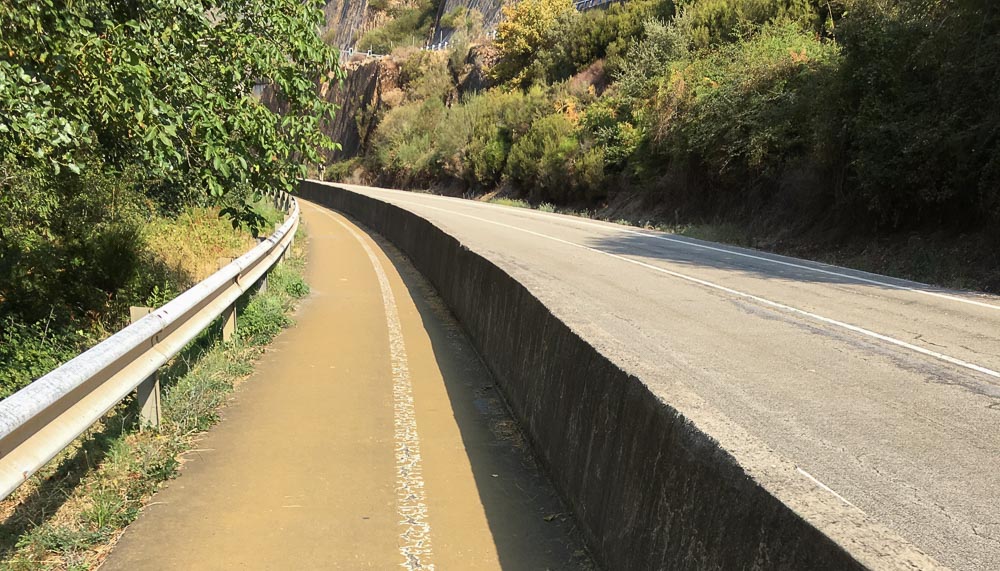
It was a challenging day for sure, the most climbing of any day other than the pass over the Pyrenees.. Leaving Ponferrada, the path was mostly on roads until the last bit into Villafranca, easy riding and nice to make good time. From Villafranca, the route followed a bike lane along a road deep in a valley that slowly worked its way up towards the base of the climb.

2016-09-10-09-51-01

Route into Villafranca

2016-09-10-10-02-18

Leading into Villafranca, the view opens up to see the beginning of the mountains ahead.

2016-09-10-11-28-03

Walking/biking lane after Villafranca. The road wasn’t too busy, but felt a little safer here- also quite fast.

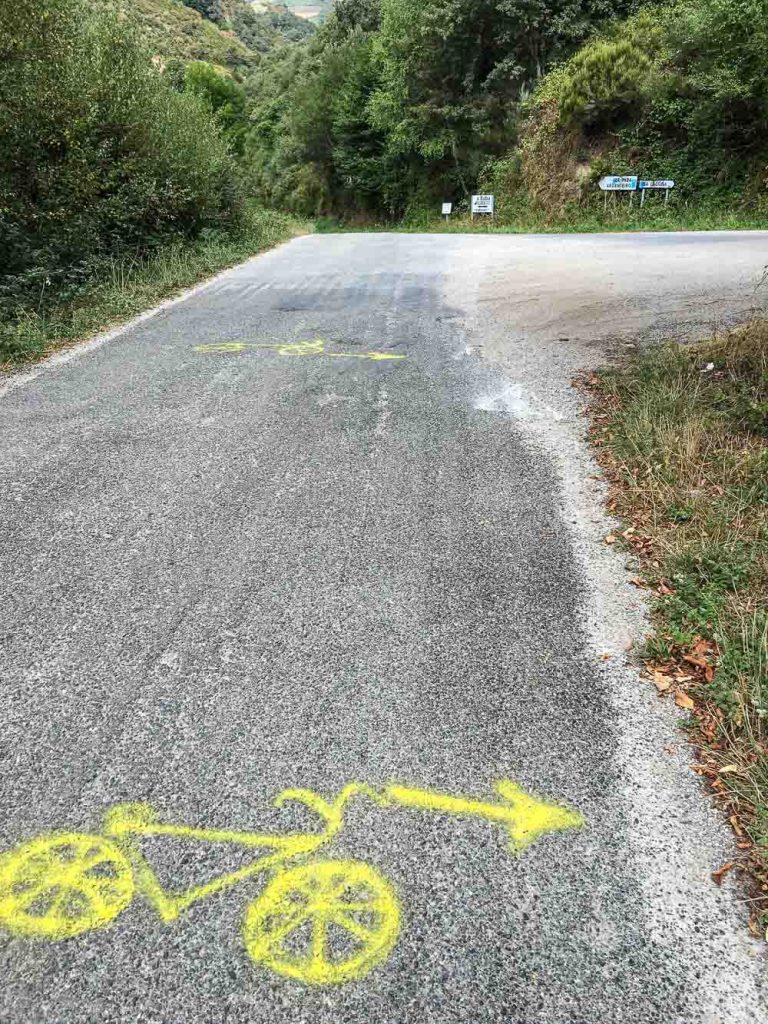
The most interesting and spectacular part of the day was the climb up to O’Cebreiro. From Herrerias, there is soon an option to leave the paved road to the L if you re walking, or stay on the road if you are on a bike. The turn is clearly and boldly painted on the road, not officially, but it was a strong message. I remember the path from Herrerias to La Faba being quite rocky, narrow and steep, so I decided to take the road. It was a good incline on the pavement, winding up to another turnoff with bike directions painted to the left, and a sign to the La Faba albergue. I decided to head into La Faba to see the town and reassess the trail.

2016-09-10-13-26-52

The ‘bike’ turnoff to keep you on the road instead of turning turning into La Faba. I decided to turn left and take the trail from La Faba to O’Cebreiro.

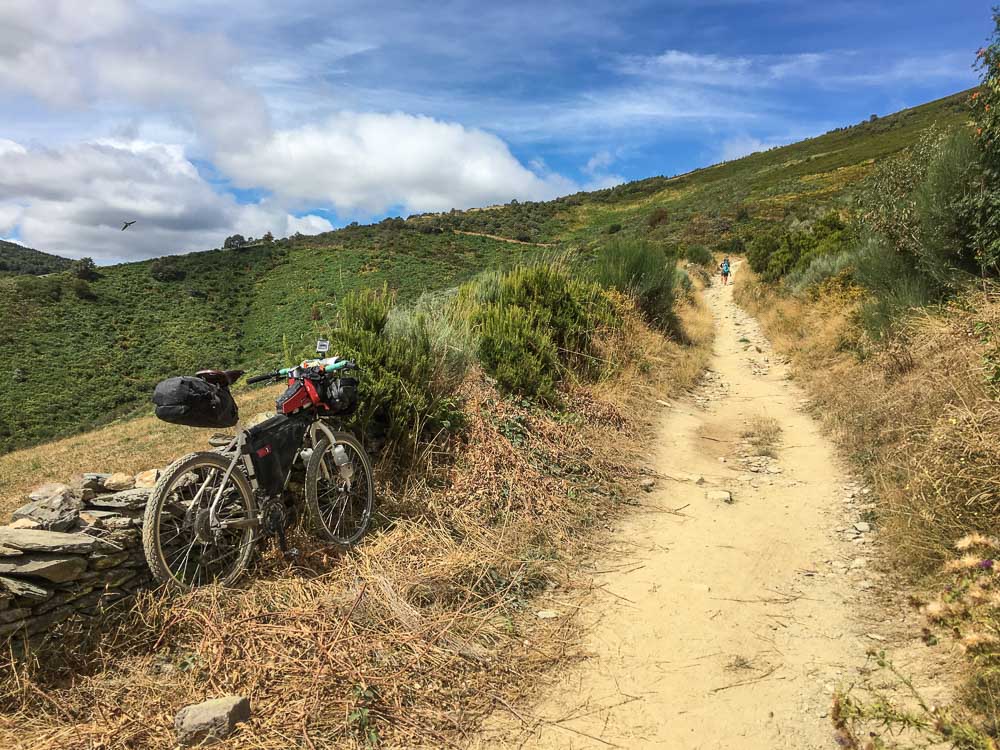
When I was in the center of the village, I saw a group of mountain bikers coming down from the pass, and they said that I should be able to make the climb. I decided to go for it, remembering it to be a bit wider than the lower section. It was rocky for the first 100m or so, and then became much more ridable, something that a jeep should have no problem doing. It’s a great section of trail if you have the energy for it, and opens up more and more as you climb, eventually reaching the village of La Laguna, where it meets the same road again and you can choose either parallel way. I chose the trail again and it was great.
2016-09-10-14-10-15

Trail from La Faba to La Laguna- totally ridable.

2016-09-10-14-19-51-2

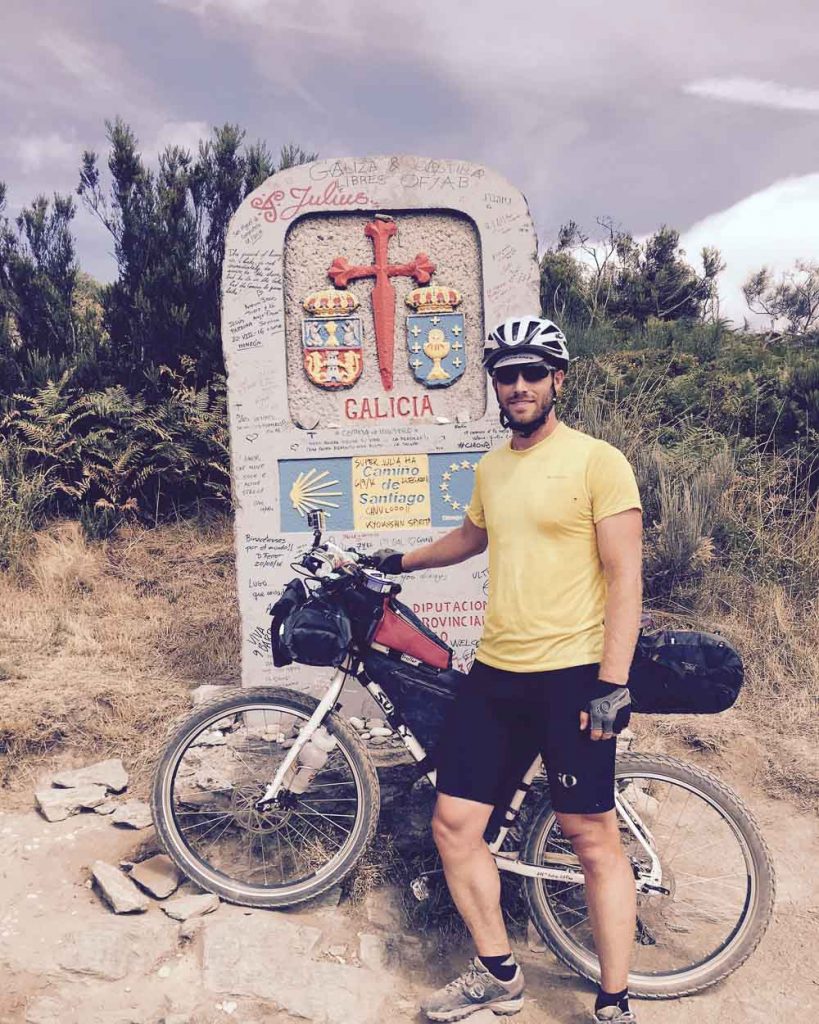
Entrance to Galicia, the final province on the Camino.

At the top of the pass, you enter the region of Galicia, the final region of the Camino that takes you to Santiago and the coast. From here the riding was great, a bit rougher trails, but many ups and downs that were manageable given the overall descending grade of the rest of the day. There was one climb up to Alto de Poio, which seemed to be the steepest I encountered so far. I almost made it, but when my tires kept spinning, I decided to walk.

2016-09-10-14-27-56

OCebreiro lookout.

2016-09-10-16-17-27

Starting to descend to Triacastela- great riding!

2016-09-10-15-34-10

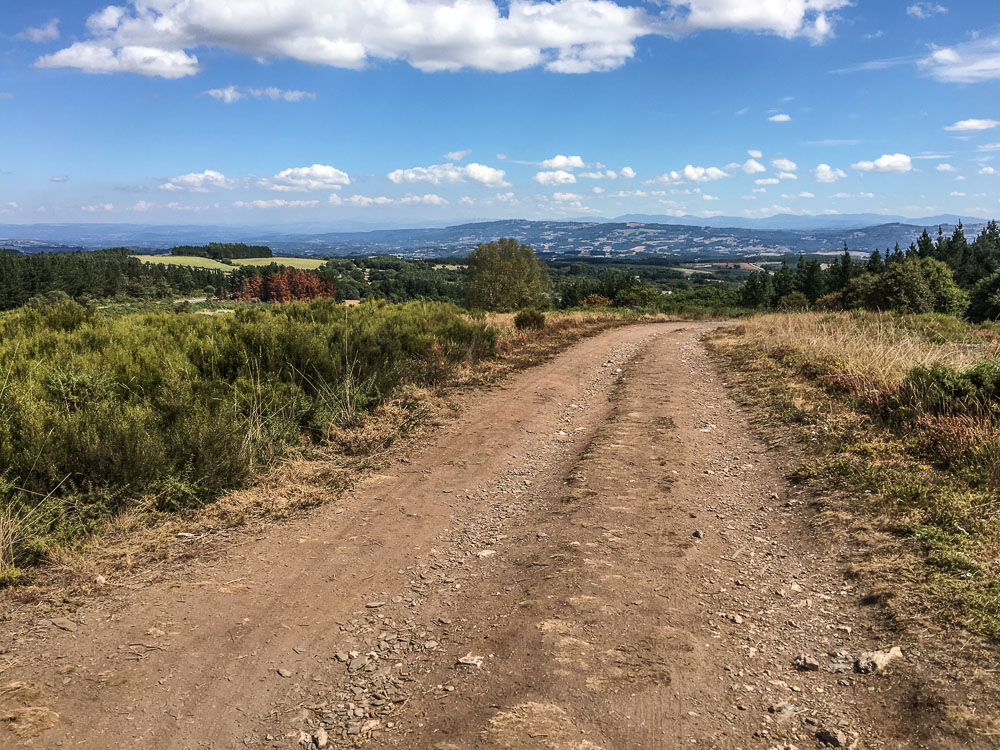
Rolling hills of Galicia

The descent down to Triacastela was spectacular, a little rough at parts but very manageable on my bike. I shot some GoPro footage that I’ll have to add a bit later. In Triacastela, I stayed at Complexo Jacobeo, which let me lock the bike inside the main area of the albergue, and has a great companion restaurant nearby. I managed to meet up with the Swiss cyclist I had seen on the first day from France, and we enjoyed looking back on the trip and comparing experiences. The food was so good I decided to also get breakfast there the next morning. From here,  Santiago is about 130km, and it feels like the end is in sight. My legs ached a bit after the day, but was glad to be pushing harder to reach the end.

2016-09-10-17-01-54-1

Waiting to check in to my albergue in Triacastela

Day 9: Entering the Cantabrian Mountains (Astorga to Ponferrada)

Distance: 36.6 mi / 59km

Climbing: 2986 ft / 910m

Even though today’s distance was short, so many different places and experiences make it feel like I’ve covered more ground than the past few long days on the Meseta.

img_8329

Pilgrim wishing he had a bike

img_8427

Santa Catalina, good place for a coffee break.

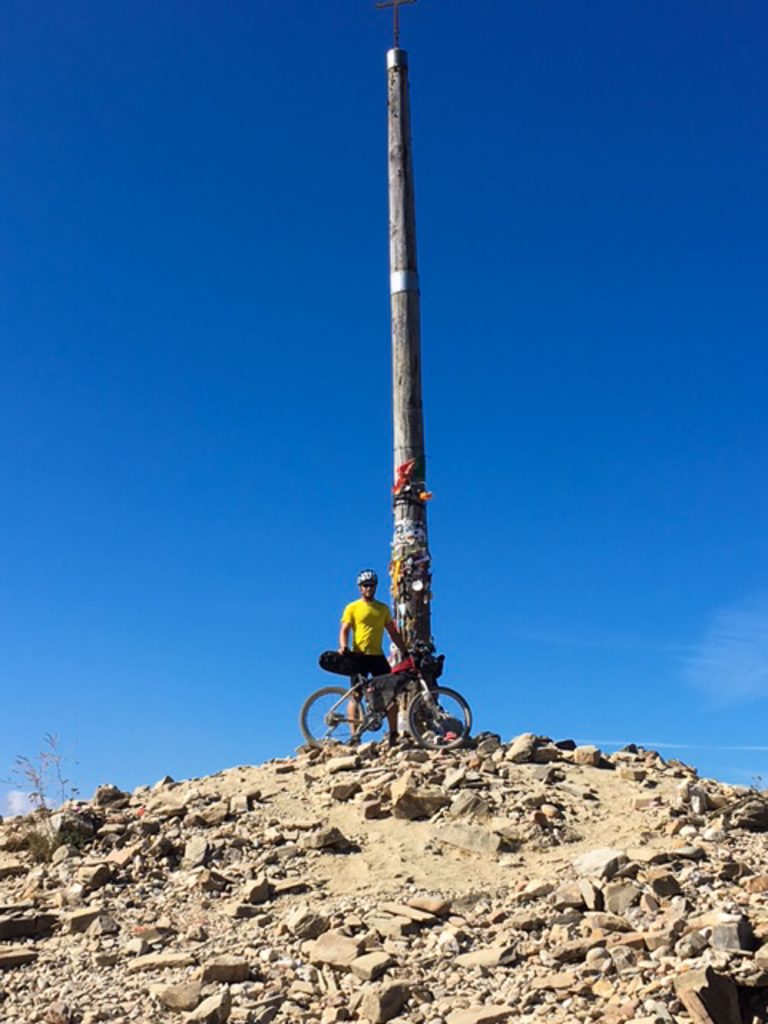
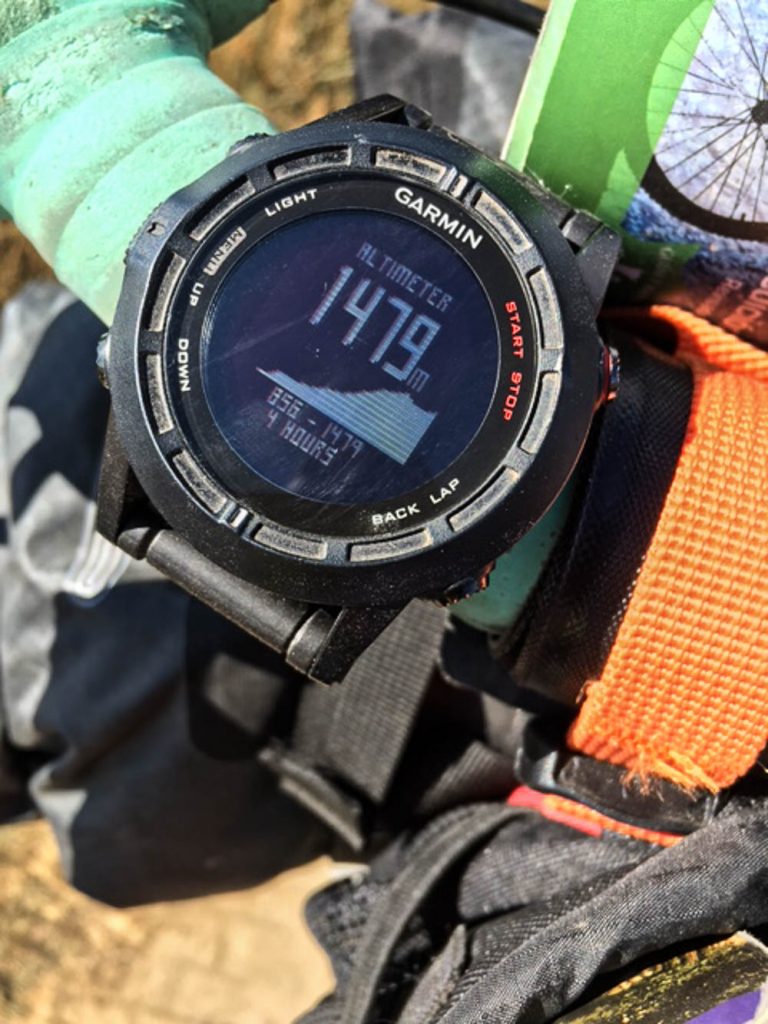
From Astorga, it’s an easy climb (2-4% grade) into the Cantabrian Mountains up to the highest point on the Camino Francés (around 1550m). Near the top of the climb is the Cruz Ferro, a famous iron cross where pilgrims leave a stone or another item behind to symbolize letting go of a burden they have been carrying. The path then continues along the mountain, and then descends quickly down to Molinaseca and the valley below, offering one of the most scenic days on the entire route.

img_8359

Cruz Ferro

img_8363

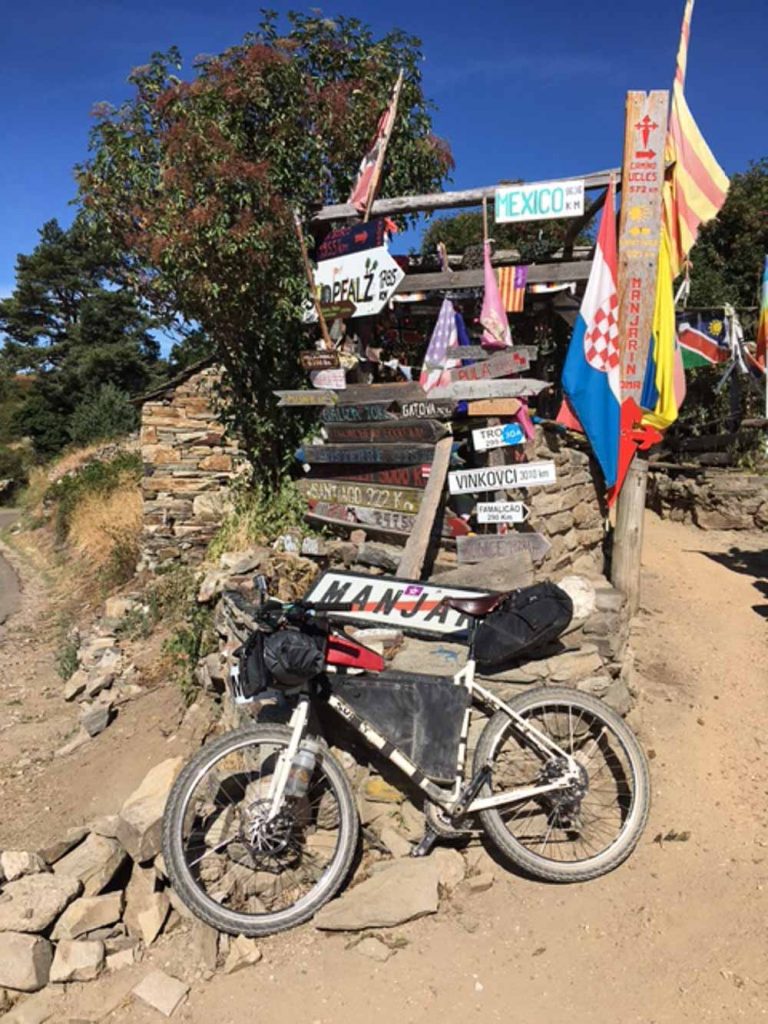
Manjarin

img_8370

non-calibrated highest point on the camino

The descent is technical, fully of sharp rocks, and fairly narrow which makes sharing it with walking pilgrims challenging. I rode the first part, but felt like my bike was really taking a beating and felt sorry to keep ringing my bell for others to move out of the way. From Al Acebo, I decided just to take the road down, finishing the descent of over 1000m much faster than a super focused ride to avoid sharp rocks.

At the bottom of the hill, I realized that my rear quick release lever had worked its way loose when my rear wheel pulled out of the horizontal dropout while I was rolling it up onto a curve. I’m super thankful that this didn’t happen just a bit higher up on the descent- or it would have been bad news.

img_8390

Molinaseca bridge

img_8400

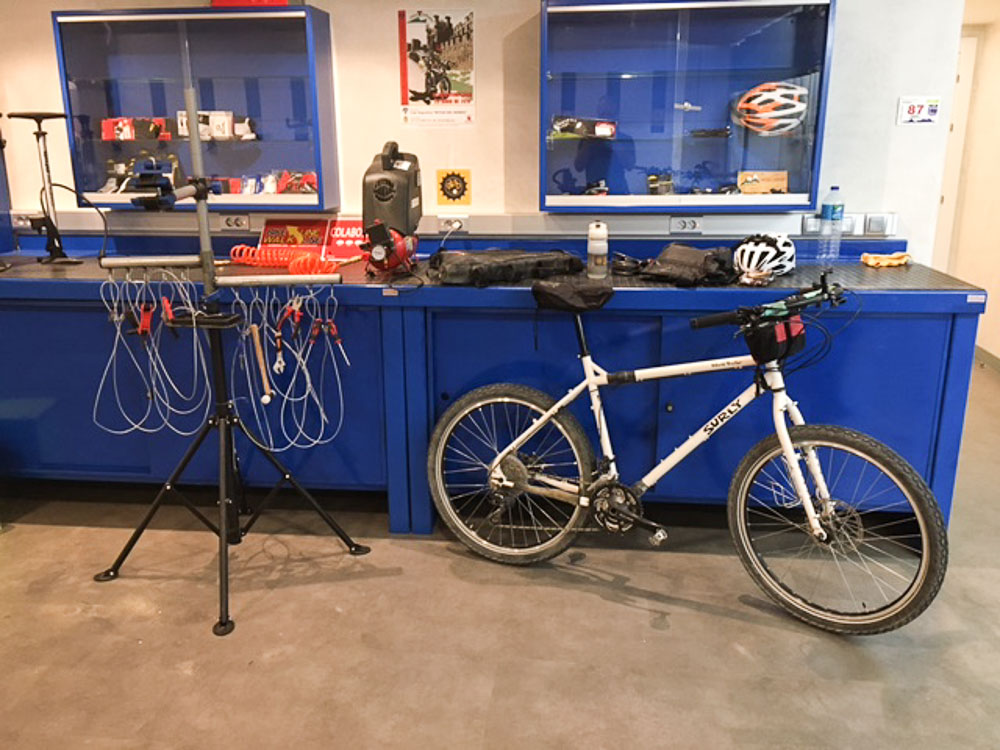
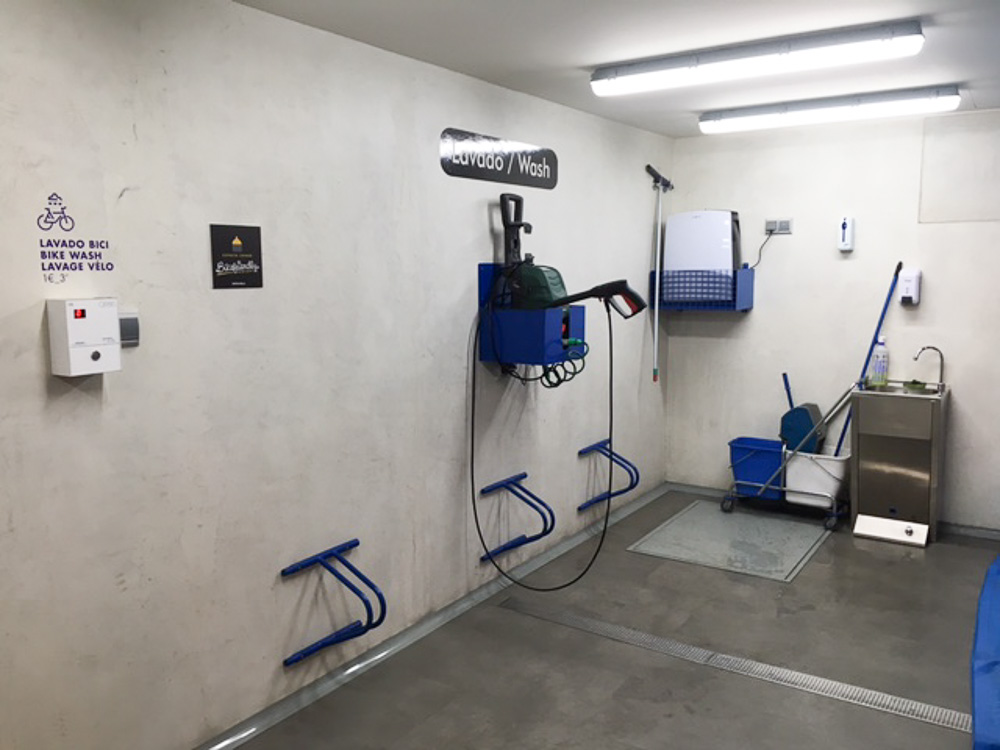
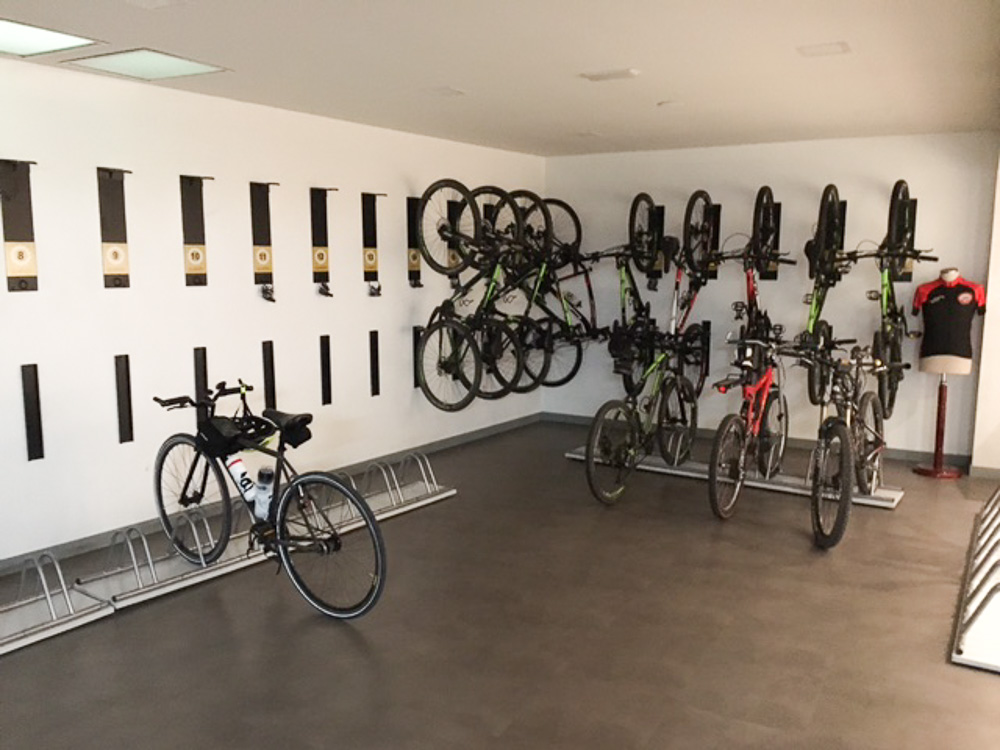
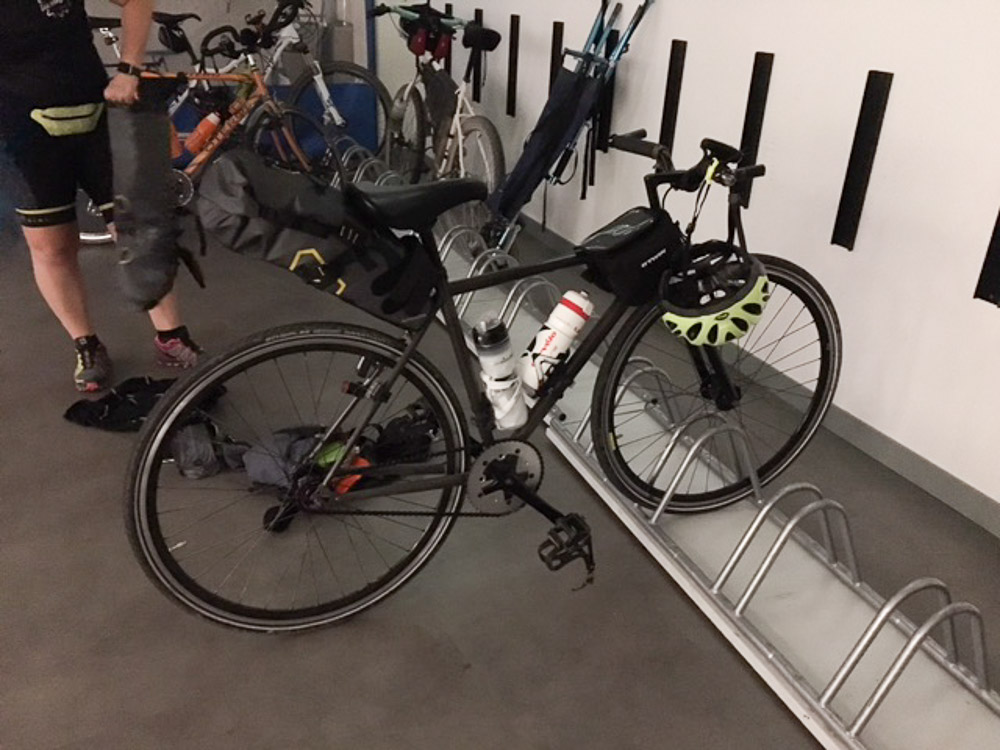
The rest of the ride was a breeze into Ponferrada, where I am staying at Albergue Guiana, which has quickly become one of my favorites on the Camino Francés. The big variable in albergues for cyclists is secure bike storage. Most advertise an enclosed space inside the building, but this one outdoes them all. Not only does it have a basement garage only for bicycles, the room also has a bicycle washing station with a pressure washer, two shop stands with tools, an air compressor to get dust off the bike, and even a sink with degreaser and a foot pedal. I think this wins best bike albergue hands down! After taking some time to use the facilities, my bike looks and feels great again, ready to finish the route to Santiago.
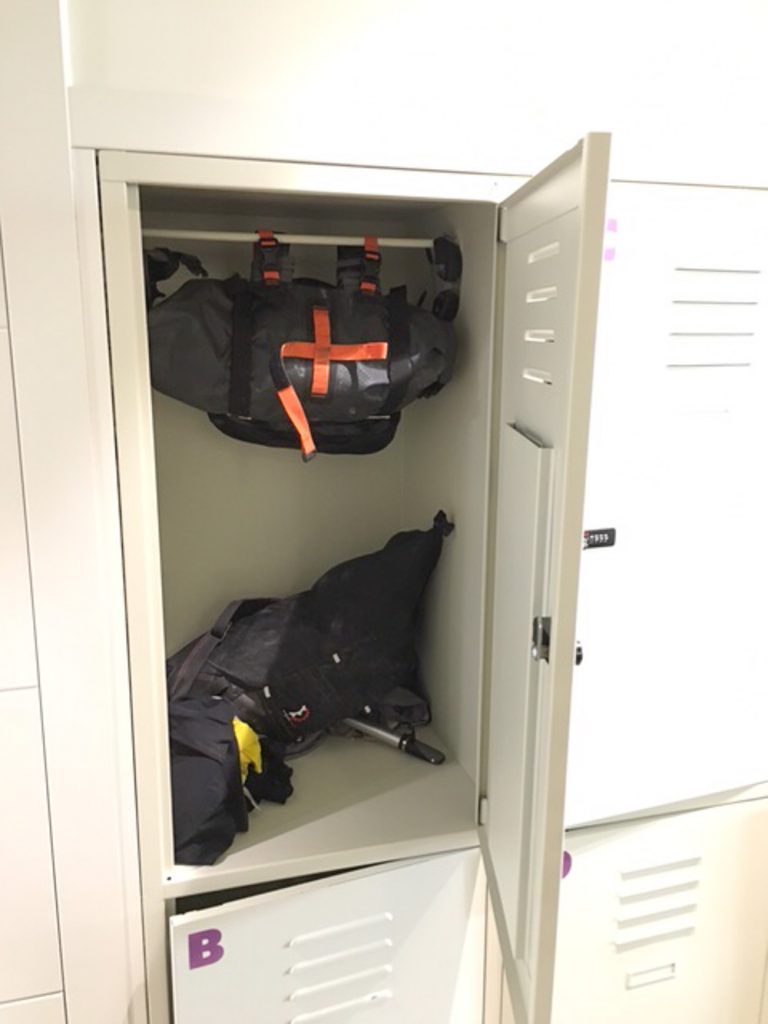
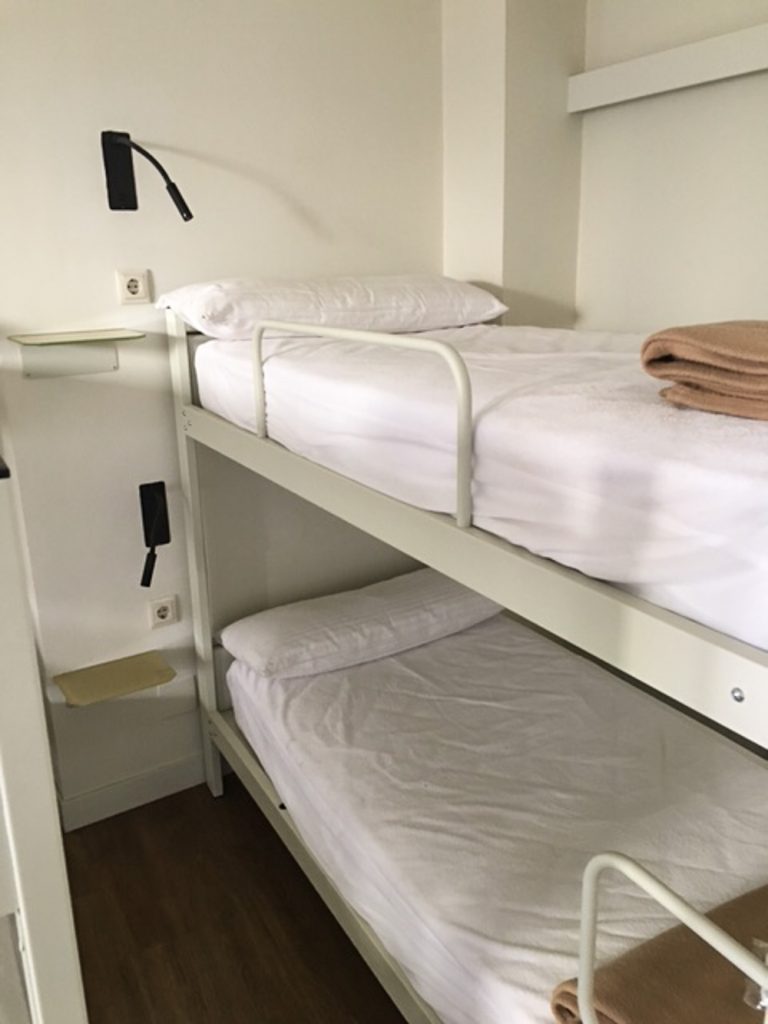
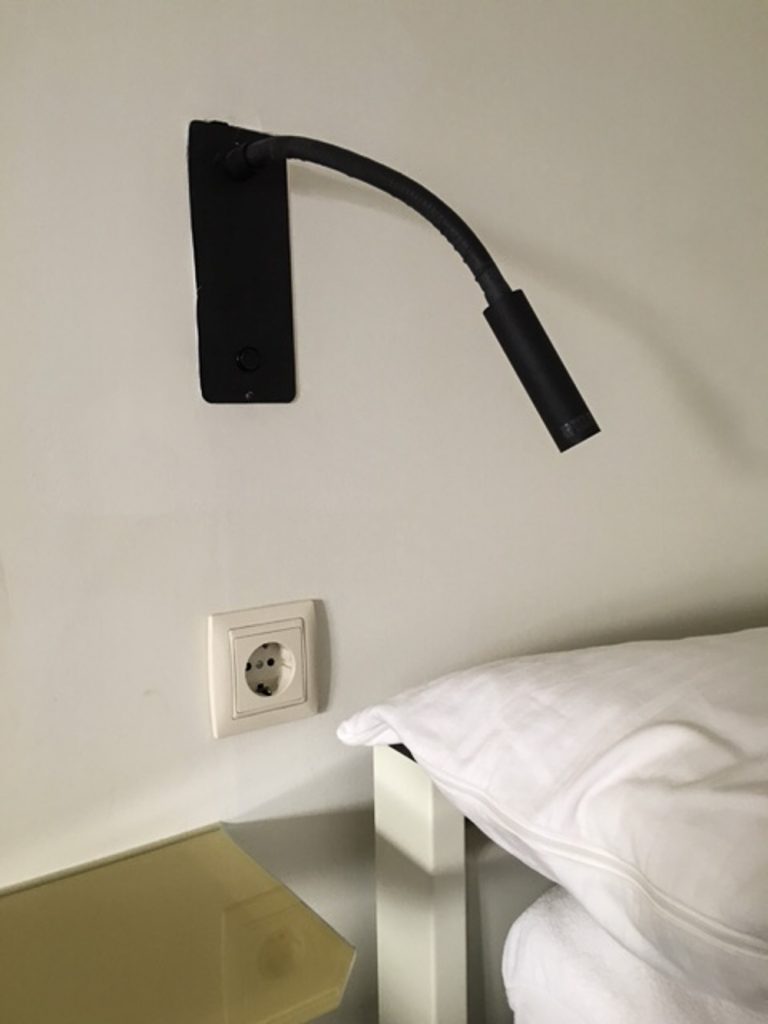
The albergue also does many little things well, like having an outlet and small shelf next to each bed to charge your phone overnight, combination lockers, a laundry area with a heater and dehumidifier, and a beautiful lounge and bar area all tastefully decorated. It’s a bit industrial, but really outdoes most others on so many fronts. Especially the other albergue here, which has been one of my least favorite along the way.

img_8423

Clean Surly World Troller at the albergue’s bike shop area.

img_8413

Bike wash

img_8412

Personal combination lockers
img_8410

Disposable sheets and blankets

img_8411

Personal outlet for charging phone near bed

img_8408

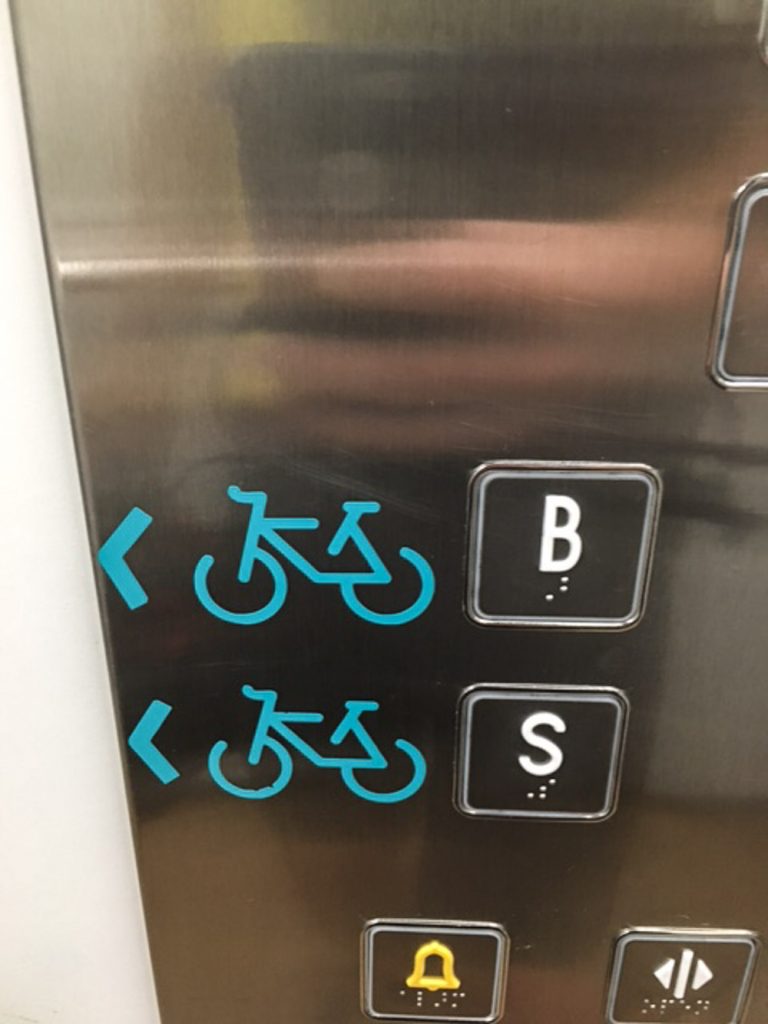
Elevator indicating bike garage floors

img_8405

Bike storage area


img_8406

This fixed-gear bike belongs to a Brazilian woman riding the Camino Francés. She says her knees hurt.

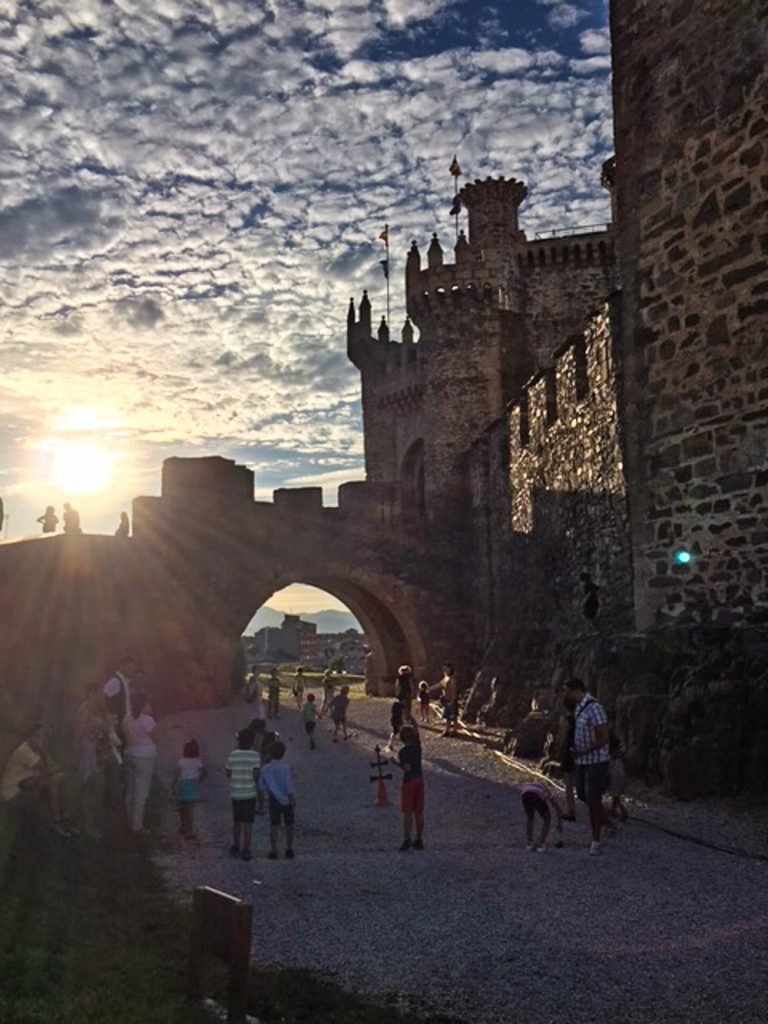
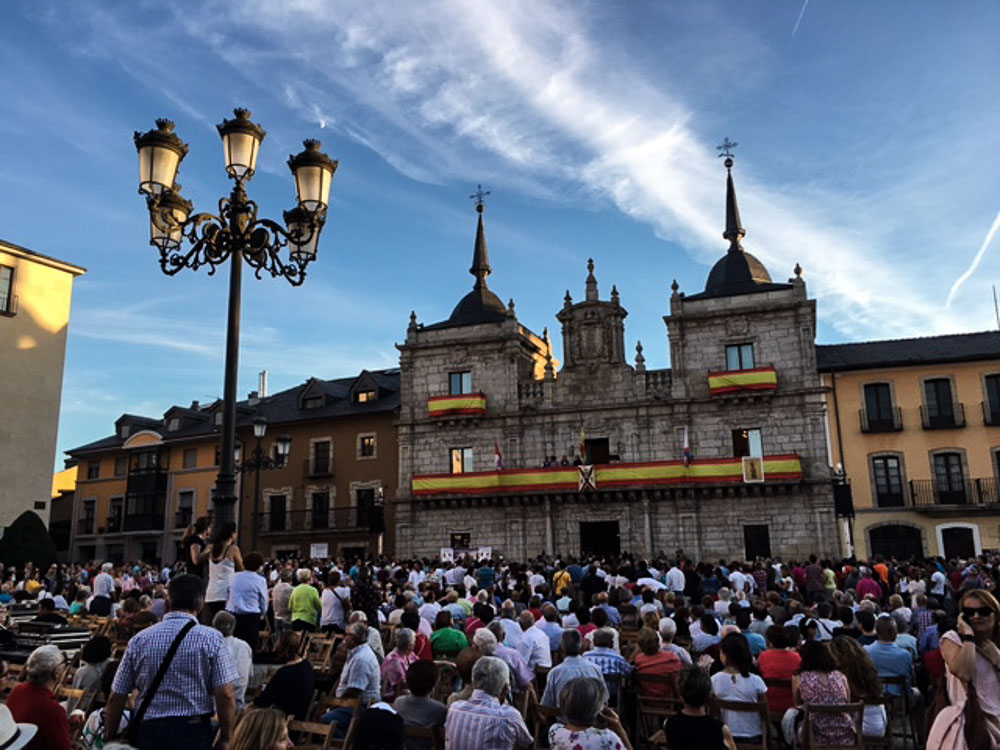
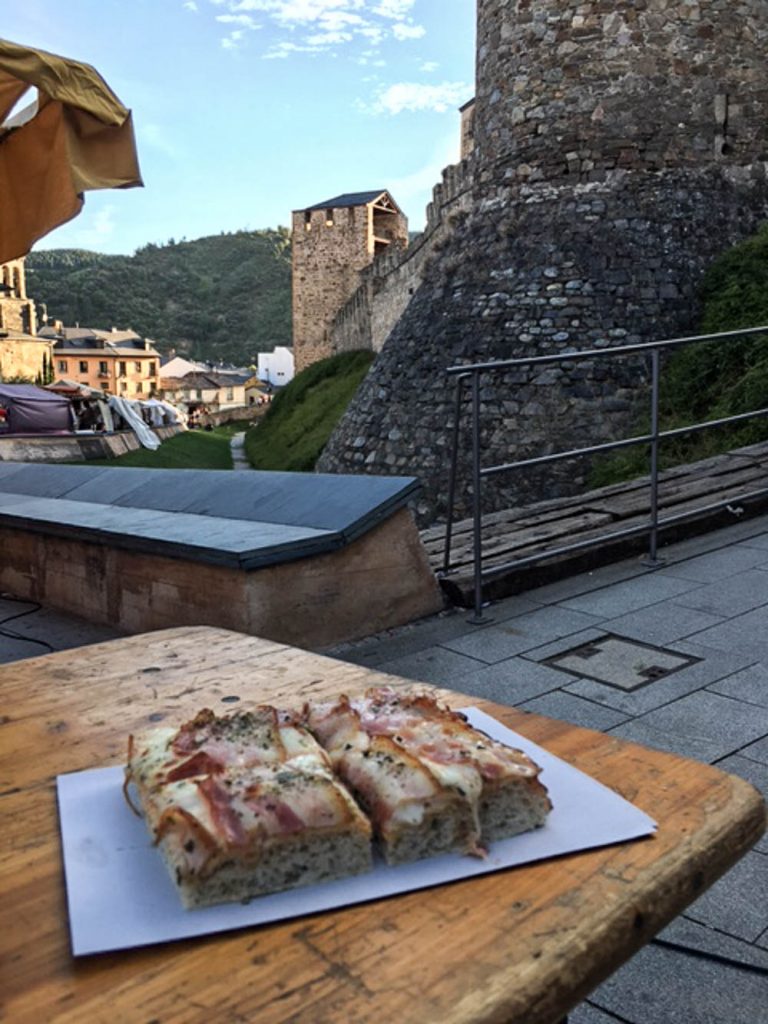
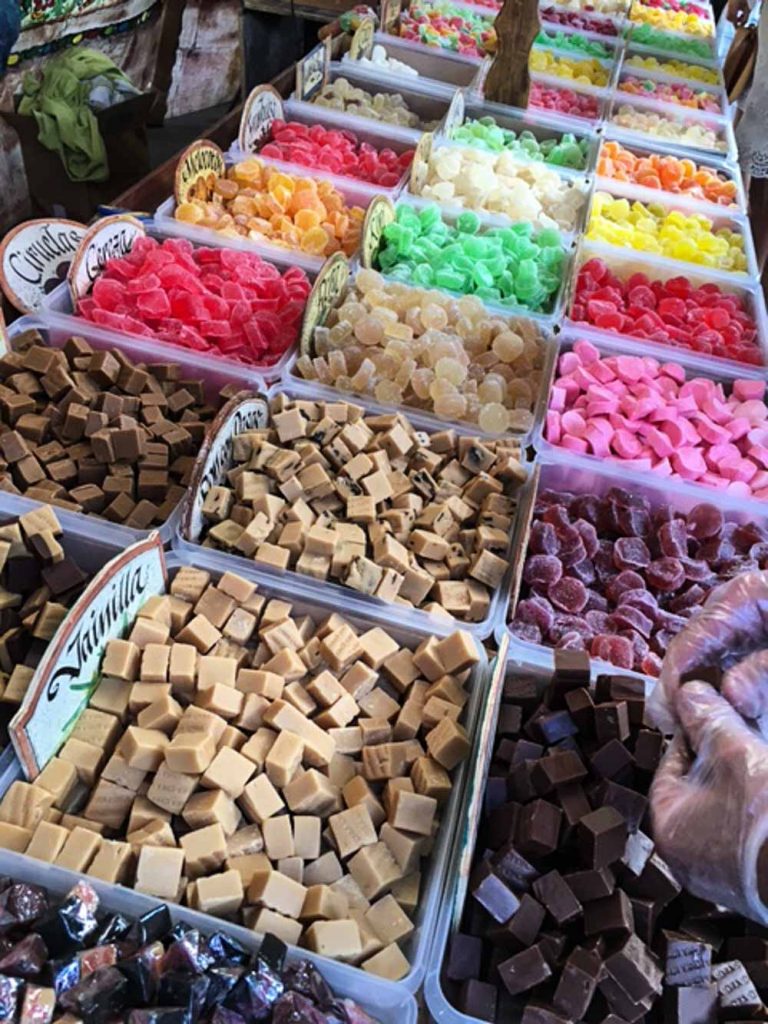
By coincidence, there is a big festival here tonight with many artisan stands near the Templar Castle, local music, a lively vibe spreading between the city’s plazas. Eating a bacon pizza at the foot of an epic castle is a great way to round out the day with a little culture after the spectacular vistas from the mountains.

img_8430

Templar Castle

img_8436

Festival

img_8435

Bacon pizza for dinner

img_8433

I’ve decided to try and get to Santiago in three days instead of the planned four, as the fourth day has a major rain storm in the forecast (more than 1” of rain and high of 65F). The days have been fairly short and easy, and I’d rather take a rainy day in Santiago and catch up on some work before heading off to Finisterre.

Day 8: León & Astorga (Mansilla to Astorga)

Distance: 50 mi / 80km

Climbing: 2024 ft / 617m

2016-09-08-09-40-23-1

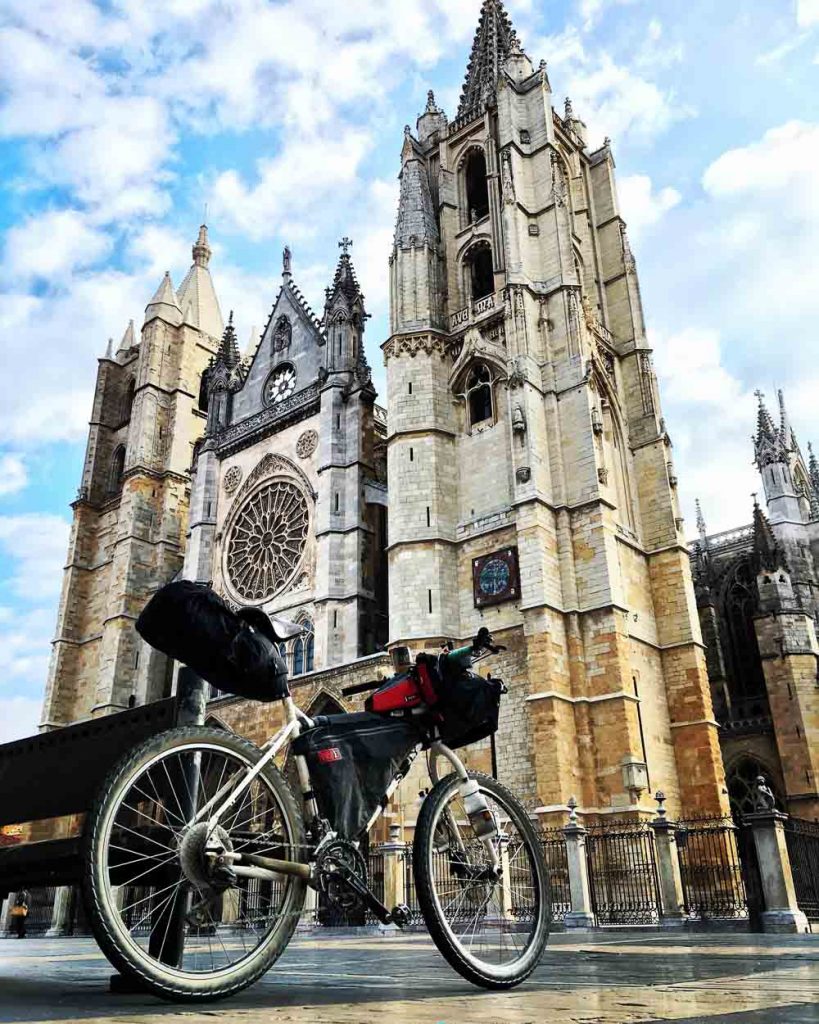
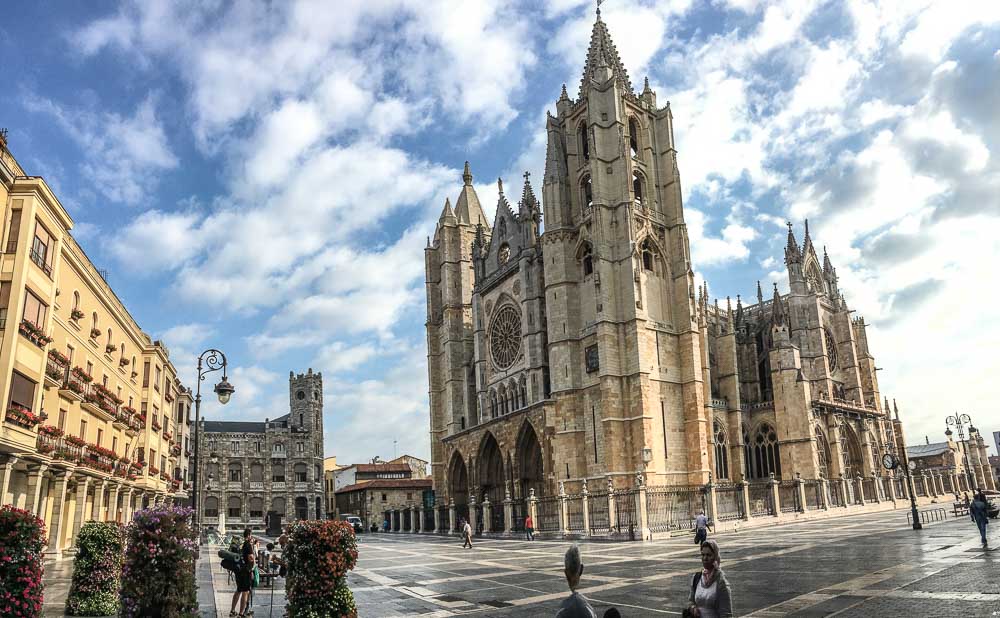
Taking in the León Cathedral


Another 50 mile day to Astorga ends the Meseta section of the Camino. It’s hard to imagine that it only takes 3 days to cross what has been at least 9 days walking on previous trips. Today’s highlights were visiting León early in the morning and watching the streets fill with life around the cathedral, and starting to feel the land roll again with hills, cresting in the view over Astorga at the end and ridges of the Cantabrian Mountains to the west.

Tomorrow I will cross over the highest point of the Camino Francés, even a bit higher than the pass on the first day over the Pyrenees. The approach is quite gradual, mostly between 2-4%. From here on out, it will be up and down until I reach Santiago, and then on to the Atlantic coast.

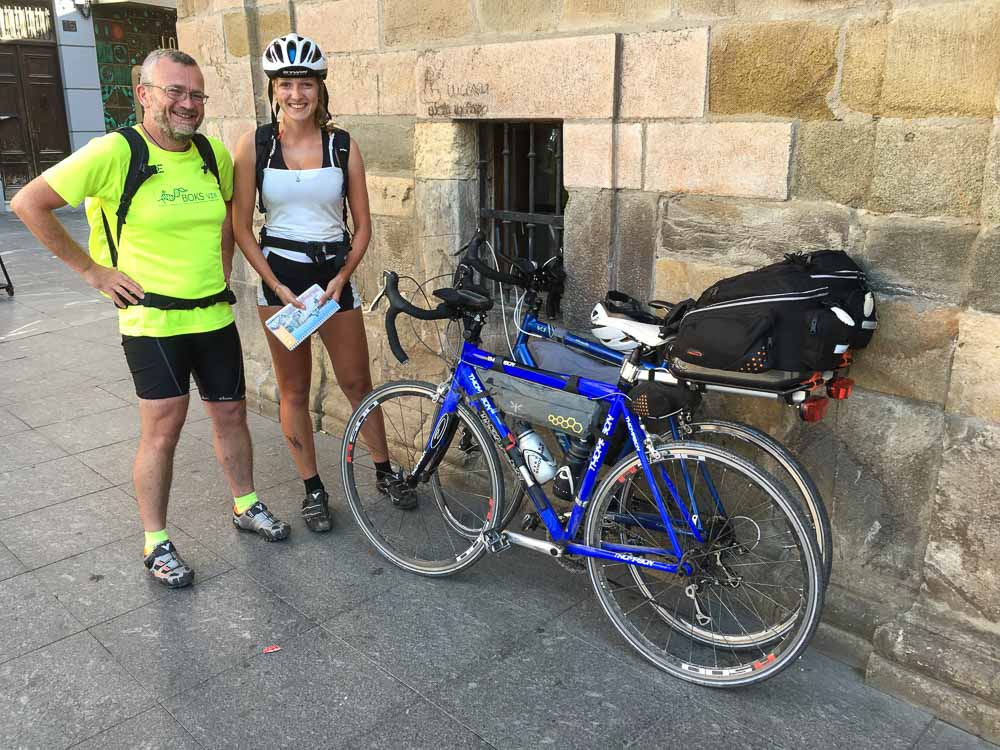
I met two pairs of cycling tourists today that each rode from their respective homes in Belgium and the Netherlands. The Belgian father and daughter had been on the road for about three weeks, and the Dutch couple quite a bit longer. It was fun to compare their gear setups and hear about their journeys.

2016-09-08-09-17-12

Dutch bicigrinos David & Agnes have been on the road for a few months, starting from their home.

2016-09-08-17-03-02

Belgian bicicgrinos

2016-09-08-16-53-11

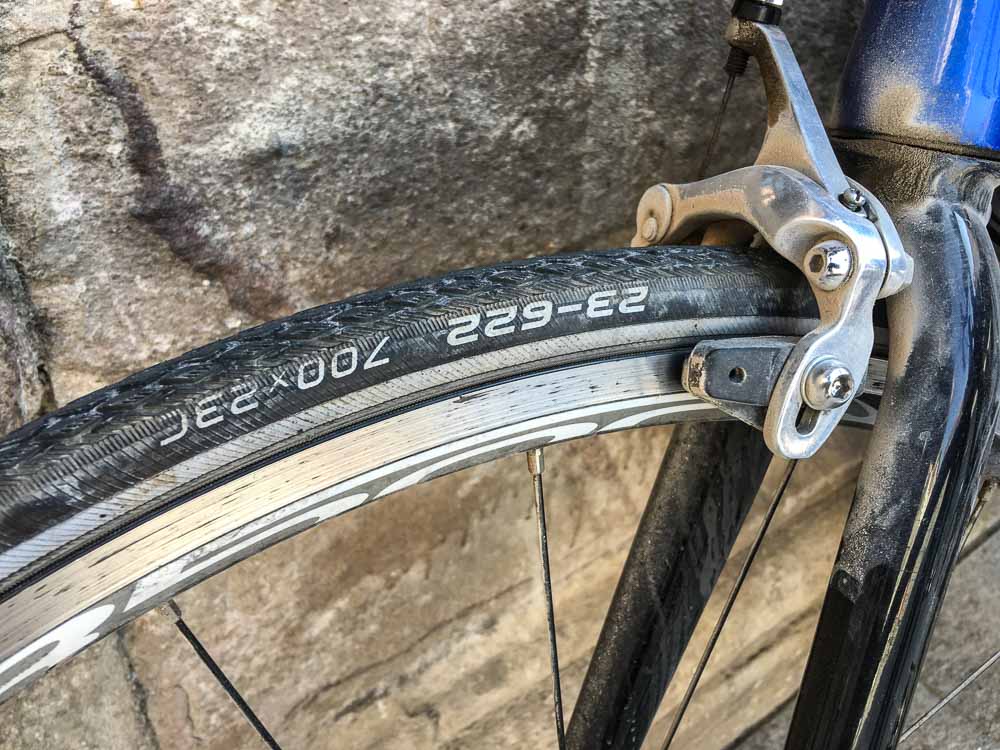
I keep encountering these Schwalbe Marathon 700/23c with amazing reports.

I forgot how amazing the Leon Cathedral is, as well as the city around it. There is something about Leon that is more open than Burgos, more alive and less touristy. I wish I would have had more time to explore, but I feel with my pace given the research work, it’s good to usually keep going.

2016-09-08-09-37-34


2016-09-08-09-25-37

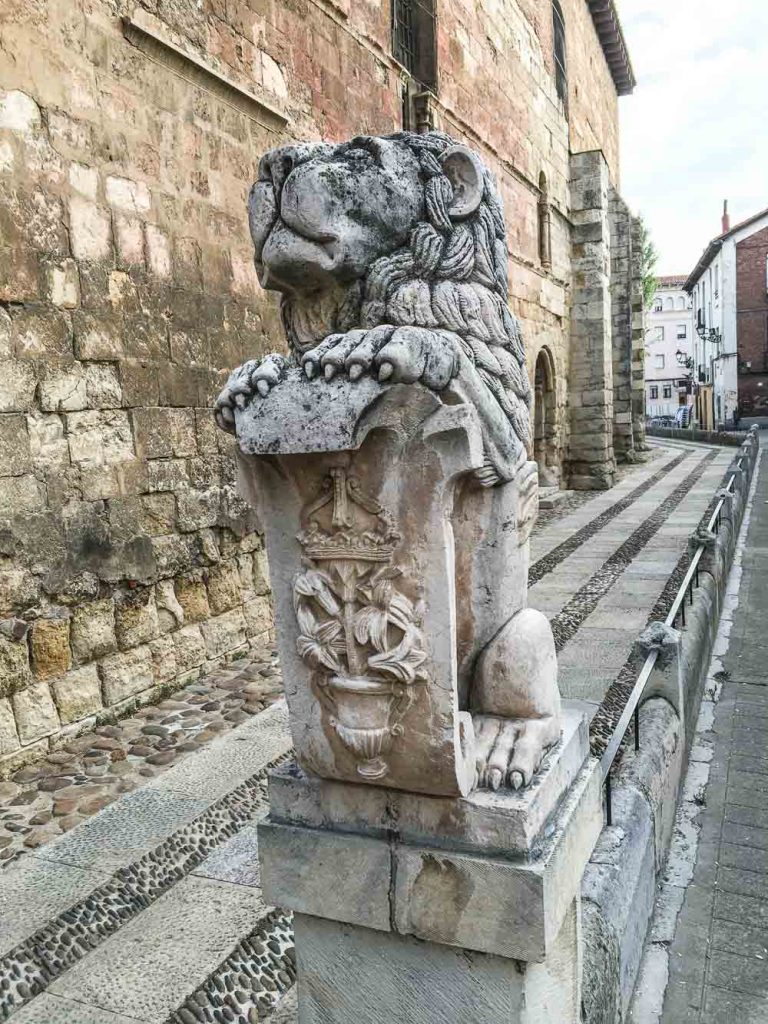
Lion in León

2016-09-08-08-44-08

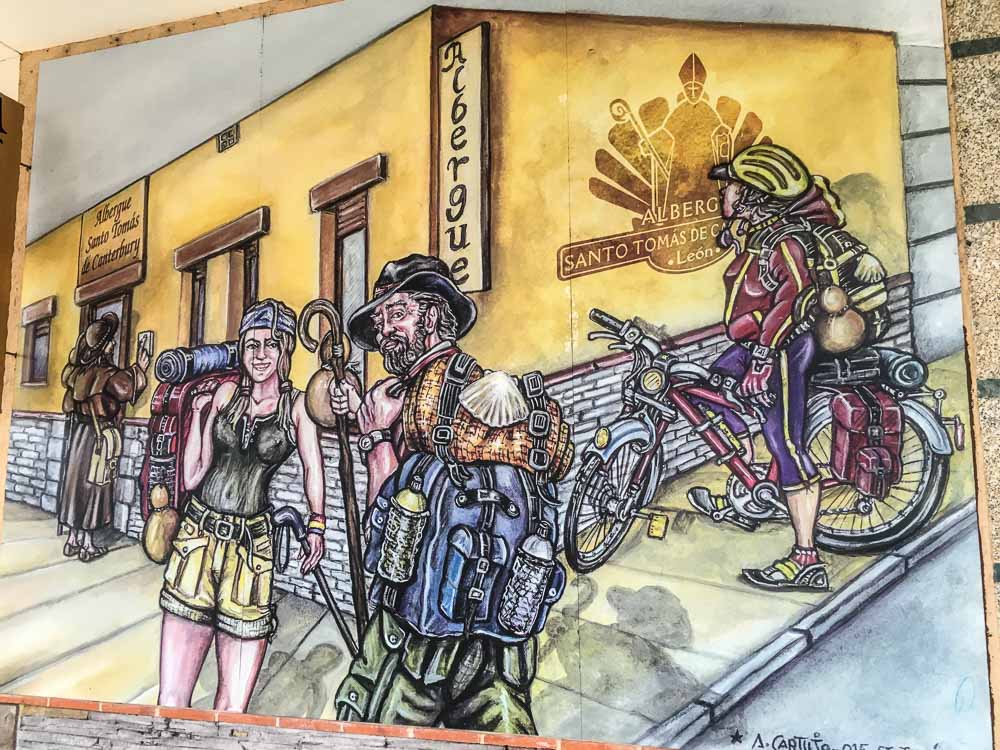
Mural at albergue just entering León

2016-09-08-10-19-18

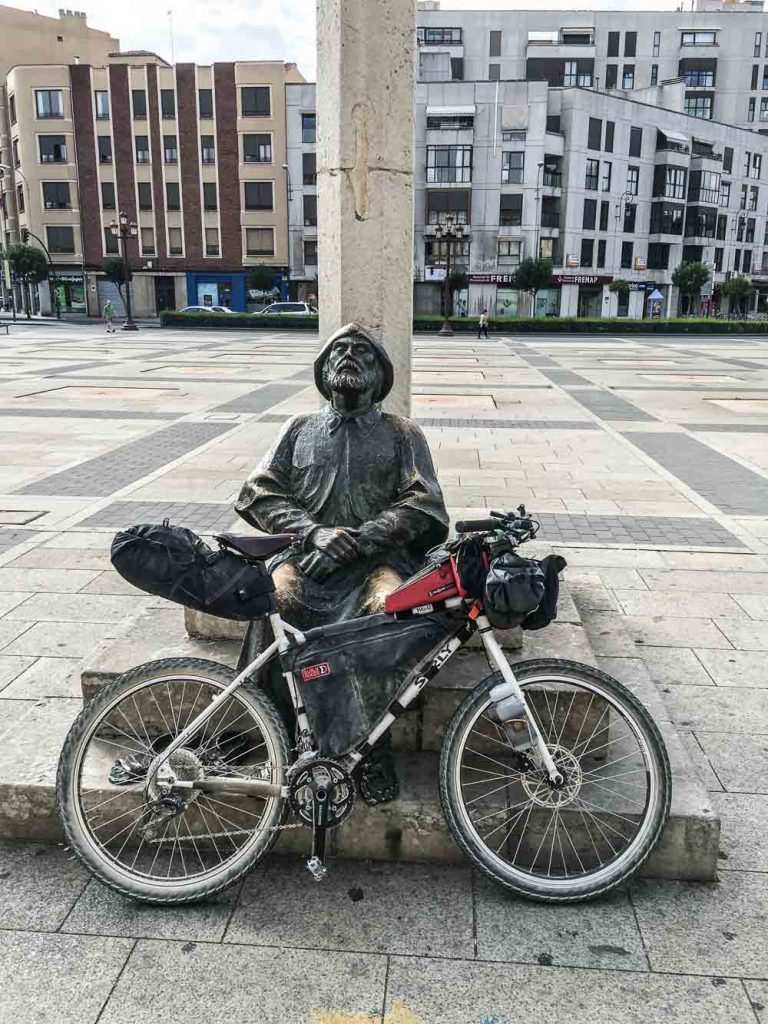
Pilgrim statue at plaza near San Marcos in León

2016-09-08-13-03-16

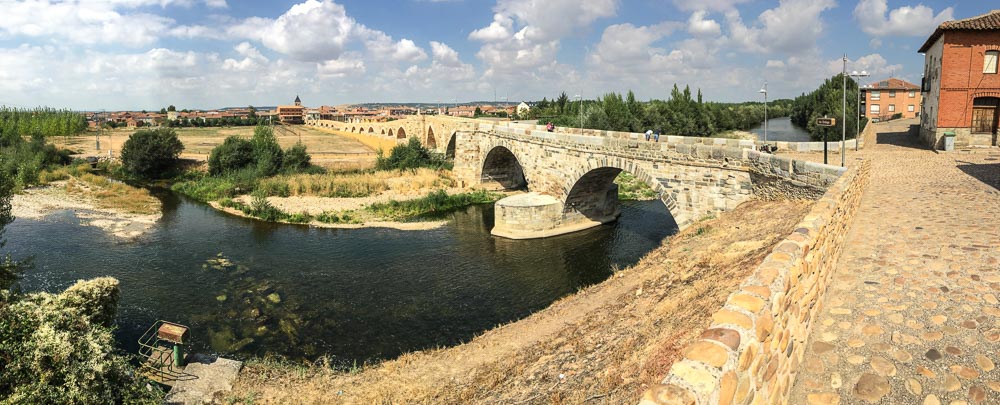
Epic bridge at Hospital de Orbigo


2016-09-08-14-21-40

End of the climb before descending to Astorga, Cantabrian Mountains in the background.

2016-09-08-17-20-32

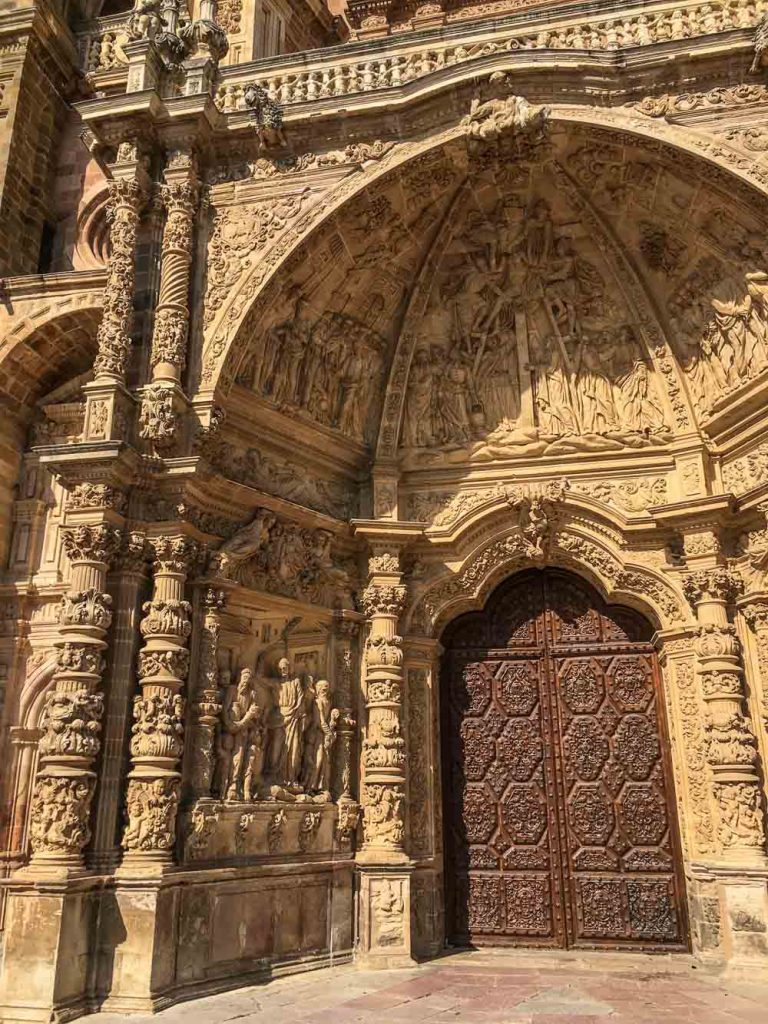
Cathedral in Astorga

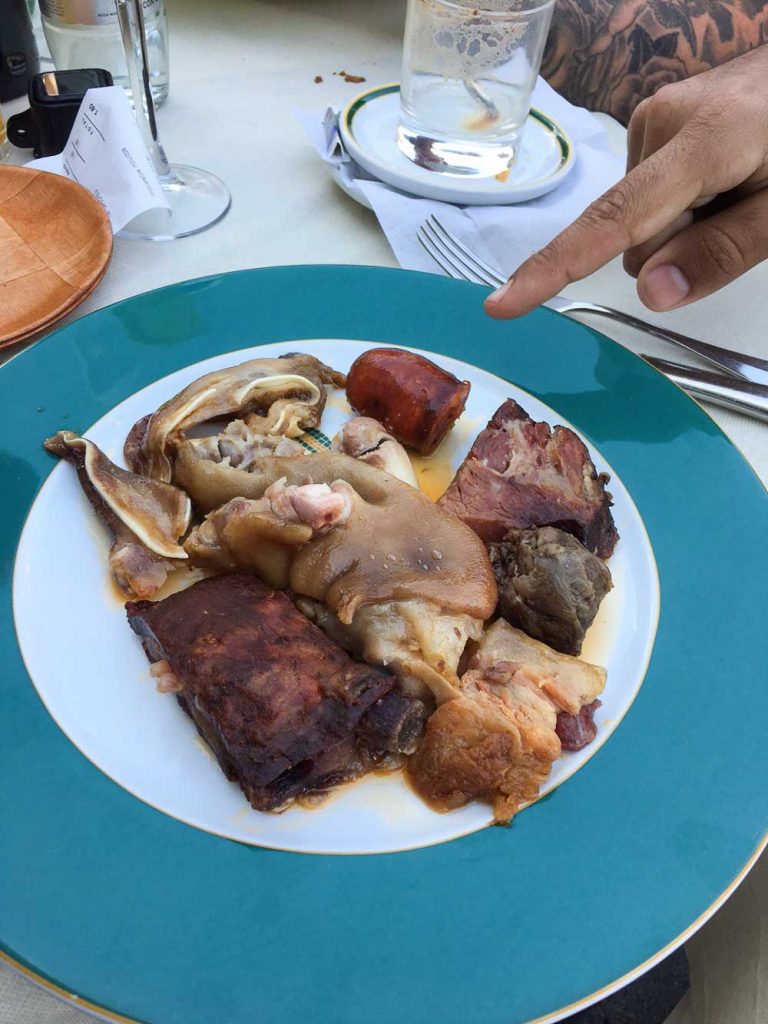
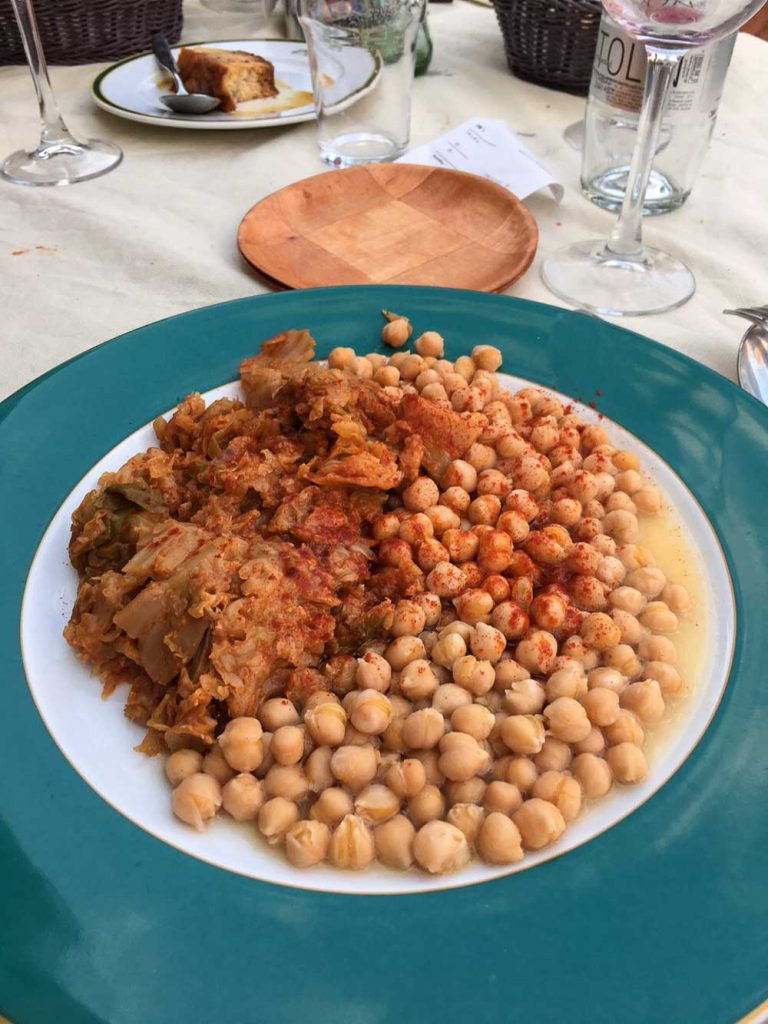
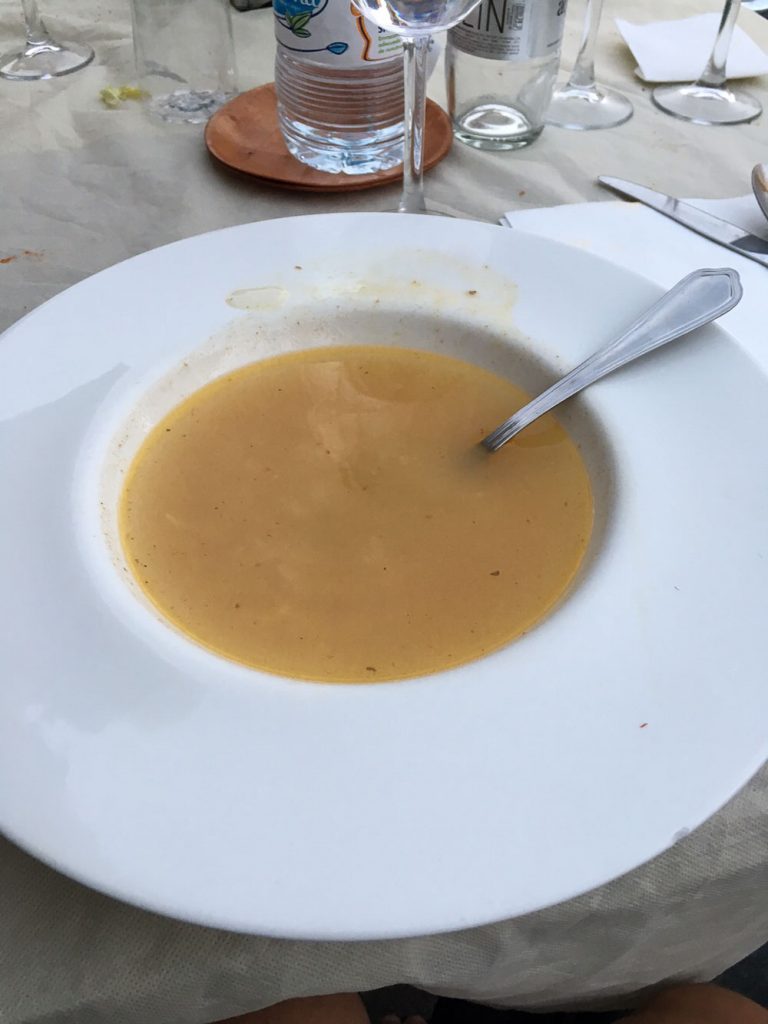
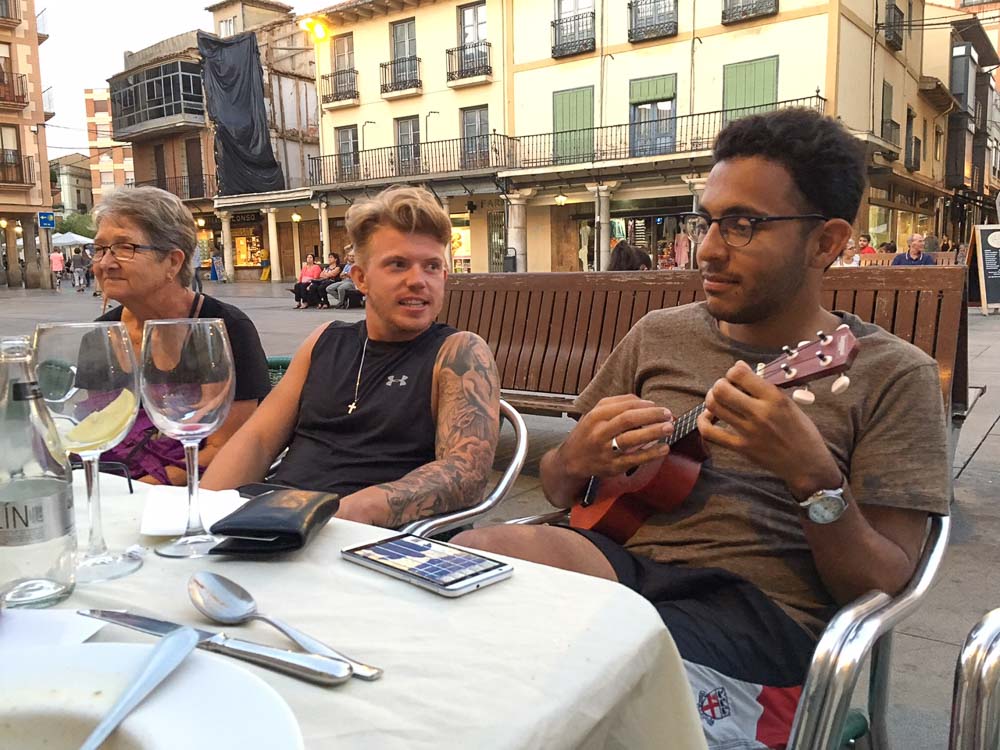
One highlight of the day was a long dinner of the local specialty Cocido Maragato featuring a variety of meets, with a suprising addition of pig’s foot (I’ve never had this before and it wasn’t that good)! See the three courses pictured below. The meal was followed by a few songs on the ukulele by a French cycling pilgrim.

img_8323

First course: meat

img_8324

Second course: garbanzos with cabbage

img_8325

Third course: broth made from the meat

img_8326

Fourth course: ukulele

Day 7: Powering across the Meseta (Carrión de los Condes to Mansilla de las Mulas)

Distance: 51.1 mi / 82km

Climbing: 1,329 ft / 405m

2016-09-07-08-37-57

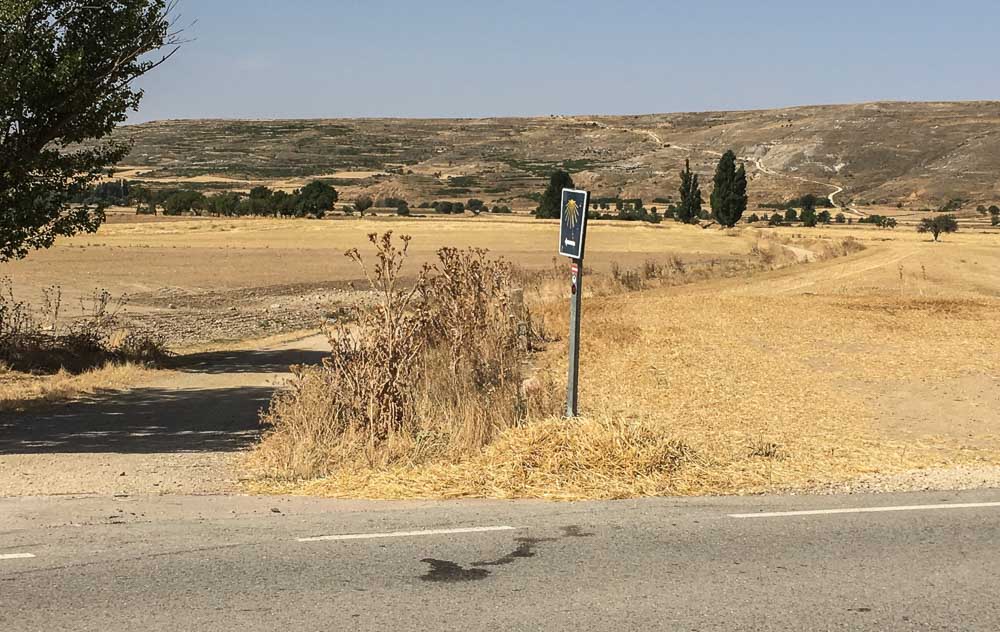
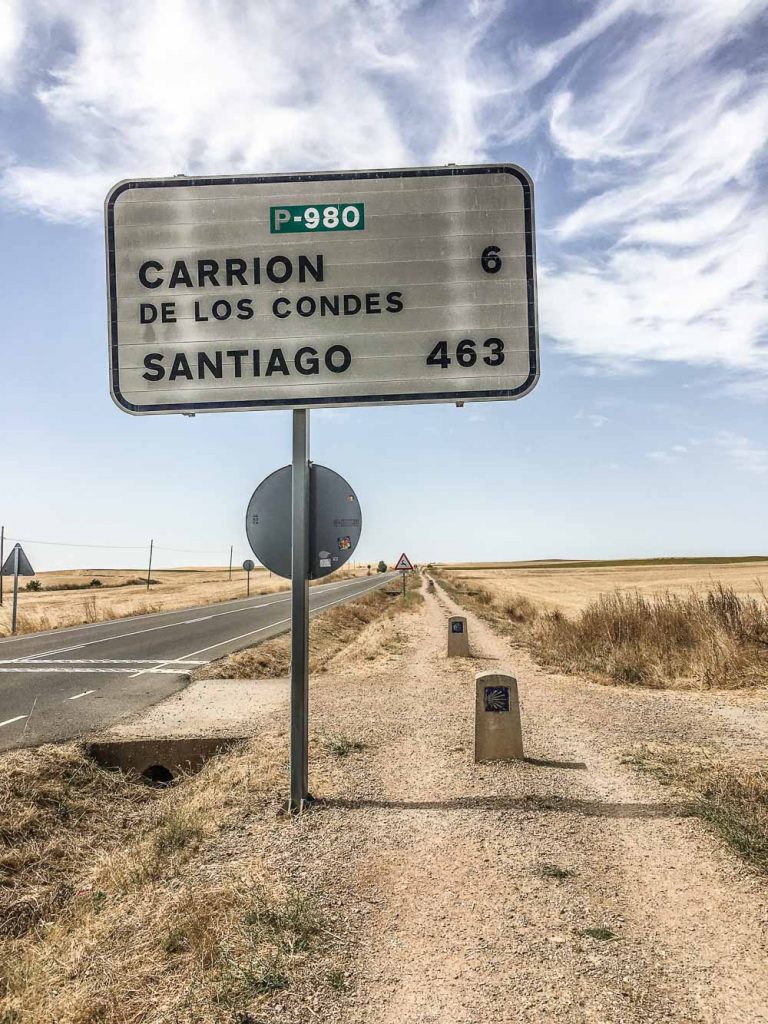
17km stretch without services after Carrion

I’m over half way to Santiago! The kilometers really fly by when it’s flat.
From a bike touring perspective, this is one of those flat days on a long distance route that you just push through to get to the more interesting parts. I covered three walking days of distance and still finished soon after lunch. If it wasn’t almost 100F and the last day of a heat wave, I probably would have pushed on to do more. I had a stiff head wind the last 25km too, which made me ready to get in and done. Tomorrow the temperature is a high of 77F with a little tail wind, so I figured I’d leave my final Meseta day for tomorrow and get to Astorga.

This day has two options, and I decided on the traditional one that does not follow a Roman Road. The route I took is recommended for cyclists, and the walking path is directly alongside a quiet road, so it makes sense to just ride the road and leave the walking pilgrims alone. There is a line of shade trees lining the walking path, and if you ride against the traffic and the sun is right, you can benefit a little from these trees. The Roman road has a bit of cobblestone, which is supposed to be annoying for cyclists. Since both routes are somewhat monotonous, I think the consensus is just to get through it faster on the quiet paved road.

Both Sahagun & Mansilla are interesting towns with a variety of cultural and historical sites, so it’s worth taking the extra time to visit the churches and museums and take a break from the bike.

In contrast to Carrion, Mansilla feels quite empty. The heat and siesta hours empty the streets, but at night people come out for a 10pm dinner. I had a nice evening talking with an American father/son and Danish mother/daughter combo who were both walking the Camino together, one in full and one over a few years.
2016-09-07-08-13-46

Theme of the day: parent/child Camino combos… gets me thinking for the next few years.
2016-09-07-10-16-19-2

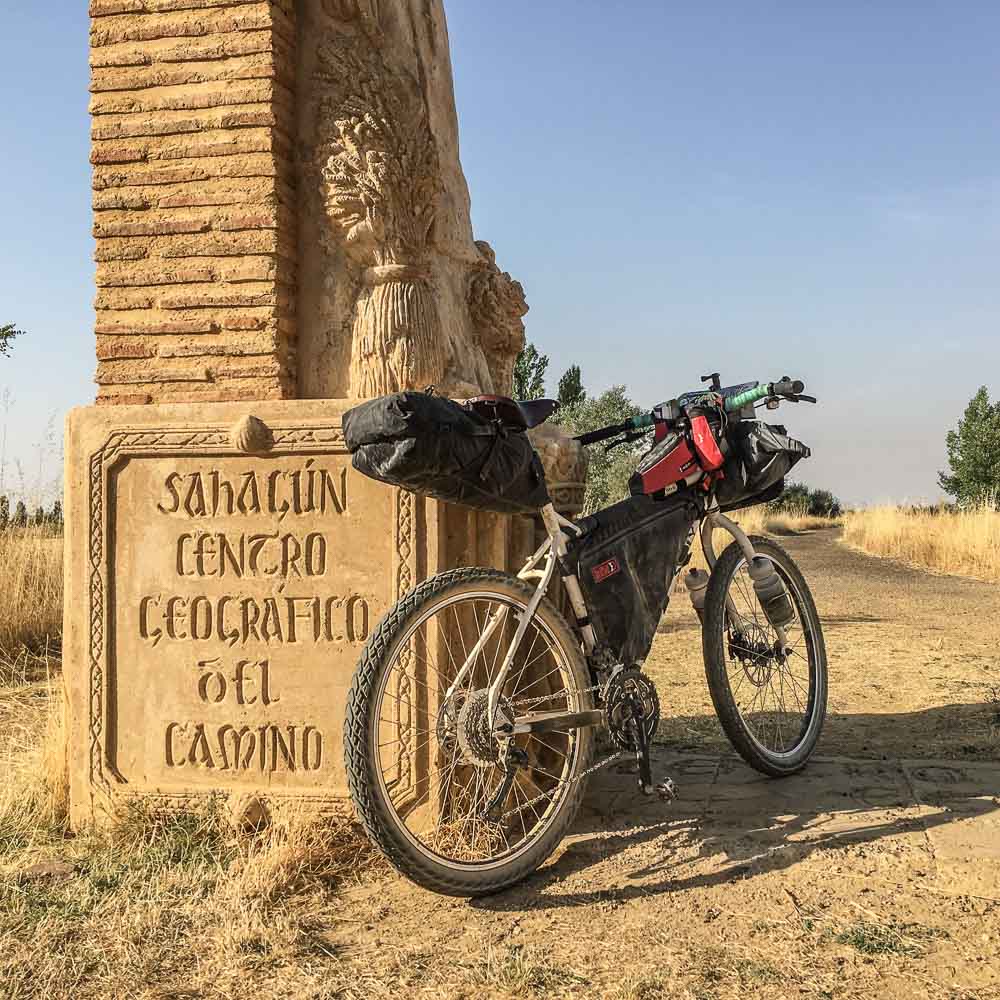
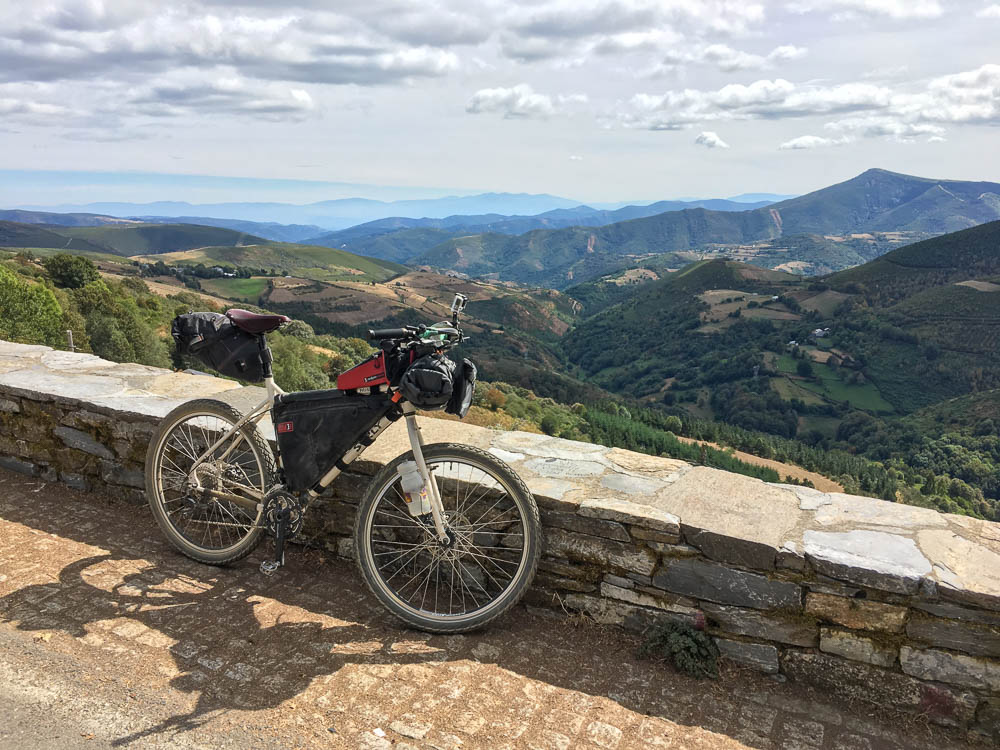
Half way to Santiago – Sahagun is the geographic center of the Camino.


2016-09-07-11-52-46

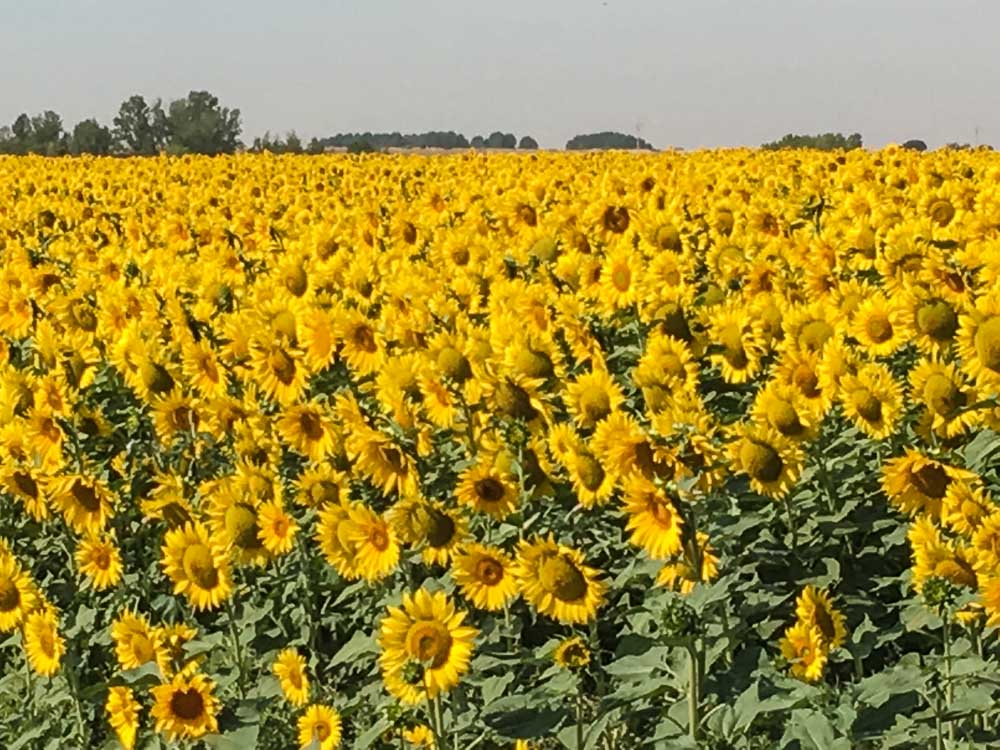
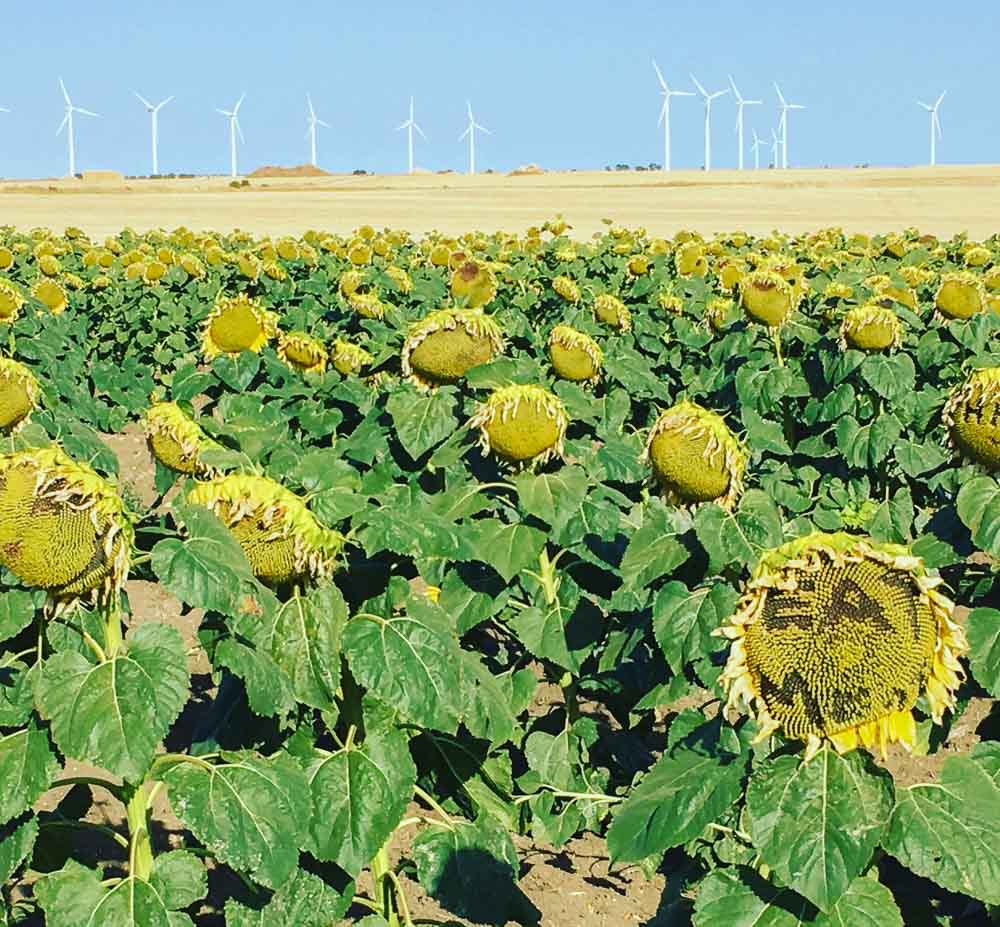
Sunflowers after Sahagun
 

Day 6: Entering the Meseta (Burgos to Carrión de los Condes)

Distance: 57.2 mi / 92km

Climbing: 2,277 ft / 684m

2016-09-06 09.23.23

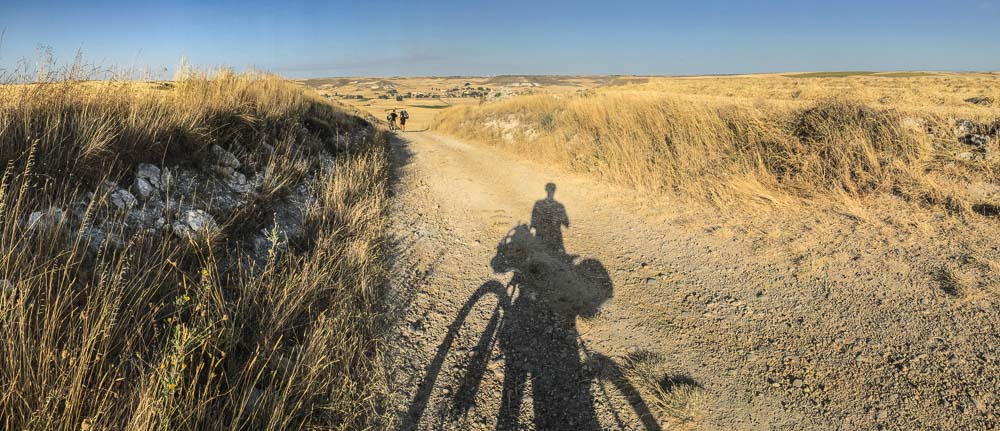
Shadows are tall, especially when riding west early in the morning and heading downhill.

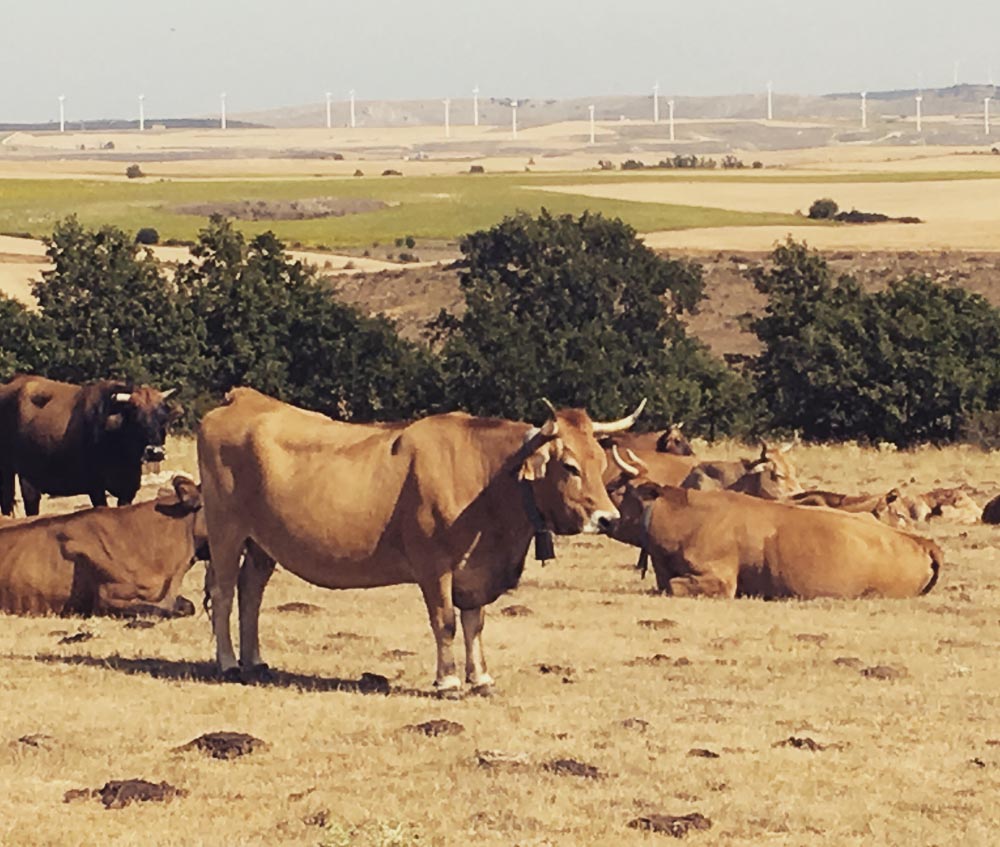
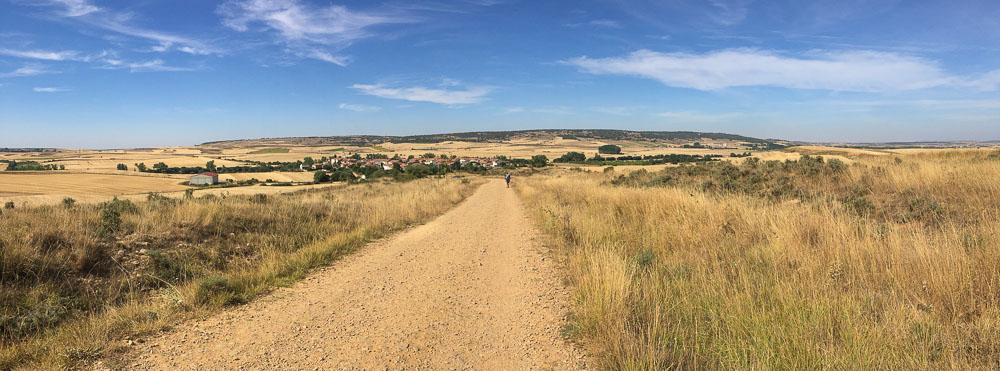
The Meseta section of the Camino runs from Burgos to Astorga, often taking 9-10 days to walk. This section represents the mental challenge of the camino, when the walking is easy- just monotonous with long hours under the hot sun. It crosses the flat part of northern Spain, with many ‘mesas’ passing through fields and areas of very interesting cultural significance (if you take the time to look).
2016-09-06 10.09.08-2

Sunflowers just past their prime, ready for hungry peregrinos.

2016-09-06 09.58.00

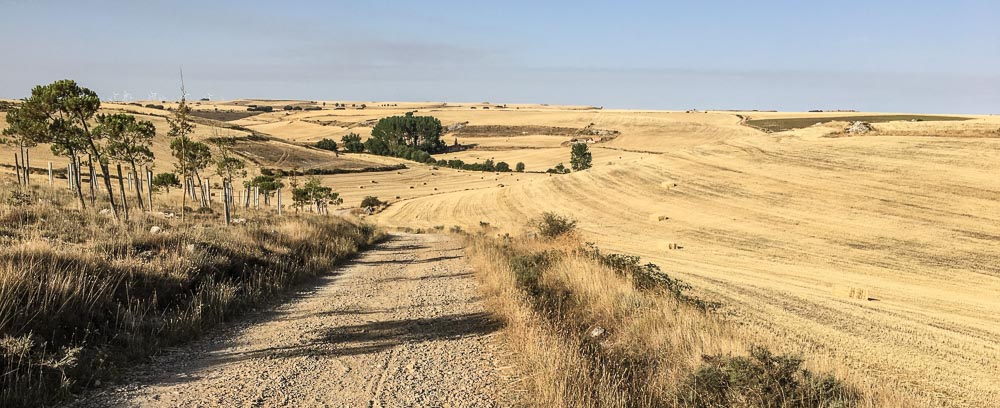
Gentle inclines to enter the Meseta.

Thankfully on a bike, this shortens to three days of mostly flat riding. One down and two more to go. If the route is hilly, I usually try to cover about two walking days worth of distance, but on these flatter sections, it’s easy to cover at least three. Leaving Burgos, there were some gentle grades which were fun to push through, knowing that the path was smooth enough to keep moving and make good time.

2016-09-06 10.45.43

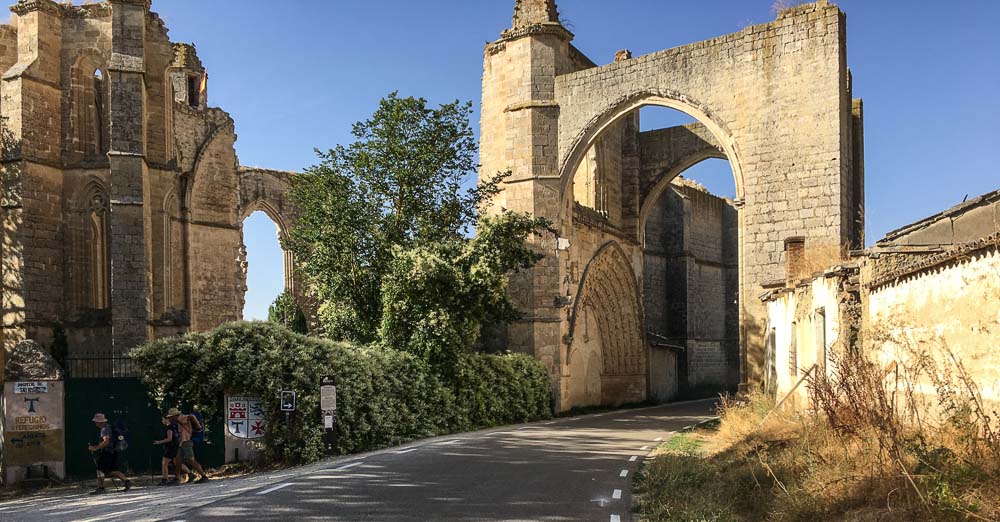
Biking through the Convent of San Anton.

2016-09-06 11.27.12

Meeting two Spanish cycling friends again at a cafe in Castrojeriz. Glad to enjoy some shade in the middle of the day.

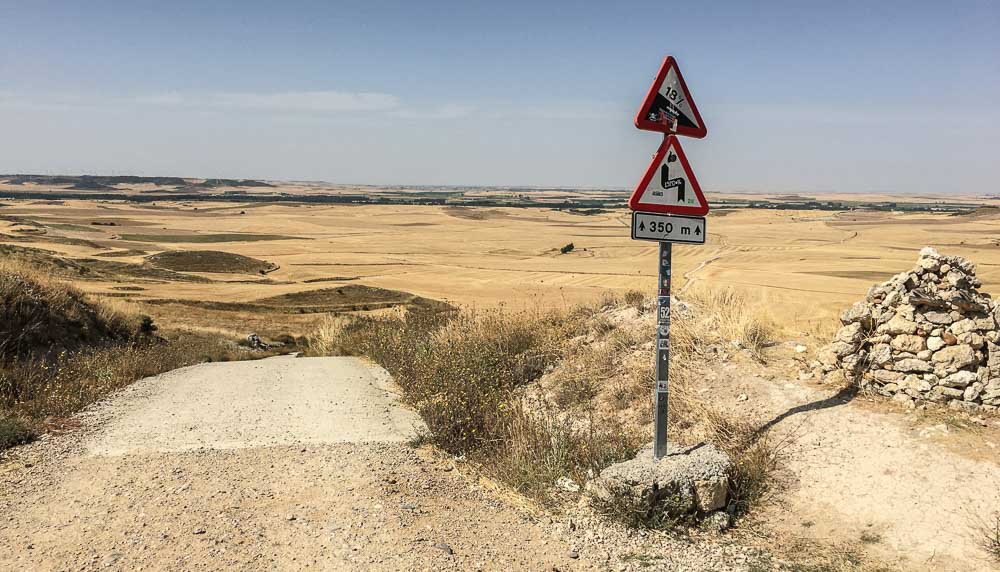
After Castrojeriz, there is a more serious mesa, involving a 12% grade and a 18% down (this side is paved). The incline was called Castrillo de Matajudios, which as more recently been renamed to the less controversial Castrillos Mota de Judios (see Guardian article). There is an option to ride around this hill to the renamed town with the same name.

2016-09-06 12.02.19

Way up the incline after Castrojeriz. See the steep dirt path along the hillside. Turn right on the road to ride around the mesa.

2016-09-06 12.21.44

18% down the incline, paved. It’s not too long and easy to walk if you don’t want to ride. Be careful if it’s raining.

2016-09-06 15.14.44

The way from Frómista to Carrion along the road. I ended up just riding on the pavement as there was no traffic and it felt good to make up some time on a longer day. It also gives the walking pilgrims some space. I’ve noticed that on the Meseta sections, many walking pilgrims have headphones on and are not able to hear my warning bell, even after ringing it a few times right behind them. Be careful if you can’t hear while walking- would be worse when crossing a busy road.

2016-09-06 20.00.52

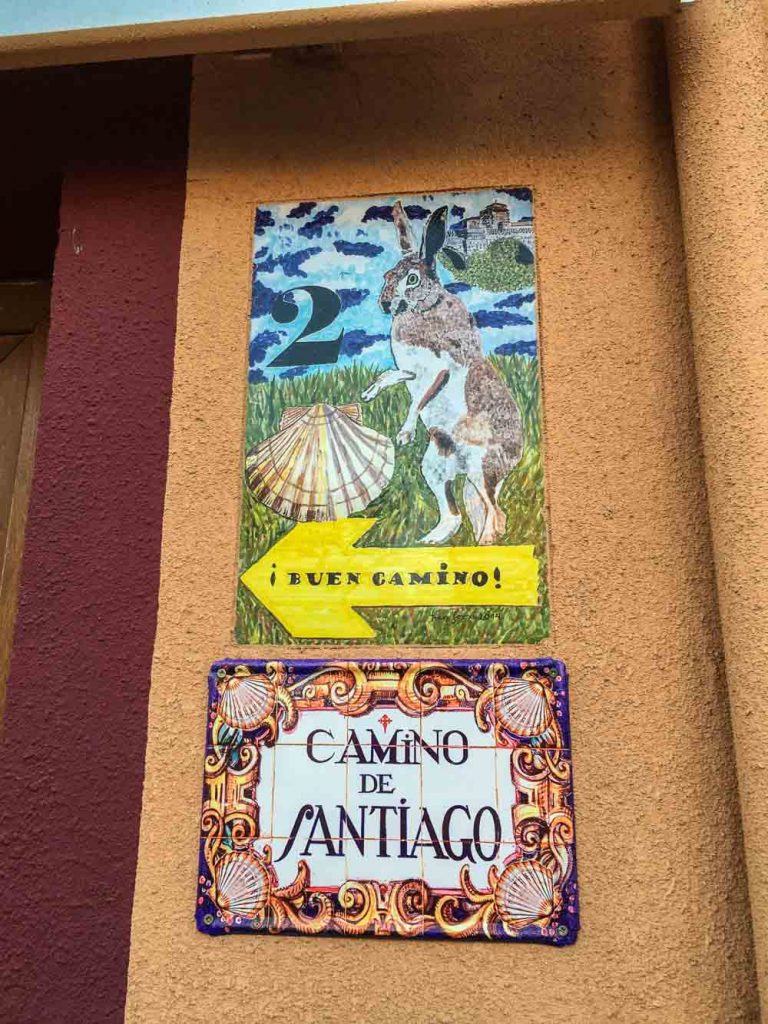
Rabbit Camino art trail marker?

From there, it was easy riding to Carrión de los Condes, a town with three parochial albergues and many nuns. The main albergue, Santia Maria, has famous singing nuns. Unfortunately they were full when I arrived, so I headed up to another farther up the hill and found a great value of private room/bath with dinner and breakfast for 28 euros). The dinner was fresh produce and eggs from their gardens, and I enjoyed the conversation with pilgrims from Madrid and the west coast of France. Between the crossover of three languages, we were able to translate and communicated. The albergue in the convent (Nuestra Señora de Belén) seems to not be well known or advertised.

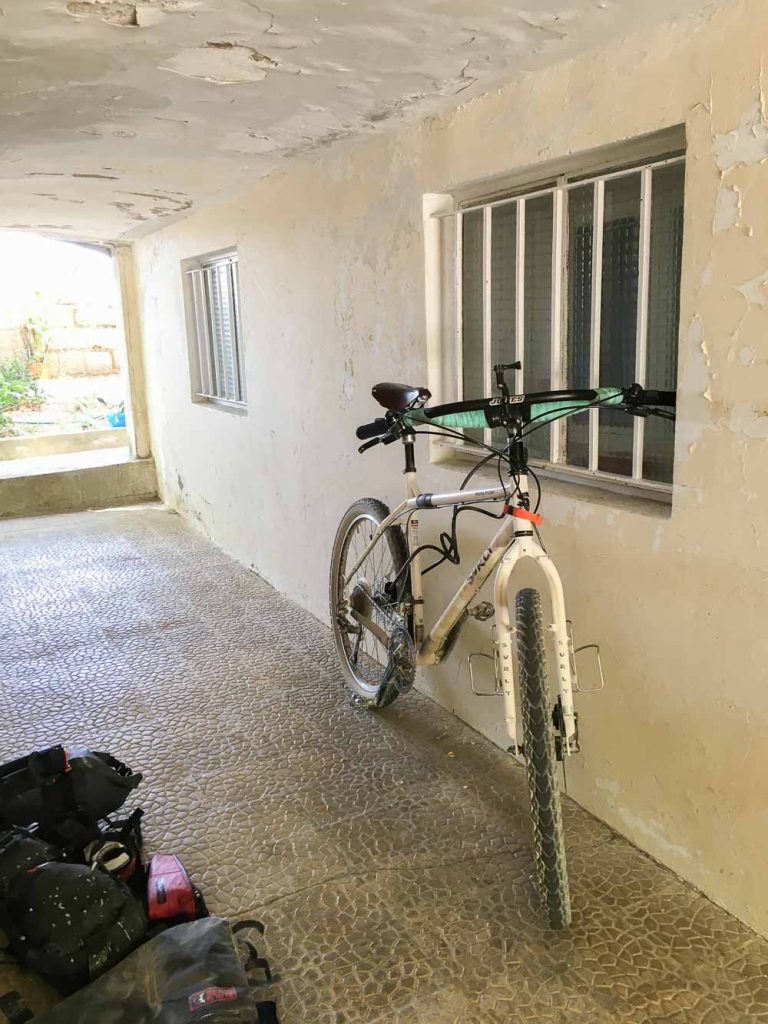
This is an example of an albergue that advertises ‘enclosed bicycle storage’ and sort of has it. My bike ended up locked to a window gate in a tunnel under the main stairway into the convent. The bike is well hidden from the street, but is accessible during the day without having to enter a locked door. I felt ok about it, but thought it’s worth noting. The main albergue, Santa Maria, also has a place to store bikes.

2016-09-06 16.04.10

“Enclosed Bike Storage” in the tunnel

2016-09-06 19.46.40

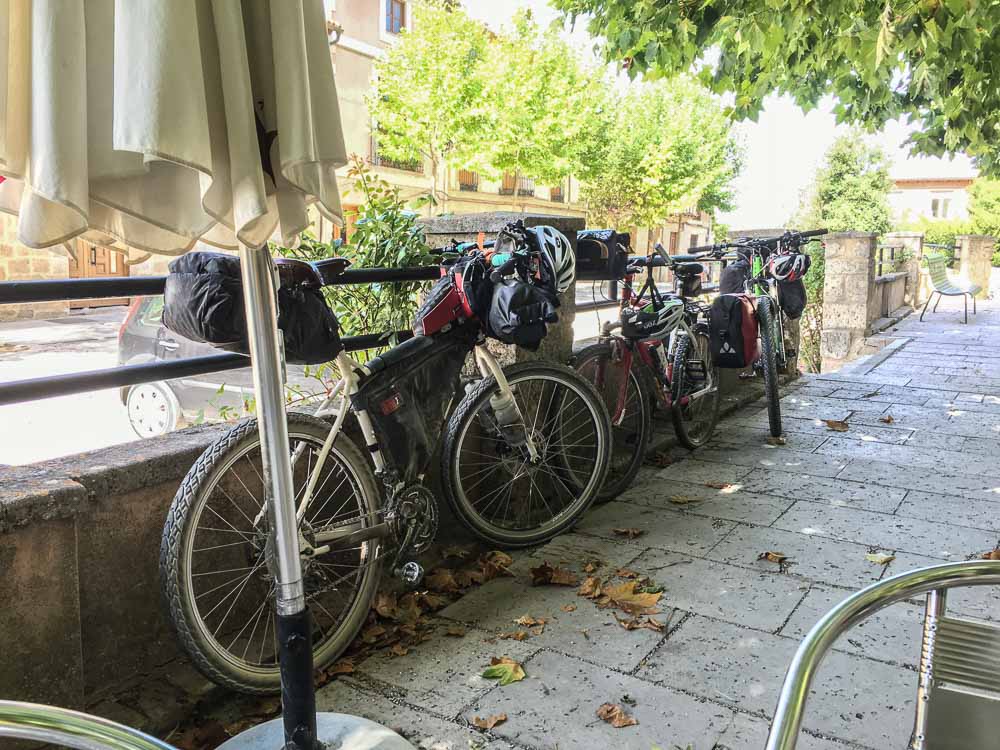
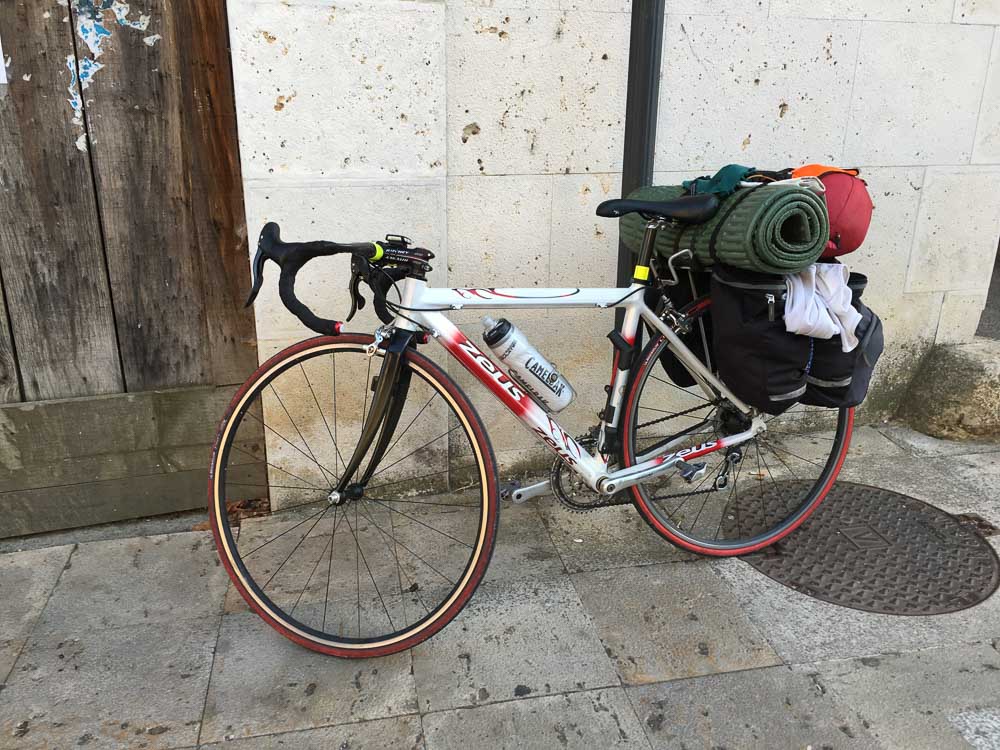
Road cycling pilgrim setup in Carrión de los Condes


Day 5: Easier riding (Belorado to Burgos)

Distance: 35 mi / 56km

Climbing: 2,224 ft / 677m

I enjoyed a relaxed morning at El Salto in Belorado with a wonderful breakfast prepared by Pepe. The weather was cooler in the morning, a welcome relief from the previous few days. The paths were really wonderful overall, and I was able to finish the shorter distance in no time to pull into Burgos and take some time to rest.

It was easier riding overall, but will mention the two more challenging parts for other cyclists looking at this day stage. The first is after Villafranca Montes de Oca, where you have a steep, but very short climb out of town, and then pleasant and flat dirt roads until this section (photo below), where you have a big down and up with a rocky section at the bottom. Other than that, its’ a very pleasant ride between Belorado and Agés. The other section is after Agés (see photos farther down), which is a bit longer, but also very doable. Many people advised against these trails, but they were overall some of the most fun riding with smooth surfaces and plenty of space for both walking and biking pilgrims to coexist.

Spending the rest of the day catching up with some research and work before heading into my longest day yet on the Meseta tomorrow.

Photos tell the story of the day:

2016-09-05 10.51.09

Looking back on the descent and climb after the monument to the fallen. Don’t let these short sections deter you from the walking route today. It’s really easy otherwise.

2016-09-05 11.03.06

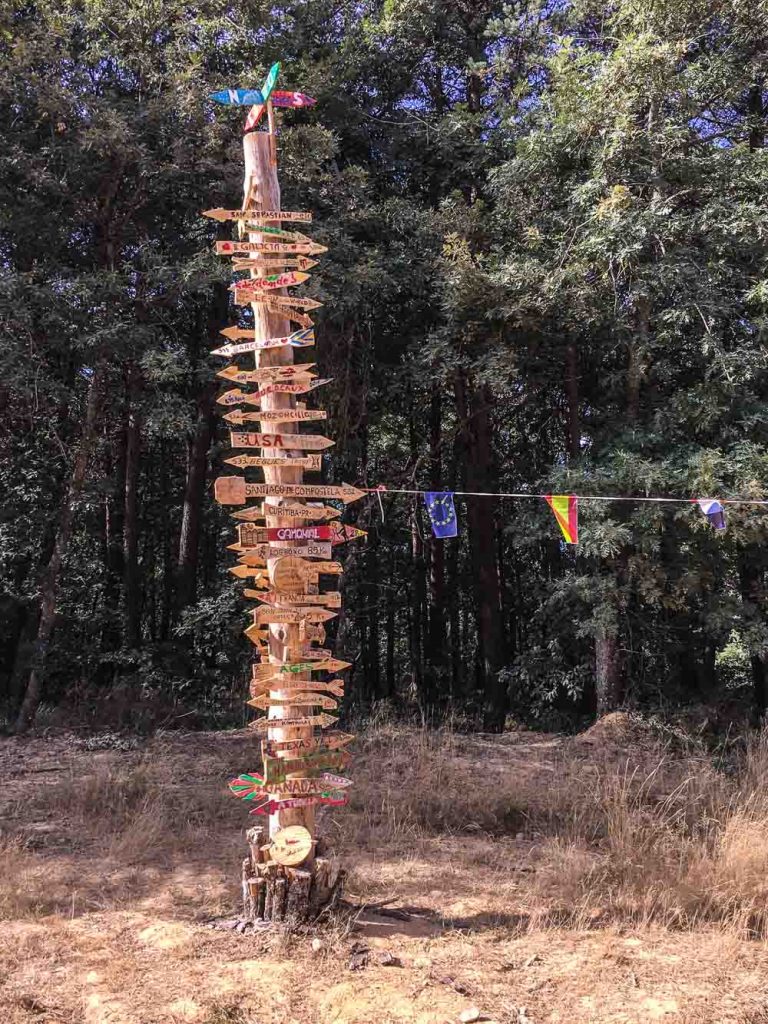
Signpost to everywhere (before San Juan de Ortega)

2016-09-05 11.30.57-2

2016-09-05 11.33.01

The road to Agés.

2016-09-05 11.50.14

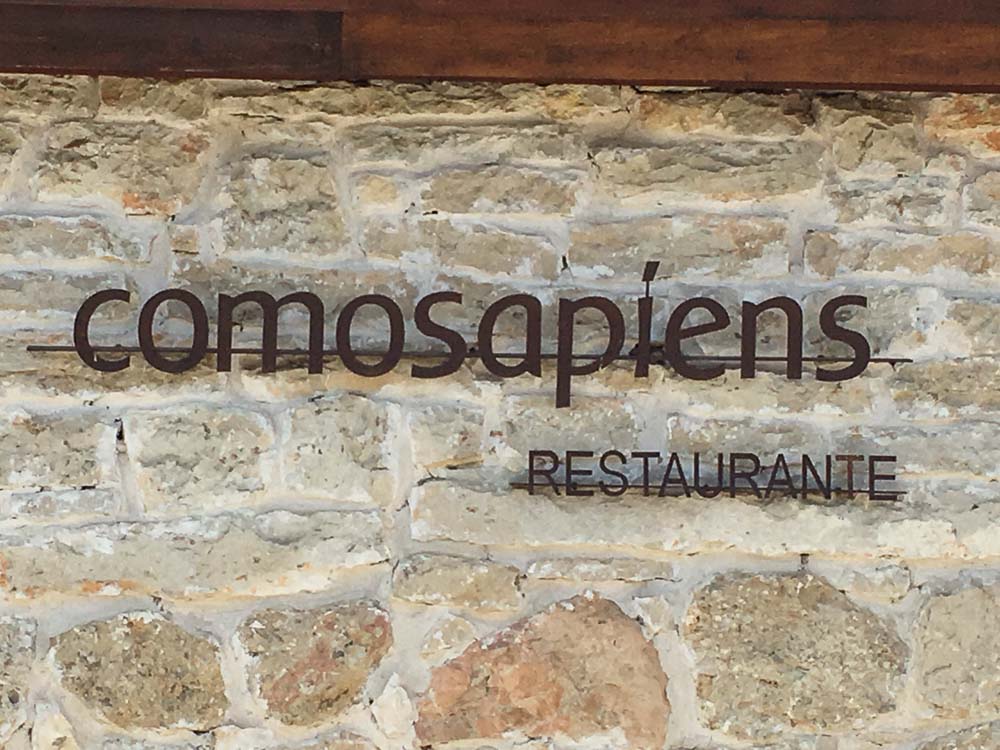
Clever restaurant name in Atapuerca.

2016-09-05 12.13.48

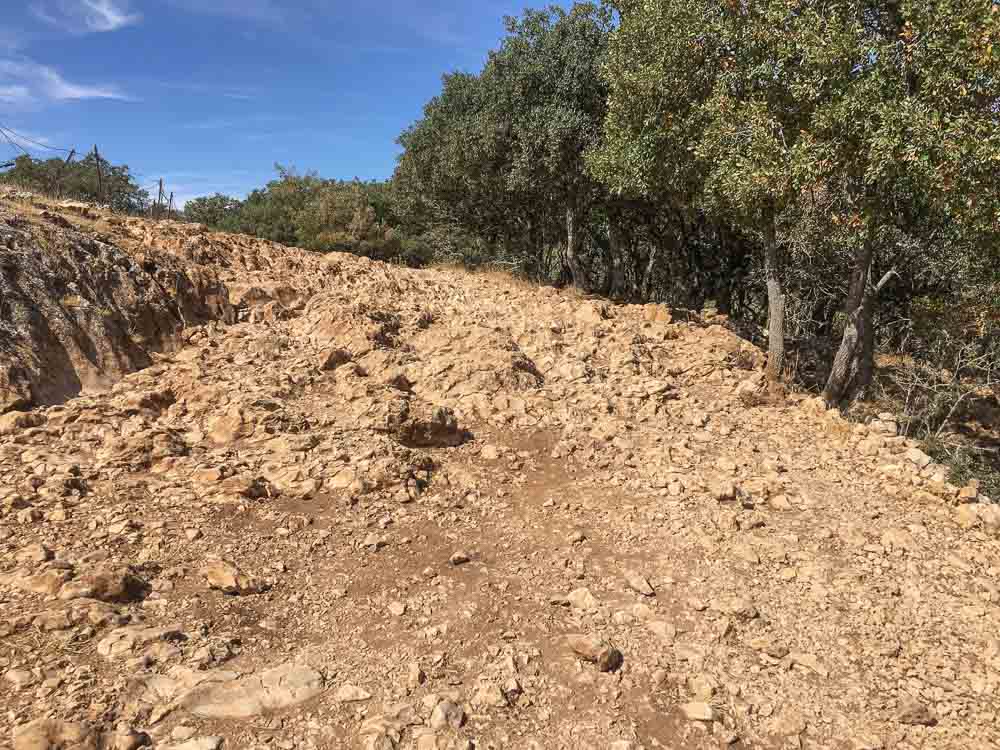
The rockiest section of the trail going up the hill after Atapuerca.

2016-09-05 12.16.15

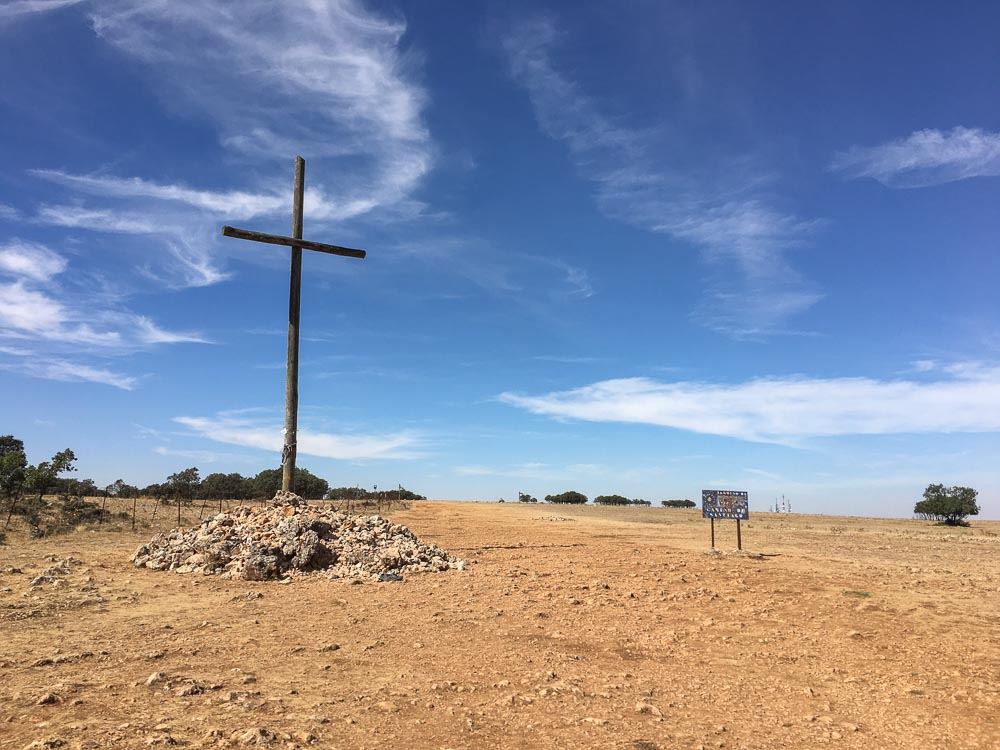
Rounding the top

2016-09-05 12.19.25

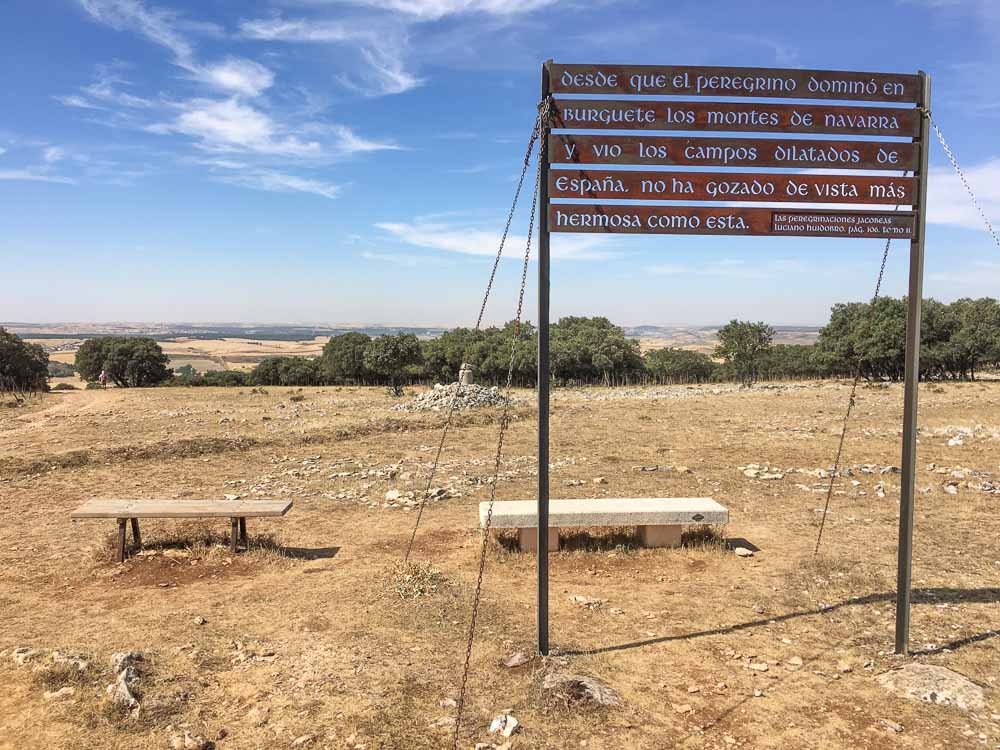
“Even though the pilgrim has dominated the mountains of Navarre and seen the vast fields of Spain, he has not enjoyed a more beautiful view than this.”

2016-09-05 12.37.27

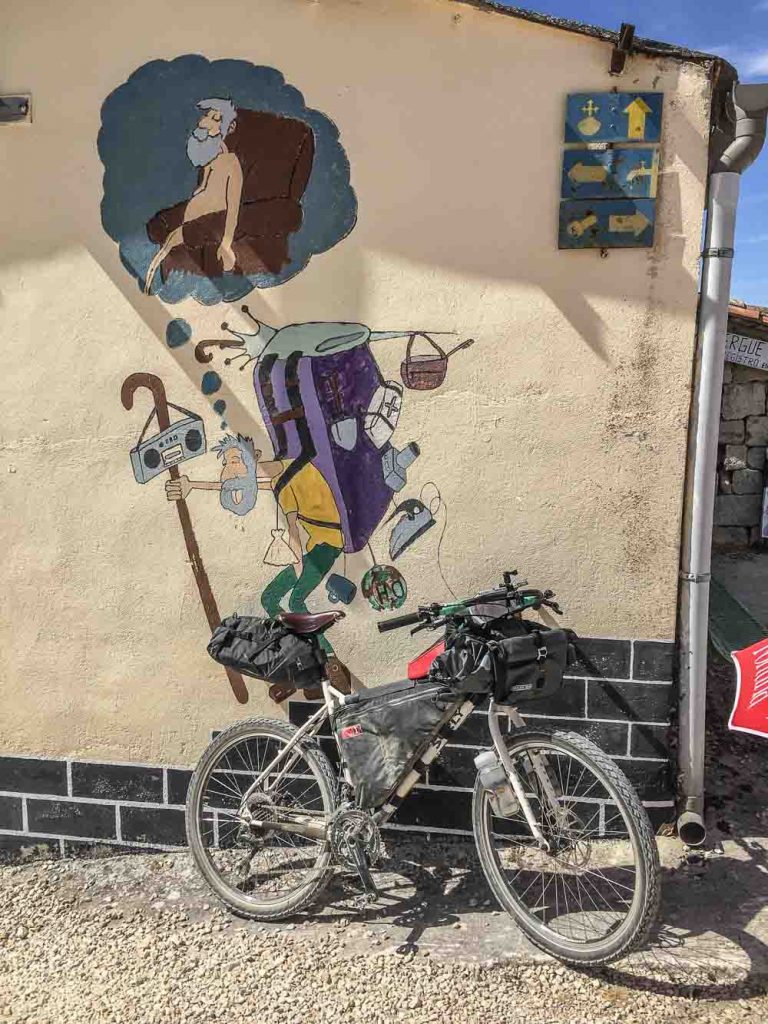
One of my favorite murals on the Camino Francés, which makes me more happy than ever to not be wearing a backpack this time.

2016-09-05 13.14.07

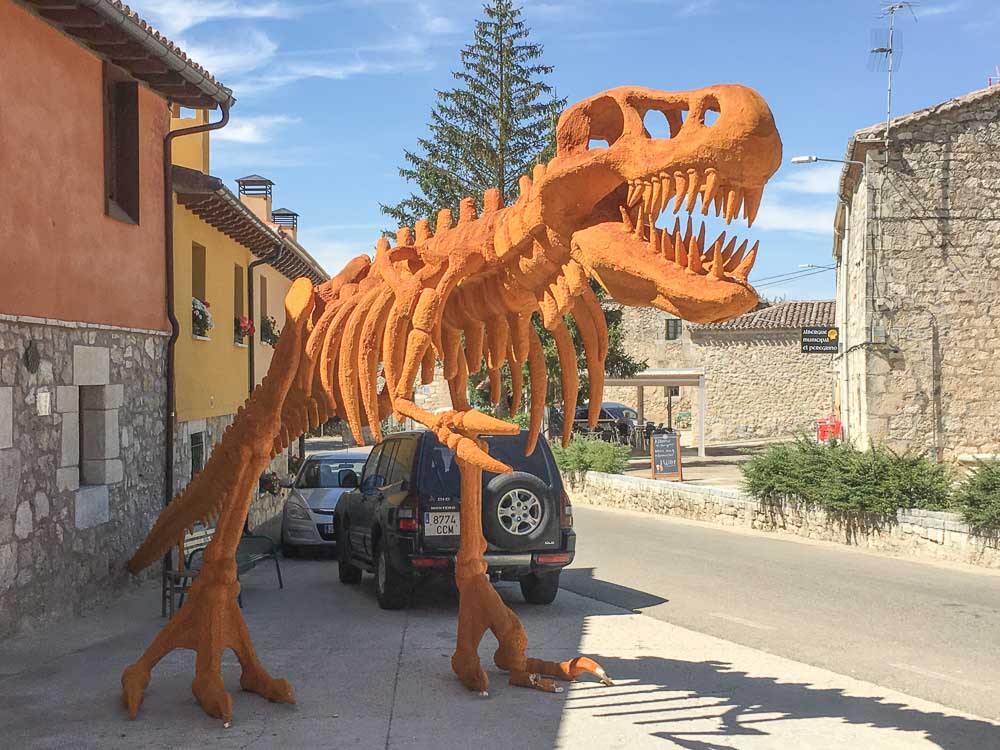
T-Rex in Orbaneja Riopico

2016-09-05 13.47.11

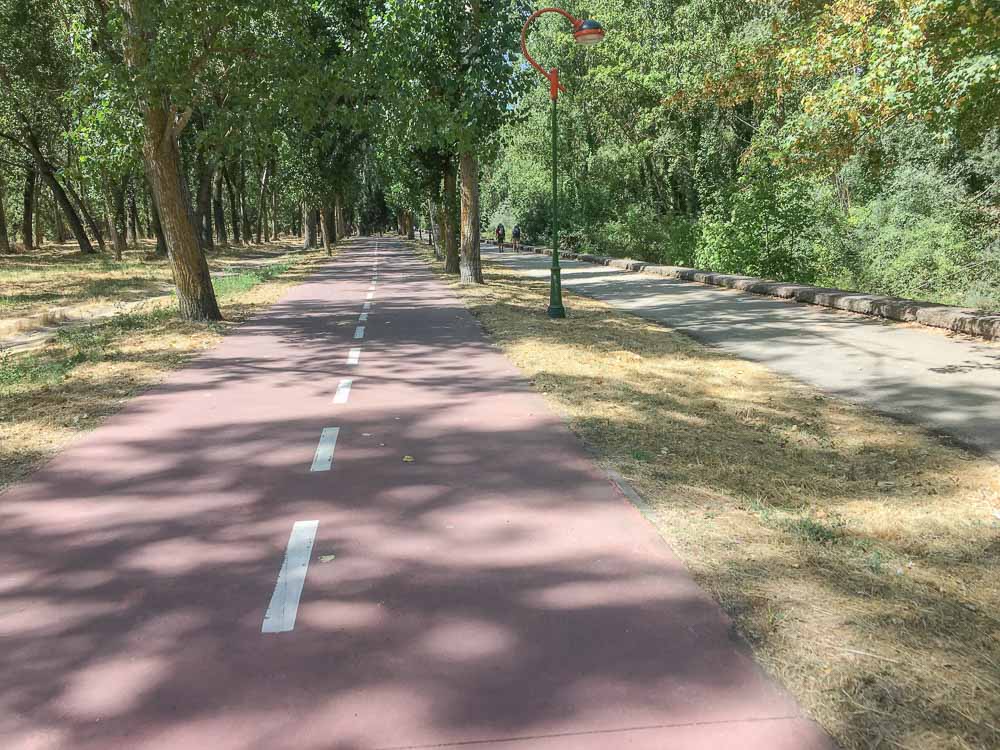
Great bike path into Burgos (take route south of the river, not the traditional way into town)


2016-09-05 13.57.59

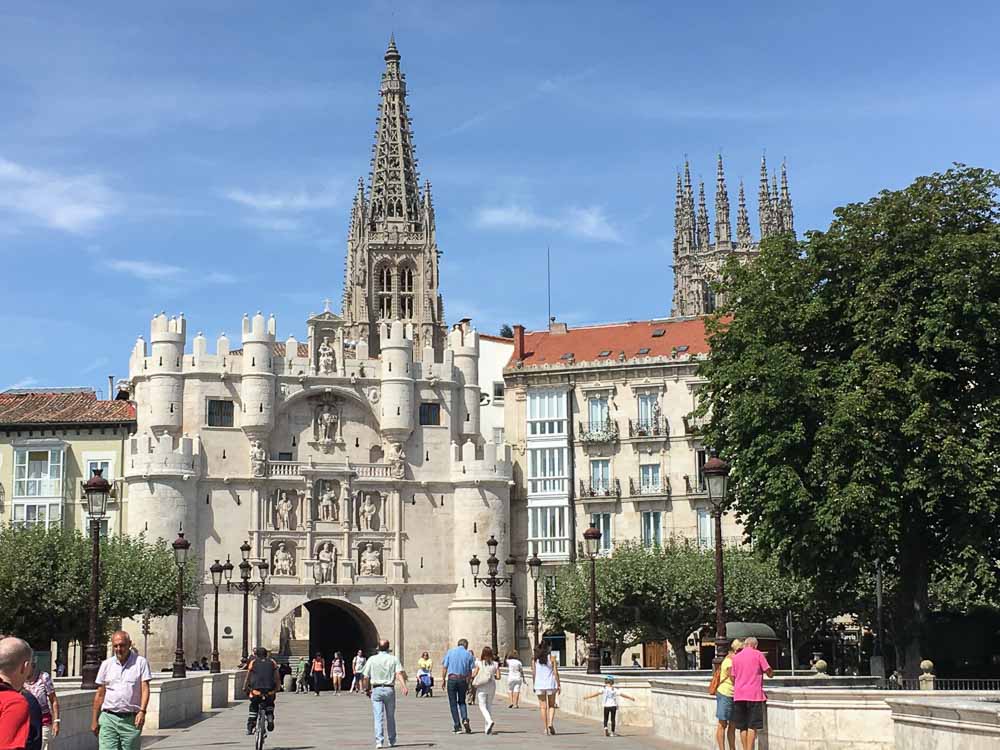
Entering Burgos


2016-09-05 15.06.28

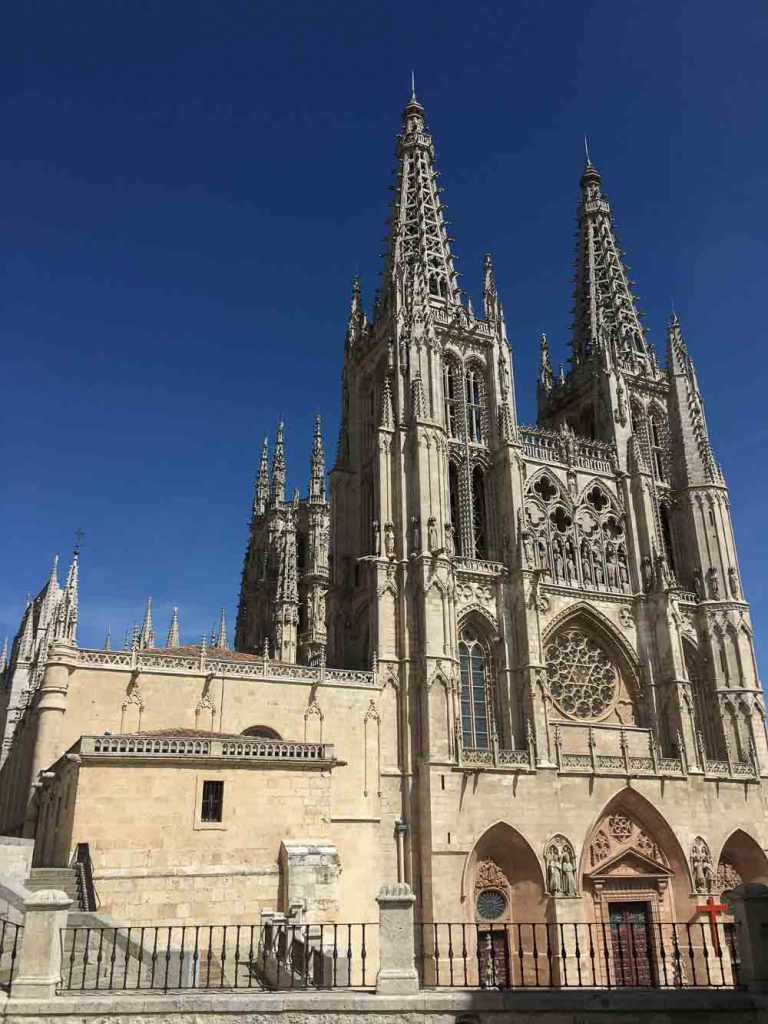
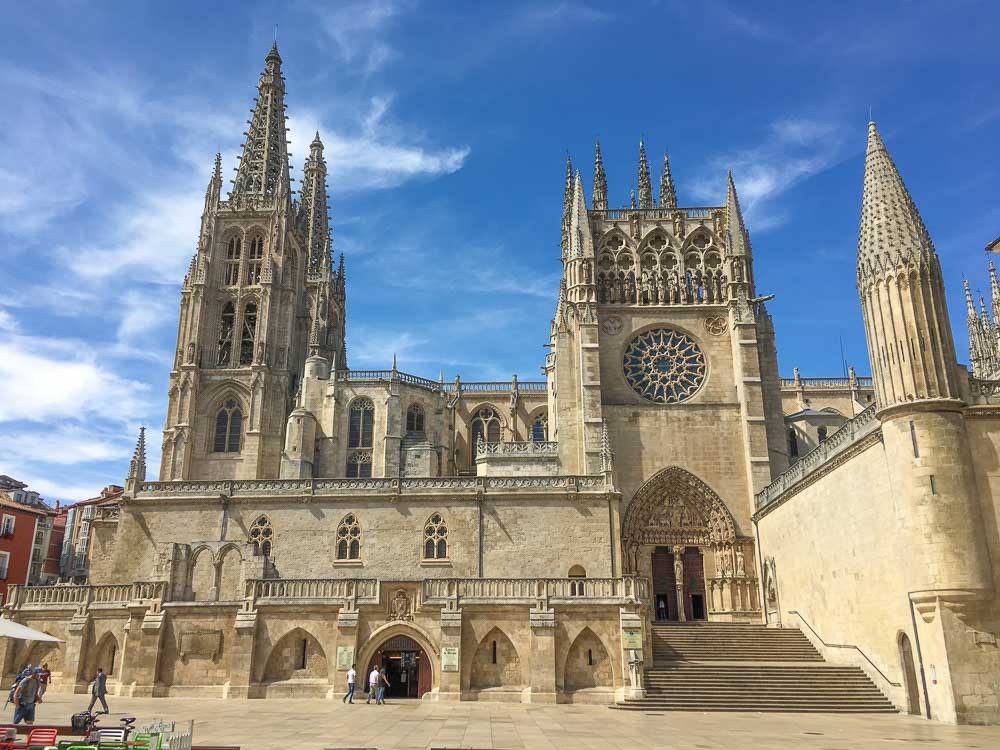
The Cathedral in Burgos never ceases to amaze

2016-09-05 14.57.12

Burgos Cathedral